Common Problems with Must Solar Inverters and How Zimbabwean Installers Fix Them
Solar power has grown rapidly in Zimbabwe over the last few years. With frequent load shedding and unstable electricity from the grid, many homeowners and businesses have turned to solar systems to keep their lights on and their operations running.
Because of this demand, one inverter brand you will hear about often is Must.
Must solar inverters are widely used in Zimbabwe because they are generally more affordable than premium brands while still offering hybrid functionality. They can run solar panels, batteries, and grid power together, making them a practical choice for many homes and small businesses.
However, like any piece of electrical equipment, Must inverters can sometimes develop problems.
Many users report issues such as:
- Overload warnings
- Battery charging problems
- Inverter shutdowns
- Error codes appearing on the display
The important thing to understand is that most inverter problems are not actually caused by the inverter itself.
In many cases, the real causes are:
- Incorrect system sizing
- Poor installation
- Incompatible batteries
- Lack of electrical protection
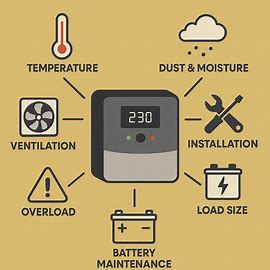
Zimbabwe’s environment can also make things harder for solar equipment. Dust, high temperatures, lightning storms, and unstable grid voltage can all affect how an inverter performs.
In this guide, I will explain the most common problems people experience with Must solar inverters in Zimbabwe. More importantly, you will learn how experienced installers diagnose and fix these problems.
By the end of this article, you will have a much clearer understanding of:
- Why inverter problems happen
- How installers troubleshoot them
- What you can do to prevent them in your own solar system
Understanding these issues will help you get better performance and longer life from your solar inverter.
Table of Contents
Understanding How Must Solar Inverters Work
Before looking at common problems, it helps to understand what a solar inverter actually does.
In simple terms, the inverter is the central control unit of your solar system.
Solar panels generate electricity in DC power (direct current). Most household appliances, however, run on AC power (alternating current). The inverter converts the electricity from your solar panels and batteries into usable power for your home.
Without an inverter, your solar system cannot run normal appliances.
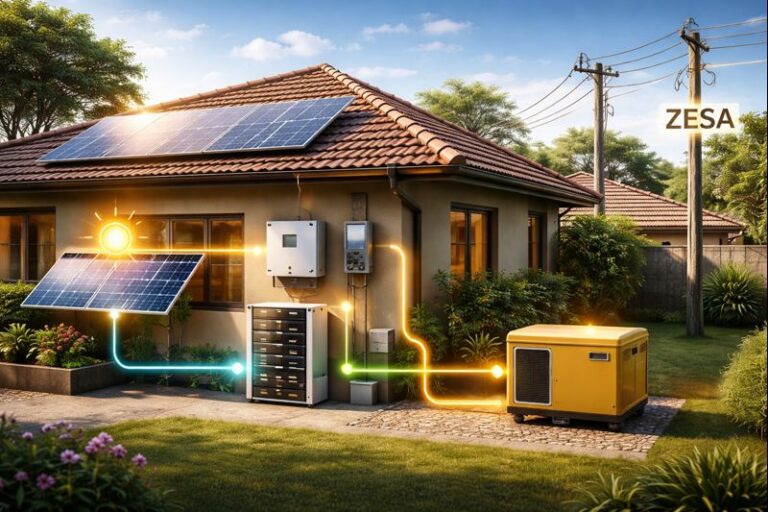
Modern Must inverters do much more than just convert electricity. They also manage the flow of power between different parts of your system.
These include:
- Solar panels
- Batteries
- ZESA grid power
- Backup generators
The inverter decides which source of electricity should power your home at any given moment.
For example:
- During the day, your system may run mostly on solar power
- At night, it may switch to battery power
- If the batteries are low, it may switch to grid power
This automatic switching is one reason hybrid inverters are so popular in Zimbabwe.
The Role of the Inverter in a Solar System
Think of the inverter as the brain of your solar setup.
It performs several important tasks:
- Converts DC electricity into AC electricity
- Charges your batteries
- Monitors system performance
- Protects the system from electrical faults
- Manages power from different energy sources
Because the inverter controls so many parts of the system, even small problems in the solar setup can affect how the inverter behaves.
That is why troubleshooting an inverter problem usually involves checking the entire solar system, not just the inverter.
Key Components That Affect Inverter Performance
An inverter does not work alone. Its performance depends heavily on other components connected to it.
These components include:
Solar panels
Panels generate the electricity used by the system. If panels are incorrectly wired or poorly positioned, the inverter may receive insufficient power.
Battery bank
Batteries store energy for use at night or during load shedding. Weak or damaged batteries can cause charging errors and shutdowns.
Charge controller
Some solar systems use separate charge controllers. If they malfunction, the inverter may not receive proper solar input.
Grid connection
Unstable grid voltage from ZESA can trigger protection mechanisms in the inverter.
Protection equipment
Devices such as surge protectors and lightning arrestors help protect the inverter from power spikes.
If any of these components have problems, the inverter may display errors even though it is not actually faulty.
Why Installation Quality Matters
One of the biggest causes of inverter problems in Zimbabwe is poor installation.
A solar system must be carefully designed and installed to work properly.
Common installation mistakes include:
- Incorrect cable sizing
- Loose wiring connections
- Poor grounding
- Incorrect inverter configuration
- Installing equipment in hot or dusty areas
Even a high-quality inverter can struggle if these issues are present.
That is why experienced solar installers spend time checking the entire system design before diagnosing inverter faults.
Why Must Inverters Sometimes Struggle in Zimbabwe
Solar systems in Zimbabwe operate under conditions that can be quite demanding.
Unlike countries with stable power grids and controlled environments, solar equipment here often faces several challenges at the same time.
Understanding these conditions helps explain why inverter problems sometimes occur.
Power Grid Instability
Zimbabwe’s electricity grid is not always stable.
Users frequently experience:
- Voltage spikes
- Sudden power restoration after outages
- Rapid voltage fluctuations
These sudden changes can confuse sensitive electronics inside the inverter.
In many cases, the inverter will shut down temporarily as a protective safety measure.
While this can be frustrating, it actually helps prevent serious damage to the system.
Environmental Conditions
Zimbabwe’s climate also affects solar equipment.
Many areas experience:
- High temperatures
- Dusty environments
- Seasonal thunderstorms
Dust is especially common in towns and rural areas where roads are not paved.
Over time, dust can accumulate inside inverter cooling vents and reduce airflow. When airflow is reduced, the inverter can overheat during heavy usage.
High temperatures can also affect electronic components. If an inverter is installed in a poorly ventilated space such as a small cupboard or garage, the heat can build up quickly.
Lightning storms are another concern. Without proper surge protection, lightning can damage solar equipment.
Incorrect Solar System Design
Another common reason Must inverters struggle is incorrect system sizing.
Some solar systems are installed with components that do not match each other properly.
Examples include:
- An inverter that is too small for the household load
- Batteries that cannot handle the charging current
- Too few solar panels to recharge the batteries
When this happens, the inverter may display warnings such as overload errors or battery faults.
These problems are often mistaken for inverter defects, but the real issue is poor system design.
This is why professional installers always perform load calculations before recommending an inverter size.
Problem #1: Overload Errors
One of the most common issues reported by Must inverter users is the overload error.
This problem occurs when the total power demand from appliances exceeds what the inverter can supply.
When this happens, the inverter may display an overload warning or shut down temporarily to protect itself.
What an Overload Error Means
Every inverter has a maximum power rating.
For example:
- A 3kVA inverter can handle smaller household loads
- A 5kVA inverter supports larger homes
- An 8kVA inverter can power heavier appliances
If appliances draw more electricity than the inverter can deliver, the system will trigger an overload protection.
This prevents damage to internal components.
Common Causes in Zimbabwean Homes
Overload errors often occur because several high-power appliances start at the same time.
Examples include:
- Electric kettles
- Microwaves
- Electric stoves
- Borehole pumps
- Air conditioners
Some appliances also require extra power when they start up.
For example, a fridge or pump may draw two to three times its normal power for a few seconds when the motor starts.
If multiple appliances start simultaneously, the inverter may detect this as an overload.
Other common causes include:
- Undersized inverters
- Adding new appliances after installing the solar system
- Running heavy appliances during load shedding
How Installers Fix Overload Problems
Experienced solar installers usually solve overload problems in several ways.
First, they check the actual power consumption of the household.
This involves measuring how much electricity different appliances use.
If the inverter is undersized, installers may recommend upgrading to a larger system.
In other cases, they may suggest redistributing loads.
For example:
- Separating heavy appliances onto different circuits
- Avoiding running kettles and microwaves at the same time
- Moving high-power equipment off the inverter supply
Sometimes the solution is simply adjusting user habits.
Once homeowners understand how their inverter works, they can avoid running too many heavy appliances at the same time.
With the right system design and usage, overload errors can usually be prevented.
Problem #2: Battery Charging Problems
Another common issue users report is battery charging problems. This usually becomes noticeable during load shedding when the batteries run out of power much faster than expected.
In some cases, users also notice that their batteries never seem to charge fully, even during sunny days.
Symptoms of Battery Charging Problems
You may be experiencing battery charging issues if you notice:
- Batteries draining very quickly
- The inverter showing low battery warnings frequently
- Batteries not reaching full charge during the day
- The system relying too much on grid power
These signs usually indicate that the batteries are not receiving enough energy or are not storing it properly.
Common Causes in Zimbabwe
Several factors can cause battery charging issues in Must inverter systems.
Incorrect battery settings
Inverters must be configured correctly depending on the battery type. Lithium batteries and lead-acid batteries require different charging voltages and charging profiles.
If these settings are wrong, the inverter may:
- Charge too slowly
- Stop charging early
- Fail to fully charge the battery bank
Old or damaged batteries
Batteries lose capacity as they age. If a battery has been used for several years, it may not hold the same amount of energy as when it was new.
This can cause the inverter to report low battery levels even when charging appears normal.
Too few solar panels
If the system does not have enough solar panels, the batteries may never receive enough power during the day to fully recharge.
This problem is especially common in systems that were installed with a very small solar array.
How Installers Fix Battery Charging Issues
Solar installers typically follow a step-by-step process when diagnosing battery charging problems.
They often start by checking:
- Battery voltage levels
- Charging settings in the inverter
- Solar panel output
If the problem is caused by incorrect settings, they adjust the inverter configuration.
If the batteries are old or damaged, installers may recommend replacing them with new lithium batteries or higher-capacity units.
In cases where solar input is too low, installers may add more solar panels so the system can recharge batteries properly during the day.
Problem #3: Inverter Shutting Down or Restarting Frequently
Some users report that their Must inverter shuts down or restarts unexpectedly. This can be frustrating, especially when it happens during load shedding.
Fortunately, this problem usually has clear causes.
What Causes Inverter Shutdowns
Inverters are designed to protect themselves from dangerous conditions.
If certain limits are exceeded, the inverter may shut down temporarily.
Common triggers include:
- Overheating
- Very low battery voltage
- Power surges
- Internal safety protection mechanisms
When the inverter detects one of these conditions, it shuts down to prevent permanent damage.
Zimbabwe-Specific Causes
Several local factors contribute to inverter shutdowns.
Poor ventilation
Some installations place the inverter inside cupboards or very small rooms. This restricts airflow and causes the inverter to heat up.
Dust accumulation
Dust can block cooling vents and slow down cooling fans. This makes the inverter run hotter during heavy use.
Grid voltage fluctuations
Zimbabwe’s electricity grid sometimes experiences sudden voltage spikes. When this happens, the inverter may temporarily disconnect from the grid to protect itself.
How Installers Solve This
Professional installers usually fix shutdown problems by checking several key areas.
They may:
- Move the inverter to a cooler, ventilated location
- Clean dust from cooling vents and fans
- Install surge protection devices
- Check the battery voltage and wiring
Once these issues are corrected, the inverter typically operates normally again.
Problem #4: Fault Codes and Error Messages
Must inverters display fault codes when something goes wrong. These messages appear on the inverter screen and help technicians identify the issue.
While these codes may look confusing at first, they are actually useful diagnostic tools.
Common Fault Codes on Must Inverters
Some of the most frequently reported fault codes include:
- Overload warnings
- Battery voltage errors
- Over-temperature alerts
- Communication faults
Each code corresponds to a specific problem within the system.
Why Fault Codes Appear
Fault codes can appear for several reasons.
These include:
- Electrical wiring faults
- Incorrect inverter configuration
- Battery problems
- Solar panel input issues
Sometimes the inverter simply detects a temporary condition, such as excessive load or low battery voltage.
In these cases, the fault may clear automatically once the condition improves.
How Technicians Diagnose Fault Codes
Experienced installers follow a structured troubleshooting process.
They usually begin by:
- Reading the error code displayed on the inverter
- Checking system voltage levels
- Inspecting wiring connections
They may also measure solar panel voltage and battery performance to determine where the issue originates.
Once the root cause is identified, they adjust the system configuration or repair the faulty component.
Problem #5: Solar Panels Not Charging the Batteries
Another issue some users experience is when the solar panels do not appear to charge the batteries.
In this situation, the system may rely heavily on grid electricity instead of solar energy.
Signs of Solar Charging Problems
Common signs include:
- Solar input reading zero on the inverter
- Batteries charging only from grid power
- Very slow battery charging during the day
These symptoms usually indicate a problem with the solar panel input.
Typical Causes
Several factors can prevent solar panels from charging the batteries.
Incorrect panel wiring
If the solar panels are wired incorrectly, the inverter may not receive the correct voltage.
Faulty connectors
Loose or damaged connectors can interrupt the flow of electricity from the panels.
Shading
Even partial shading from trees, buildings, or dust can significantly reduce solar output.
Installer Fixes
Solar installers usually inspect the entire solar panel system.
They may:
- Test the voltage from the solar panels
- Reconnect faulty wiring
- Replace damaged connectors
- Adjust panel positioning to reduce shading
Once the panels deliver proper voltage to the inverter, battery charging normally resumes.
Problem #6: Noise from Cooling Fans
Many Must inverter owners notice that the cooling fans can become quite loud during operation.
While this can be surprising, it is usually normal.
Why Must Inverters Use Cooling Fans
Inverters generate heat when converting electricity and charging batteries.
Cooling fans help maintain safe operating temperatures by removing excess heat.
The fan may run more frequently when:
- Batteries are charging
- The inverter is handling heavy loads
- Ambient temperatures are high
When Fan Noise Is Normal
Fan noise is normal during periods of heavy system activity.
For example:
- Charging batteries during sunny afternoons
- Running multiple appliances during load shedding
In these cases, the fan simply helps keep the inverter cool.
When It Indicates a Problem
However, very loud or constant fan noise may indicate issues such as:
- Dust buildup
- Restricted airflow
- Worn cooling fans
Installer Maintenance Solutions
Technicians usually resolve fan issues by performing simple maintenance.
This may include:
- Cleaning ventilation openings
- Removing dust from internal components
- Replacing worn fans if necessary
Regular maintenance helps keep the cooling system working properly.
How Zimbabwean Installers Diagnose Inverter Problems
When a solar inverter develops a problem, installers follow a systematic diagnostic process.
They do not immediately assume the inverter is faulty. Instead, they inspect the entire solar system.
Initial System Inspection
The first step is a visual inspection.
Installers check:
- Cable connections
- Circuit breakers
- Grounding systems
Loose or damaged wiring can often cause inverter faults.
Battery Testing
Next, installers test the battery bank.
They measure:
- Battery voltage
- Charging current
- Battery capacity
Weak batteries are a common cause of inverter warnings.
Solar Input Testing
Technicians also measure the electrical output from solar panels.
This helps determine whether the panels are producing enough power.
If solar input is low, they investigate possible causes such as shading or wiring problems.
System Load Assessment
Finally, installers analyze the household load.
They check how much electricity appliances are drawing and whether the inverter can handle the demand.
This step often reveals overload problems.
Preventing Must Inverter Problems Before They Start
The best way to deal with inverter problems is to prevent them before they happen.
A well-designed solar system can operate smoothly for many years.
Proper System Sizing
Correct system sizing is essential.
The inverter, batteries, and solar panels must all match the household’s energy needs.
If the system is too small, the inverter will constantly operate under stress.
Installing Surge and Lightning Protection
Electrical protection devices are extremely important in Zimbabwe.
These devices protect solar equipment from:
- Lightning strikes
- Voltage spikes
- Grid faults
Without proper protection, even a high-quality inverter can be damaged.
Using High-Quality Batteries
The quality of your batteries plays a major role in system performance.
Lithium batteries often provide:
- Longer lifespan
- Faster charging
- Better efficiency
Using compatible batteries reduces the risk of charging problems.
Regular Maintenance
Solar systems should be inspected regularly.
Routine maintenance includes:
- Cleaning dust from equipment
- Checking wiring connections
- Monitoring battery performance
Simple maintenance steps can prevent many problems.
Working With Experienced Installers
One of the most important factors is choosing a qualified installer.
Experienced installers understand how to design systems that match Zimbabwe’s power conditions.
They also know how to troubleshoot problems quickly.
When to Repair vs Replace a Must Inverter
Sometimes inverter problems can be repaired easily. In other cases, replacing the inverter may be the better option.
Signs the Inverter Can Be Repaired
Many issues are minor and can be fixed quickly.
Examples include:
- Cooling fan replacement
- Loose wiring connections
- Configuration adjustments
- Dust cleaning
These repairs are usually affordable and restore normal operation.
Signs Replacement May Be Better
In some situations, replacing the inverter makes more sense.
Examples include:
- Severe internal hardware damage
- Repeated system failures
- Inverters that are too small for the household load
Upgrading to a larger or newer inverter may provide better long-term reliability.
Cost Considerations for Zimbabwean Users
In Zimbabwe, the decision often depends on cost.
Repairing small faults is usually cheaper than buying a new inverter.
However, if the inverter is frequently failing or cannot handle the household load, replacing it may save money in the long run.
Understanding the cause of the problem helps you make the right decision for your solar system.
Are Most Must Inverter Problems Preventable?
After looking at the most common issues, one thing becomes clear: most Must inverter problems are preventable.
In many cases, the inverter itself is not the real problem. The issue usually comes from how the solar system was designed, installed, or maintained.
When a system is correctly installed and properly sized, Must inverters can operate reliably for many years.
The most common causes of problems usually include:
- Incorrect inverter sizing
- Poor installation practices
- Weak or incompatible batteries
- Lack of surge protection
- Dust and heat buildup
Many of these problems occur because people rush into installing solar systems during severe load shedding without fully planning the system.
For example, some households install a small inverter with large appliances such as kettles, pumps, and microwaves. When these appliances run together, overload warnings appear.
Other systems are installed with too few solar panels, which prevents the batteries from charging properly.
In many cases, the solution is not replacing the inverter but improving the overall system design.
Preventing inverter problems usually comes down to a few simple principles:
- Proper system planning before installation
- Choosing compatible components
- Installing protection equipment
- Maintaining the system regularly
When these steps are followed, the chances of serious inverter problems become much lower.
This is why experienced installers always focus on system design first and equipment second.
A well-designed solar system protects the inverter, batteries, and other components from unnecessary stress.
Frequently Asked Questions About Must Inverter Problems
Many homeowners ask similar questions when they experience inverter problems. Below are some of the most common concerns.
Why does my Must inverter keep shutting down?
This usually happens when the inverter detects a condition that could damage it.
Common causes include:
- Overheating
- Battery voltage dropping too low
- Overload from too many appliances
- Voltage spikes from the grid
The inverter shuts down as a safety measure. Once the problem is fixed, the system usually operates normally again.
What causes overload errors on Must inverters?
Overload errors occur when the power demand from appliances exceeds the inverter’s capacity.
This can happen when:
- Multiple heavy appliances start at the same time
- Motors or pumps draw high startup power
- The inverter is undersized for the household load
Reducing the number of appliances running at once or upgrading to a larger inverter can solve this problem.
Why are my batteries not charging properly?
Battery charging problems are often caused by:
- Incorrect inverter settings
- Weak or aging batteries
- Insufficient solar panel capacity
- Loose wiring connections
Checking battery settings and ensuring the solar panels produce enough power usually resolves this issue.
Can Must inverters work with lithium batteries?
Yes. Many Must inverters are compatible with lithium batteries.
However, the inverter must be configured with the correct charging settings for lithium batteries. Incorrect settings can cause charging issues or reduce battery lifespan.
Always confirm compatibility before installing new batteries.
How long should a Must inverter last?
The lifespan of a solar inverter depends on several factors, including:
- Installation quality
- Environmental conditions
- System load
- Electrical protection
Under good conditions, a well-installed inverter can last many years.
Regular maintenance and proper system design help extend the life of the inverter.
Should I repair or replace my Must inverter?
This depends on the type of problem.
Minor issues such as:
- Faulty fans
- Loose wiring
- Incorrect settings
can usually be repaired easily.
However, if the inverter has severe internal damage or is too small for the household load, replacing it may be the better long-term solution.
Final Thoughts
Must solar inverters remain a popular choice in Zimbabwe because they offer affordable hybrid functionality for homes and small businesses.
Like any solar equipment, they can develop problems. But in most cases, these issues are caused by system design, installation mistakes, or environmental conditions rather than the inverter itself.
If your system is properly sized, well protected, and maintained regularly, a Must inverter can provide reliable backup power during Zimbabwe’s frequent load shedding.
Understanding how these systems work and how installers troubleshoot problems helps you make better decisions about your solar setup.