How Solar Protection Kits Prevent Damage from Power Surges, Lightning, and ZESA Faults in Zimbabwe
Why Solar Systems Fail Despite Good Equipment
If you’ve invested in solar in Zimbabwe, you probably did it to escape power cuts, protect your appliances, and gain peace of mind.
Yet many solar systems still fail early.
Not because the panels are fake.
Not because the inverter is low quality.
They fail because of electrical damage.
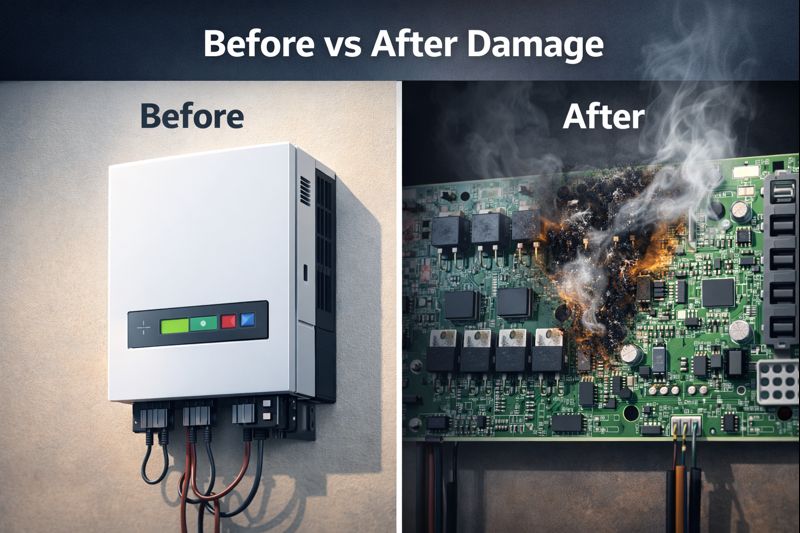
Power surges, lightning, and unstable ZESA supply quietly destroy solar components long before you see obvious signs. By the time the inverter stops switching on or the battery starts behaving strangely, the damage is already done.
I see this problem often in Zimbabwe.
A homeowner installs a good hybrid inverter.
A business adds lithium batteries.
Everything works perfectly — until one stormy night or one bad ZESA reconnection.
This is where solar protection kits matter.
They don’t improve performance.
They prevent damage.
In this article, I’ll explain:
- How power surges, lightning, and ZESA faults damage solar systems
- Why solar equipment is more sensitive than many people realise
- How proper protection kits stop this damage before it becomes expensive
If you want your solar system to last, this is information you can’t ignore.
Table of Contents
Understanding Electrical Power Surges (Beginner Level)
Before we talk about protection, you need to understand the enemy.
Power surges are one of the biggest silent killers of solar systems in Zimbabwe.
What Is a Power Surge?
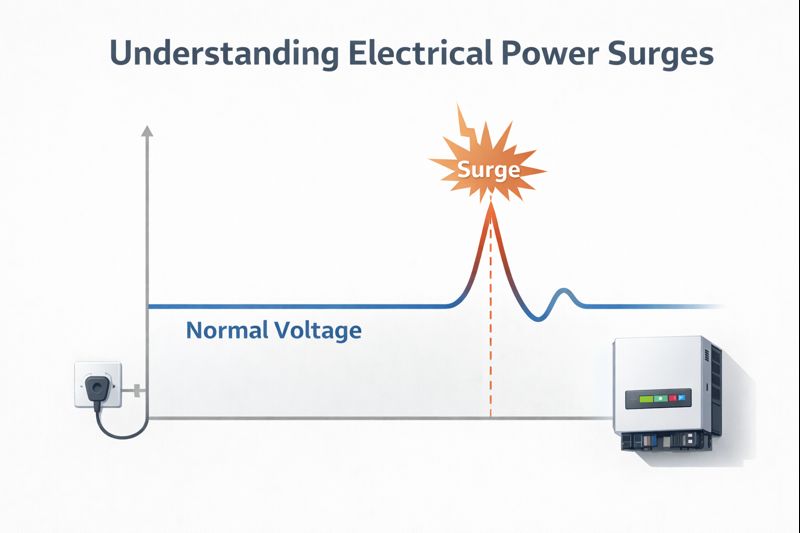
A power surge is a sudden spike in voltage.
Instead of electricity flowing smoothly at a safe level, the voltage jumps higher than your solar equipment can handle.
These spikes often last:
- A fraction of a second
- Or a few seconds
That’s enough to damage sensitive electronics.
Solar inverters, battery management systems, and charge controllers all rely on electronic circuits. They are fast, efficient, and fragile when exposed to unstable power.
You may not see immediate failure.
But each surge weakens internal components.
Over time, the damage adds up.
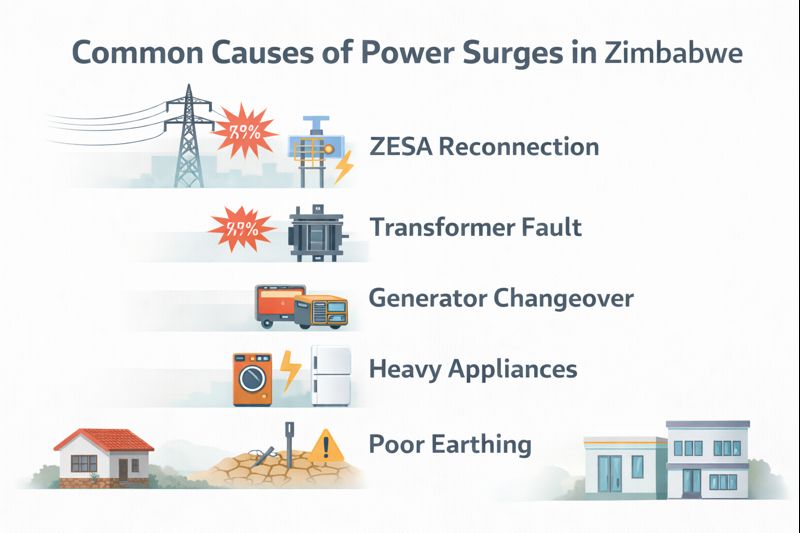
Common Causes of Power Surges in Zimbabwe
In Zimbabwe, power surges are not rare events. They are part of daily electrical life.
Here are the most common causes:
- ZESA switching power on and off during load shedding
- Sudden grid reconnection after a blackout
- Faults in local transformers
- Generator changeovers without proper isolation
- Large appliances switching on in nearby properties
- Poor or shared earthing systems in high-density areas
Why?
Because they are connected to:
- Solar panels
- Batteries
- ZESA grid
- Sometimes a generator
This means there are multiple pathways for surges to enter your system.
Without protection, the inverter absorbs the shock.
And the inverter usually loses.
Lightning Strikes and Solar Systems in Zimbabwe
Lightning is not just dramatic.
It is extremely destructive to unprotected solar systems.
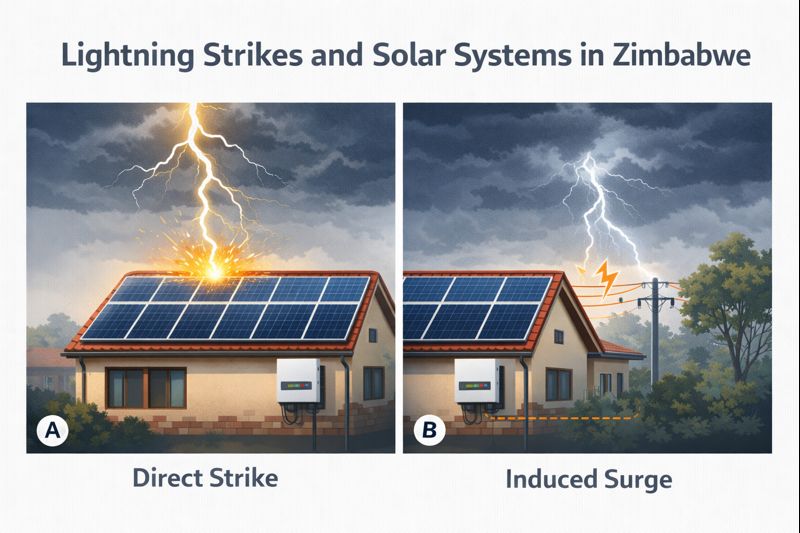
How Lightning Affects Solar Installations
You don’t need a direct lightning strike on your panels for damage to occur.
There are two main ways lightning harms solar systems:
- Direct strikes
These are rare but catastrophic. They can destroy panels, wiring, and inverters instantly. - Indirect or induced surges
These are far more common. Lightning strikes nearby and sends a massive electrical surge through:- Power lines
- Ground
- Metal structures
- Solar cables
The surge travels until it finds sensitive electronics.
That’s usually your inverter or charge controller.
Even one lightning-induced surge can:
- Blow internal inverter components
- Damage battery BMS circuits
- Reduce battery lifespan permanently
Why Zimbabwe Is a High-Risk Lightning Zone
Zimbabwe experiences frequent thunderstorms, especially during the rainy season.
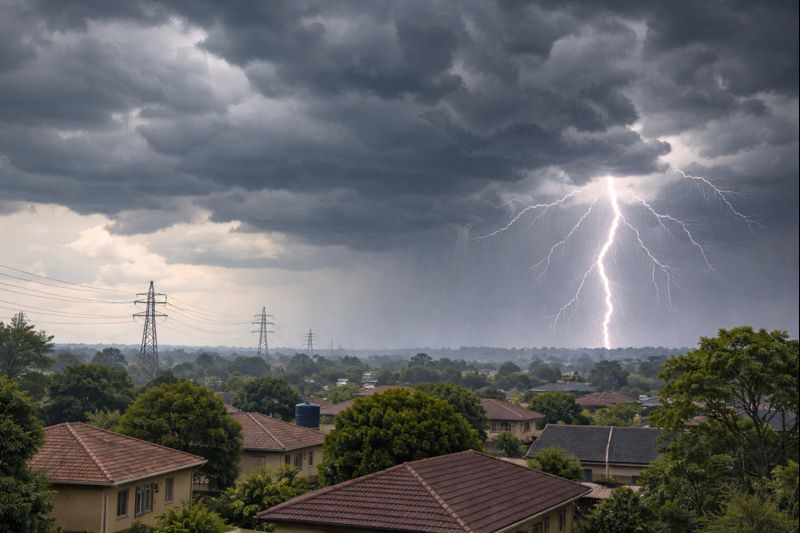
Several factors increase risk:
- Open landscapes and elevated terrain
- Metal solar panel frames mounted on rooftops
- Long DC cable runs from panels to inverter
- Rural installations with weak or no proper earthing
Solar panels act like collection points.
They sit high, exposed, and connected by long cables that behave like antennas during storms.
Without lightning and surge protection, your solar system becomes the easiest path for that energy to travel.
And once it enters your system, it looks for the weakest component.
That component is rarely cheap.
ZESA Faults and Grid Irregularities (Intermediate Level)
ZESA power is not just unreliable.
It is often electrically unstable.
When your solar system connects to the grid, it inherits those problems.
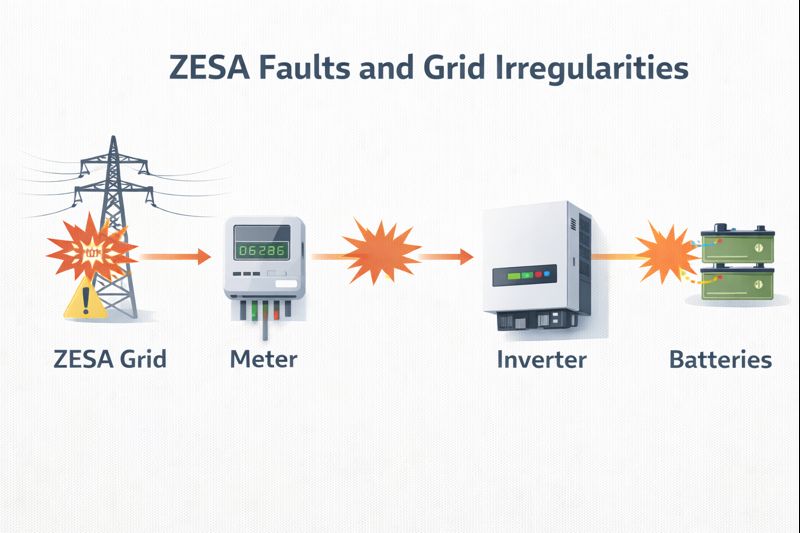
Common ZESA-Related Electrical Problems
In Zimbabwe, grid faults happen more often than people realise.
Some of the most damaging ones include:
- Voltage fluctuations
Power rises and falls outside safe operating limits. - Sudden reconnection surges
Power returns after load shedding at a much higher voltage. - Neutral loss
A serious fault where voltage becomes unbalanced and spikes dangerously. - Phase imbalance
Common in areas with uneven loading.
These faults don’t announce themselves.
Your lights may still work.
Your TV may stay on.
But your solar inverter is silently taking the hit.
How Grid Faults Travel into Solar Systems
Hybrid inverters are designed to interact with ZESA.
That’s their strength — and their weakness.
When a grid fault occurs:
- The surge enters through the AC side
- It passes straight into the inverter’s internal electronics
- The inverter tries to regulate the damage
Without AC-side protection, the inverter becomes the sacrificial component.
This is why many inverter failures happen:
- Shortly after a blackout
- During stormy weather
- After ZESA power is restored
If your system lacks proper protection, ZESA faults don’t stop at the meter.
They travel directly into your solar investment.
How Solar Components Get Damaged (Intermediate → Advanced)
Now let’s look at what actually gets damaged.
Understanding this helps you see why protection kits are not optional.
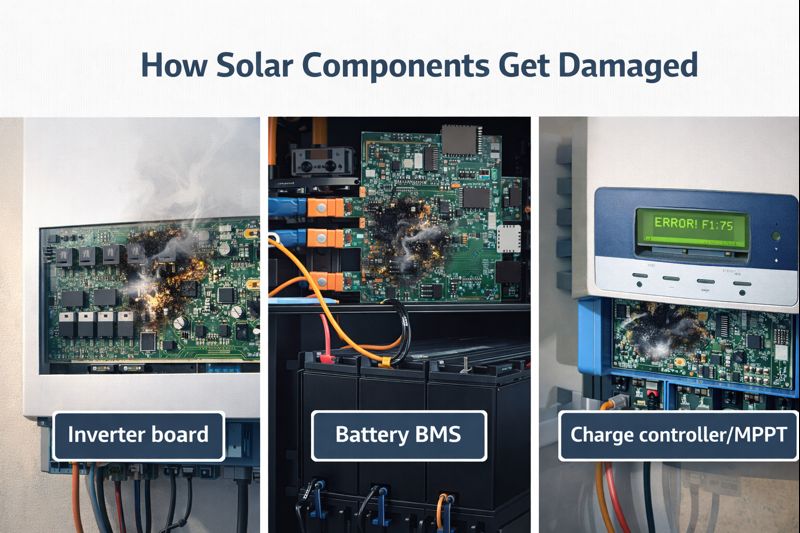
Damage to Inverters
The inverter is the brain of your solar system.
It contains:
- Power boards
- Switching components
- Control electronics
These parts do not like voltage spikes.
Common inverter damage includes:
- Burnt circuit boards
- Blown MOSFETs or IGBTs
- Damaged internal power supplies
- Random error codes and shutdowns
Sometimes the inverter still switches on.
But it behaves unpredictably:
- It trips under low load
- It refuses to charge batteries
- It fails during grid changeover
This is often surge damage, not manufacturing defects.
Damage to Solar Batteries
Many people assume lithium batteries are safe from surges.
They are not.
Lithium batteries rely on a Battery Management System (BMS).
Surges can:
- Damage BMS communication boards
- Cause cell imbalance
- Trigger permanent protection lockouts
Once a lithium battery’s BMS is compromised, capacity drops.
The battery may still work.
But it will never perform the same.
And most warranties do not cover electrical surge damage.
Damage to Solar Panels and Charge Controllers
Panels are more robust, but they are not immune.
Lightning-induced surges can:
- Destroy bypass diodes
- Damage junction boxes
- Reduce panel output permanently
Charge controllers and MPPT circuits are even more sensitive.
Once damaged:
- Charging becomes inefficient
- Batteries suffer long-term stress
- System performance slowly declines
This kind of damage is hard to detect early.
Most people only notice it when:
- Batteries start failing
- Power availability reduces
- Replacement costs become unavoidable
Why Basic Installations Fail Without Protection
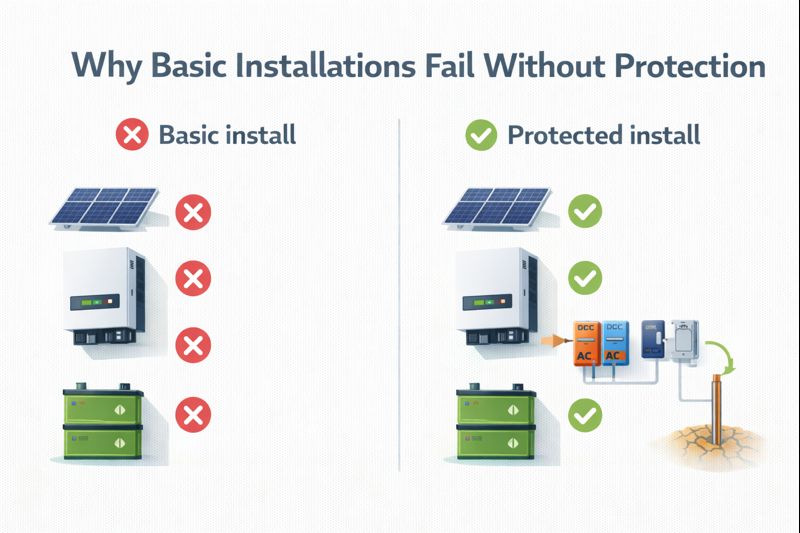
Many solar systems in Zimbabwe are installed correctly — but incompletely.
The missing piece is protection.
The “Panels + Inverter Only” Installation Mistake
To cut costs, some installations focus only on:
- Panels
- Inverter
- Batteries
Protection is treated as optional.
This is a mistake.
Without protection:
- The inverter absorbs all surges
- Batteries suffer hidden damage
- Failures appear “random”
The system works — until it doesn’t.
And when it fails, the most expensive components are affected.
Why Warranty Often Doesn’t Cover Surge Damage
This surprises many solar owners.
- Lightning damage
- Power surges
- Grid-related electrical faults
From the manufacturer’s perspective, this damage is external.
That means:
- Repairs are out of pocket
- Replacements are expensive
- Downtime costs money
In Zimbabwe, replacing an inverter or lithium battery is not cheap.
Protection kits exist to stop this scenario.
They take the damage before it reaches your equipment.
Without them, your solar system is exposed every time ZESA power returns or a storm passes through.
What Is a Solar Protection Kit? (Core Concept)
At this point, the problem should be clear.
Now let’s talk about the solution.
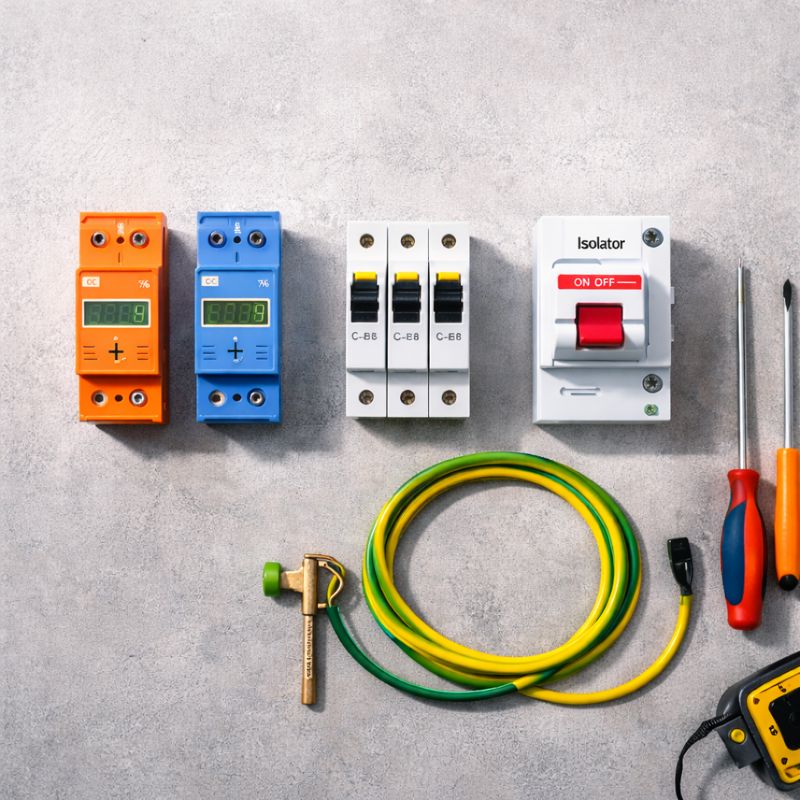
A solar protection kit is not a single device.
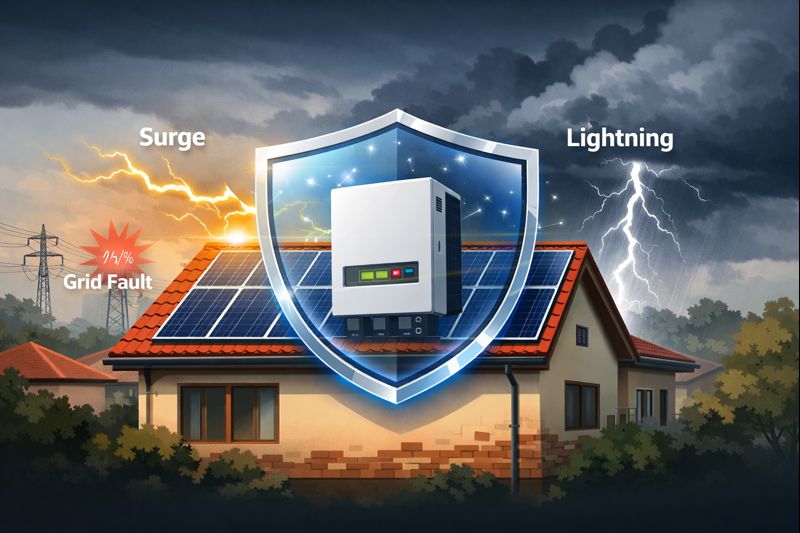
It is a group of components designed to stop dangerous electrical energy before it reaches your inverter, batteries, or panels.
Think of it as a shield, not an upgrade.
What a Solar Protection Kit Is Meant to Do
A proper protection kit is designed to:
- Absorb sudden voltage spikes
- Divert surge energy safely to earth
- Isolate faulty sections of the system
- Prevent damage during grid faults and lightning events
It does not improve output.
It does not increase power.
Its job is simple: prevent damage.
Protection vs Performance Components
This is where many people get confused.
Solar systems have:
- Performance components (panels, inverters, batteries)
- Protection components (SPDs, breakers, isolators, earthing)
Performance components generate and manage power.
Protection components keep them alive.
You can have the best inverter on the market.
Without protection, it is still vulnerable.
DC-Side Protection Components Explained
The DC side of your system runs from the solar panels to the inverter.
This side is always live during daylight.
That makes protection here critical.
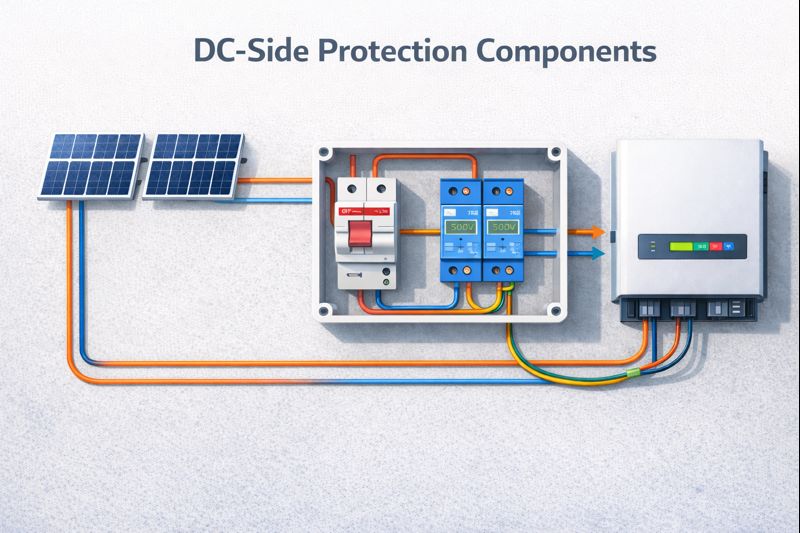
DC Surge Protection Devices (SPDs)
DC surge protection devices handle voltage spikes coming from:
- Lightning-induced surges
- Long panel cable runs
- Static buildup on metal frames
When a surge appears, the SPD:
- Reacts instantly
- Redirects excess voltage to earth
- Prevents it from entering the inverter
Without a DC SPD, the inverter takes the hit directly.
DC Isolators
DC isolators allow you to safely disconnect panels from the inverter.
They are essential for:
- Maintenance
- Emergency shutdowns
- Fault isolation
More importantly, good isolators prevent:
- Arcing
- Internal overheating
- Fire risk during faults
Cheap or missing isolators are a common problem in local installations.
String Fuses and Cable Protection
When multiple panel strings are connected, faults can occur.
String fuses:
- Stop reverse currents
- Prevent cable overheating
- Protect panels from internal damage
Proper cable sizing and routing also matter.
Thin cables heat up faster during surges.
Poor routing increases lightning risk.
Protection is not just devices — it is correct design.
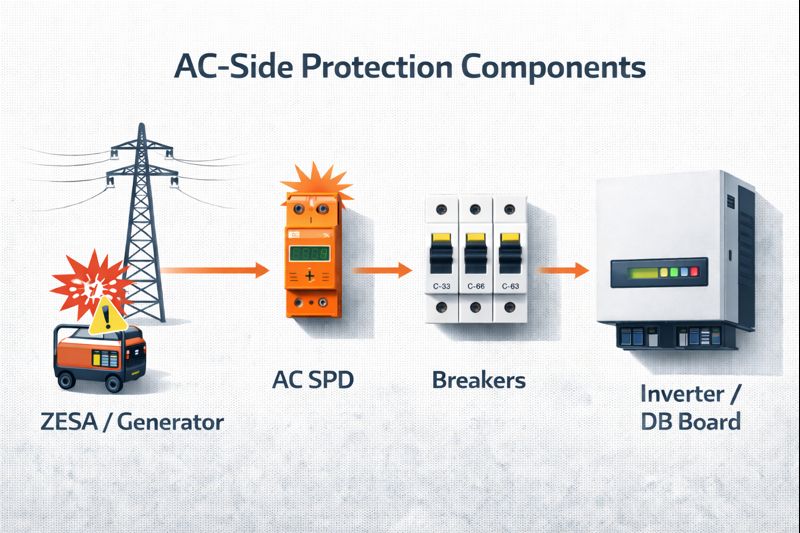
AC-Side Protection Components Explained
The AC side connects your inverter to:
- ZESA grid
- Generator
- Household or business loads
This is where most ZESA-related damage enters.
AC Surge Protection Devices
AC surge protection devices protect against:
- Grid reconnection spikes
- Transformer faults
- Nearby lightning strikes
They act as the first line of defence.
When ZESA power returns suddenly, the SPD absorbs the spike instead of your inverter.
This single device can save you thousands.
Circuit Breakers and Overcurrent Protection
Breakers do more than just trip when there’s too much load.
They protect against:
- Short circuits
- Fault currents
- Wiring damage
Correctly rated breakers ensure that faults are stopped early, not after damage spreads.
Earth Leakage and Human Safety
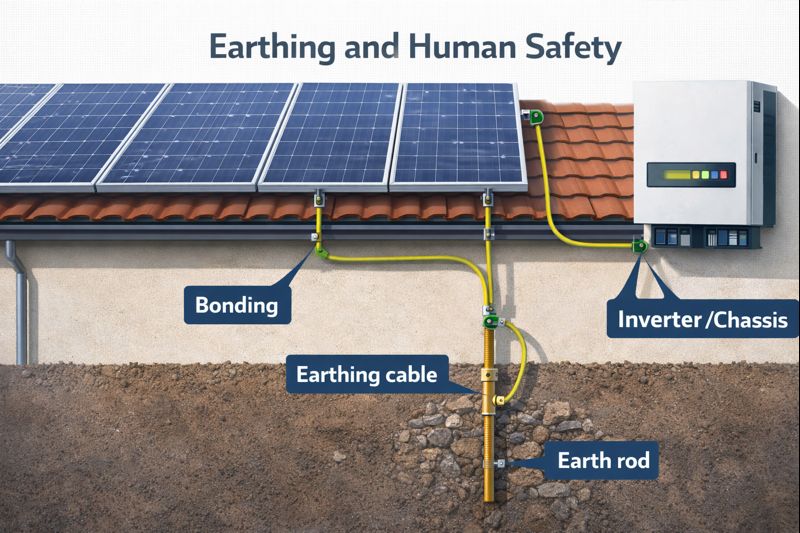
Some protection components exist to protect people, not just equipment.
Earth leakage devices:
- Detect current flowing where it shouldn’t
- Cut power instantly
- Prevent electric shock
In Zimbabwe, where earthing quality varies widely, this is critical.
Equipment protection and human safety must work together.
How Protection Kits Prevent Damage (Putting It All Together)
Now let’s connect everything.
Protection kits don’t stop storms.
They don’t stabilise ZESA power.
They control what reaches your solar equipment.
What Happens During a Surge When Protection Is Installed
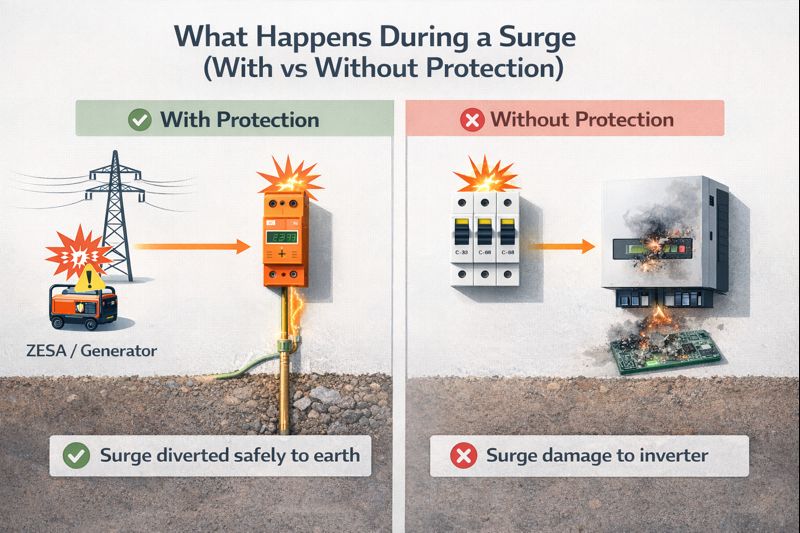
When a surge occurs, whether from lightning or ZESA, several things happen almost instantly:
- The surge appears on DC or AC lines
- Surge protection devices detect the abnormal voltage
- Excess energy is diverted safely to earth
- Sensitive electronics are isolated from the spike
All of this happens in milliseconds.
Your inverter never “sees” the surge.
Your batteries remain unaffected.
Your system continues operating normally.
The protection device may degrade over time — and that’s expected.
It sacrifices itself so your expensive components don’t have to.
What Happens Without Protection
Without protection, there is no buffer.
Here’s what typically happens:
- A surge enters through the grid or panel cables
- It travels straight into the inverter
- Internal components absorb the stress
- Damage accumulates silently
Sometimes the inverter fails immediately.
Other times:
- It works for weeks or months
- Then fails suddenly with no warning
At that point, the damage is already permanent.
Protection kits turn unpredictable damage into controlled, manageable risk.
Choosing the Right Protection Kit for Your Solar System
Not all systems need the same level of protection.
But every system needs protection.
Protection Needs by System Type
Different system designs face different risks.
- Off-grid systems
High lightning exposure, long DC cable runs, heavy battery reliance - Hybrid systems
Grid surges, reconnection spikes, generator interaction - Grid-tied systems
Continuous exposure to ZESA fluctuations
Each system type needs:
- DC protection
- AC protection
- Proper earthing
Skipping one creates a weak point.
Protection Needs by Application
Where the system is installed also matters.
- Homes
Smaller loads, but still vulnerable to grid and lightning damage - Farms and boreholes
Long cable runs, open terrain, higher lightning risk - Businesses
Downtime costs money, equipment sensitivity is higher
The bigger the investment, the higher the risk of ignoring protection.
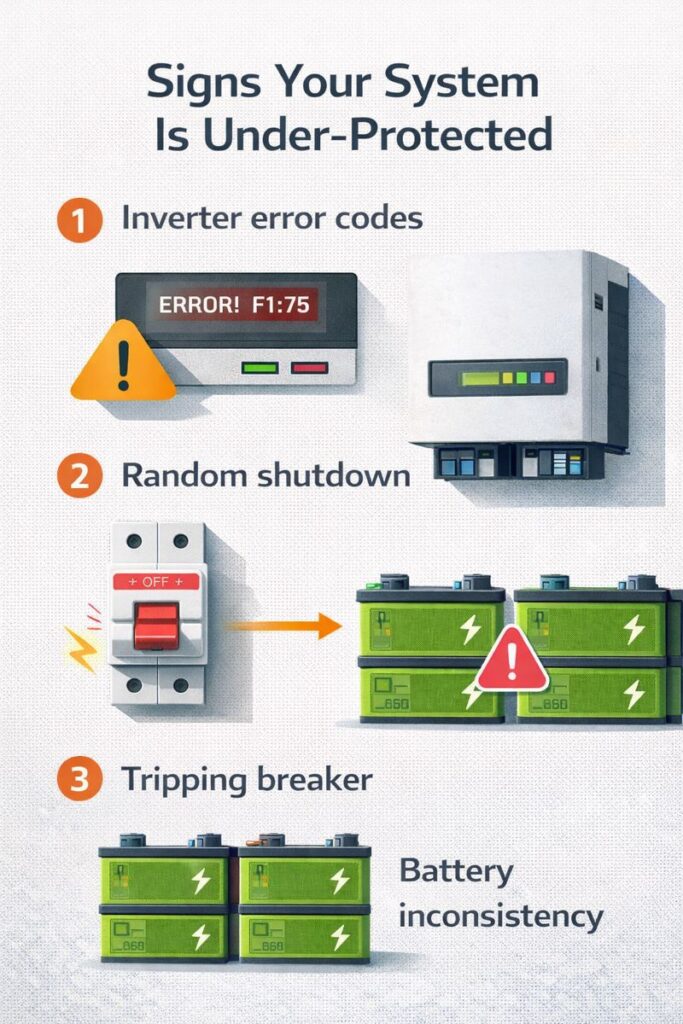
Signs Your Solar System May Already Be Under-Protected
Many systems are already at risk without the owner realising it.
Watch out for these warning signs:
- Inverter errors after power cuts
- Random system shutdowns
- Batteries behaving inconsistently
- Frequent breaker trips
- Reduced system performance with no clear cause
These are not “normal solar problems”.
They often point to electrical stress.
The longer it continues, the more expensive the repair becomes.
Protection kits are most effective before damage occurs.
But even adding protection later can stop further deterioration.
Installation Best Practices and Common Mistakes
Protection devices only work when they are installed correctly.
Poor installation can make even good protection useless.
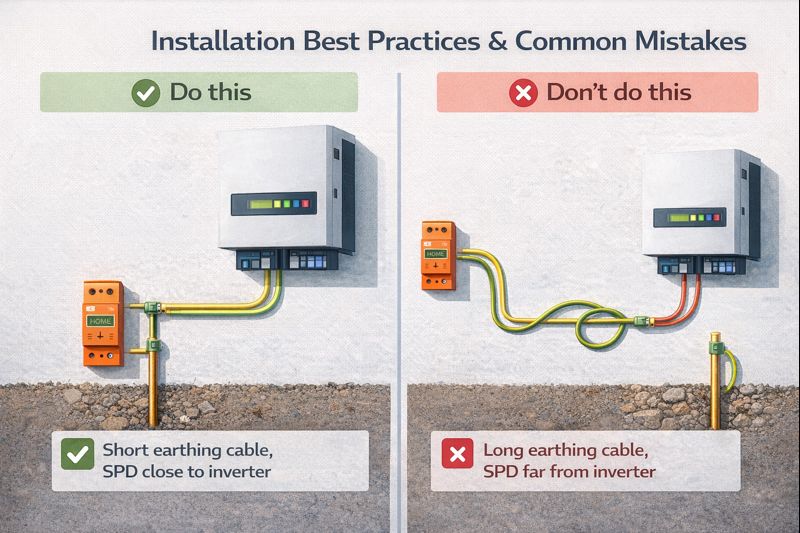
Here are best practices you should insist on.
- Install protection devices as close as possible to the inverter
- Keep DC and AC cables properly separated
- Use correct cable sizes for both current and surge handling
- Ensure all metal parts are properly bonded
Common mistakes I see in Zimbabwe include:
- Missing DC surge protection completely
- AC protection installed far from the inverter
- No proper earthing, or earth wires left floating
- Cheap isolators that overheat and fail
- Protection devices installed but never connected to earth
Protection without proper earthing does not work.
It’s like installing a lightning rod with nowhere for the energy to go.
Cost vs Risk: Why Protection Is Cheaper Than Repairs
Protection kits add a small cost to a solar installation.
But the alternative is far more expensive.
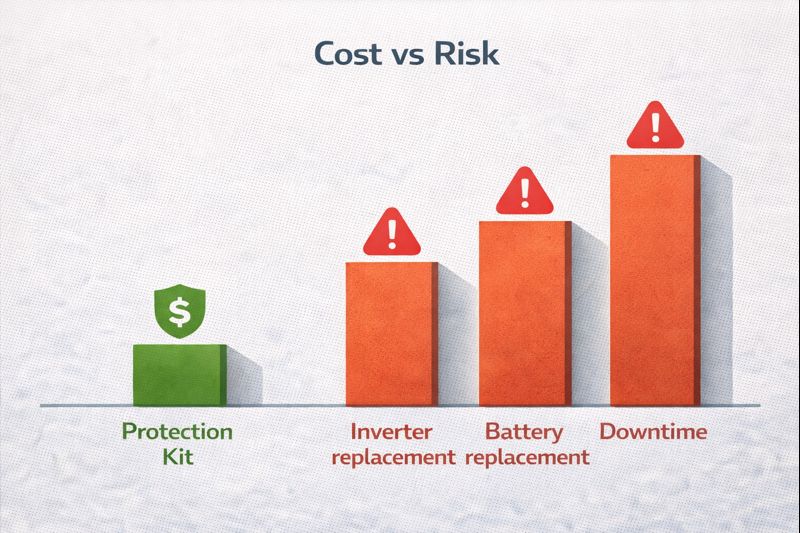
Consider the real costs:
- Replacing a damaged inverter
- Replacing lithium batteries with BMS failure
- Lost productivity during downtime
- Technician call-outs and diagnostics
In Zimbabwe, a single surge can wipe out years of savings.
Protection kits are a once-off investment that:
- Extends equipment life
- Reduces failures
- Protects warranties indirectly by preventing exclusions
Skipping protection is not saving money.
It is postponing a larger bill.
Final Thoughts: Protecting Your Solar Investment in Zimbabwe
Solar power makes sense in Zimbabwe.
But our electrical environment is harsh.
Power surges, lightning, and unstable grid supply are not exceptions.
They are normal conditions.
Solar protection kits exist because of this reality.
They:
- Take damage so your system doesn’t
- Turn unpredictable events into manageable risks
- Protect the most expensive parts of your system
If you want your solar system to last, protection is not optional.
It is part of doing solar properly.
Frequently Asked Questions
Can a solar system work without a protection kit?
Yes, it can work. But it is exposed to serious risk every day.
Do small solar systems need protection?
Yes. Small systems often use the same sensitive electronics as large ones.
How often should protection devices be replaced?
Surge devices degrade over time. They should be checked during routine maintenance.
Is lightning protection mandatory in Zimbabwe?
Not always by law, but it is strongly recommended for safety and equipment longevity.
Final Advice: Don’t Let One Surge Undo Your Entire Solar Investment
If there’s one thing I want you to take away from this guide, it’s this:
Solar systems don’t usually fail because they are badly made.
They fail because they are left unprotected in a very harsh electrical environment.
In Zimbabwe, power surges, lightning, and unstable ZESA supply are not rare events. They are part of daily life.
That means every solar system without proper protection is:
- Exposed every time power goes off and comes back
- At risk every thunderstorm
- Slowly degrading even when it appears to be working fine
Protection kits are not an optional extra.
They are part of a complete solar system.
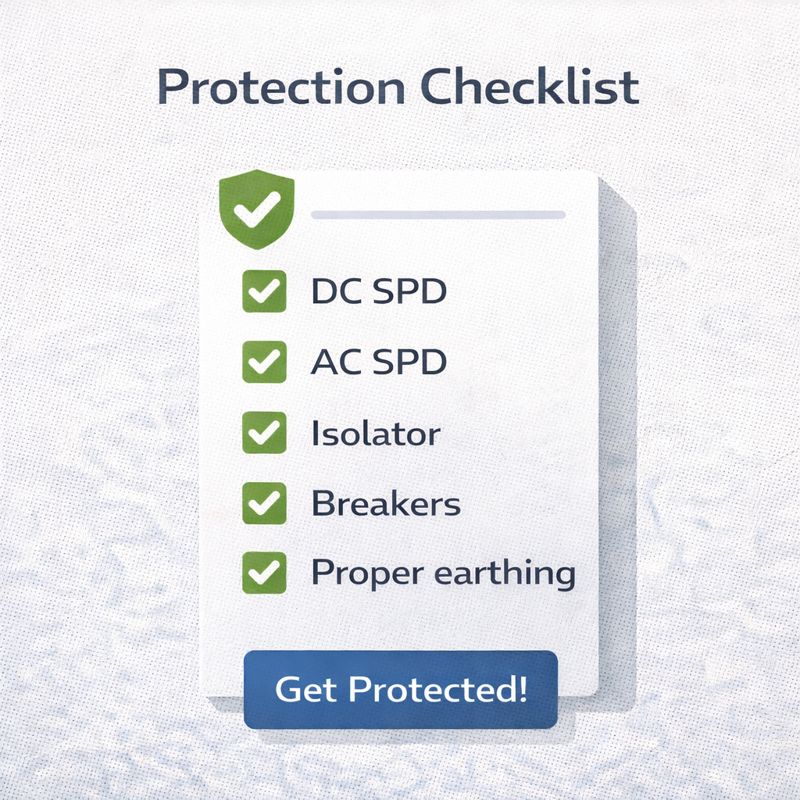
If your system already has protection, make sure:
- It covers both DC and AC sides
- It is properly earthed
- It was installed correctly, not just added for appearance
If your system does not have protection, the risk is not theoretical.
It is real — and it grows with time.
Before the next power cut.
Before the next storm.
Before the next unexplained inverter fault.
Have your solar system checked for proper protection.
A simple assessment can tell you:
- Whether your system is exposed
- What level of protection you actually need
- How to prevent costly damage before it happens
Protect the system you’ve already paid for.
That is always cheaper than replacing it.