Hybrid Solar Systems in Zimbabwe: How Batteries, ZESA & Generators Work Together
1. Introduction: Why Hybrid Solar Systems Are Gaining Popularity in Zimbabwe
If you live in Zimbabwe, you already know one thing: power supply is unpredictable.
ZESA can be available today and gone tomorrow. Load shedding schedules change. Fuel for generators is expensive and not always easy to find. Relying on a single power source no longer makes sense for most homes.
This is where hybrid solar systems come in.
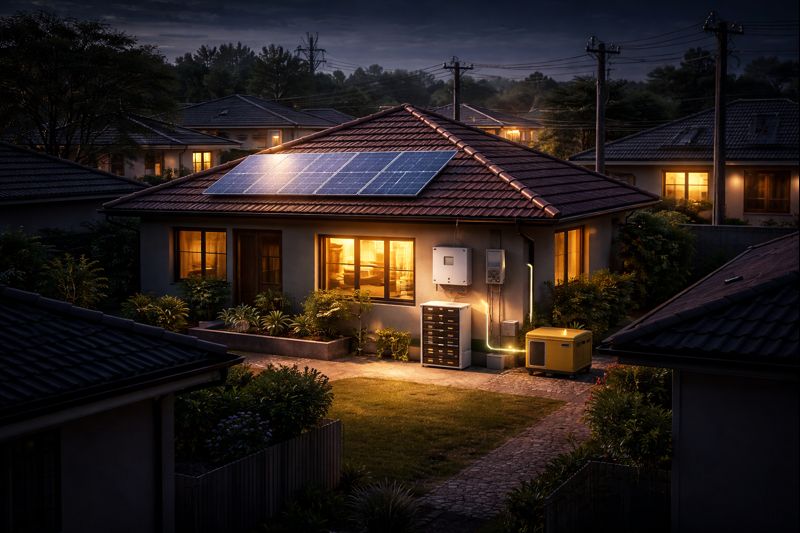
A hybrid system allows your home to use solar power, batteries, ZESA, and even a generator together. The system automatically chooses the best power source at any given time. You get electricity when the sun is shining, when the grid is available, and even during long blackouts.
Homeowners are choosing hybrid systems because they want:
- Fewer power interruptions
- Lower generator fuel costs
- Better use of solar and batteries
- A system that adapts to Zimbabwe’s power challenges
If you are planning to go solar or upgrade an existing setup, understanding how hybrid systems work will help you make better decisions and avoid costly mistakes.
Table of Contents
2. What Is a Hybrid Solar System? (Beginner Explanation)
A hybrid solar system is a power setup that combines more than one energy source and manages them intelligently.
Instead of choosing between solar, ZESA, or a generator, a hybrid system allows all of them to work together.
You do not need to manually switch power sources. The system does it for you.
2.1 Simple Definition
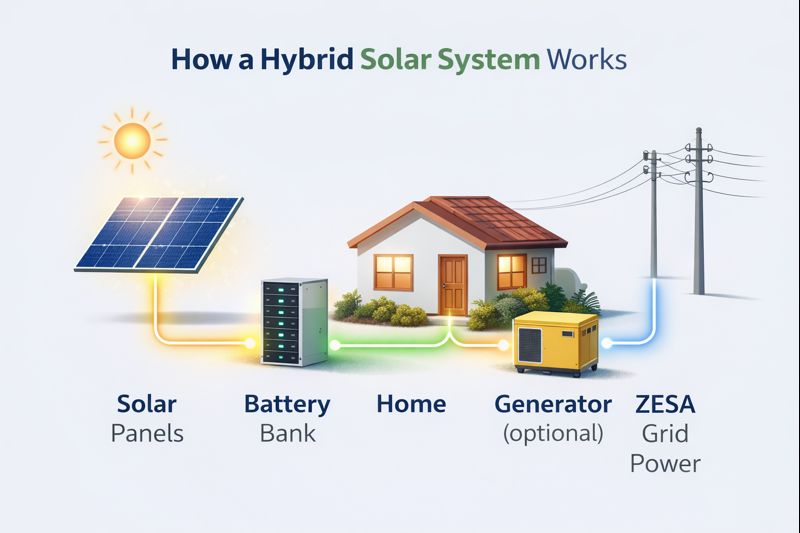
A hybrid solar system uses:
- Solar panels to generate power
- Batteries to store energy
- ZESA as a backup or support source
- A generator as an emergency backup
The goal is simple: keep your home powered at all times while reducing fuel and electricity costs.
Think of it as a smart energy manager for your house.
2.2 Core Power Sources in a Hybrid System
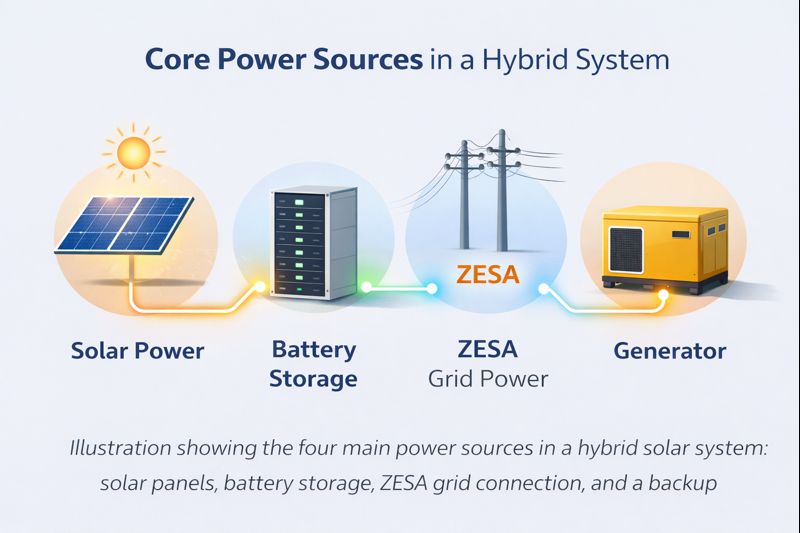
A typical hybrid solar system in a Zimbabwean home works with four main power sources:
- Solar power
This is your primary source during the day. Solar panels produce electricity when the sun is available. - Battery storage
Batteries store excess solar energy and supply power when there is no sun or when ZESA goes off. - ZESA grid power
The grid can either support the system or act as a backup, depending on how the system is configured. - Generator (optional but common)
The generator kicks in during long outages or extended bad weather when batteries run low.
Not every home uses all four, but hybrid systems give you the flexibility to include them when needed.
3. Key Components of a Hybrid Solar System
To understand how a hybrid system works, you need to understand its main components and what each one does.
3.1 Solar Panels
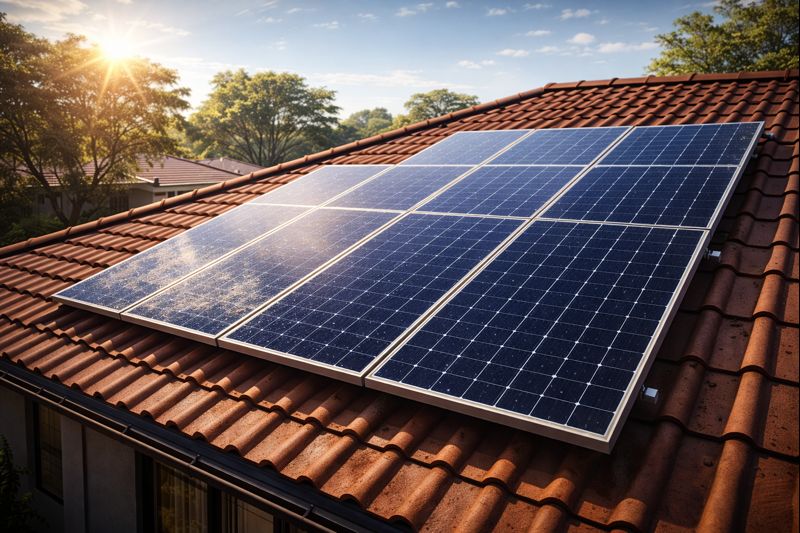
Solar panels convert sunlight into electricity.
In a hybrid setup, panels usually:
- Power household appliances during the day
- Charge batteries at the same time
- Reduce reliance on ZESA and generators
Panel size and quantity depend on your household’s energy needs and roof space.
3.2 Hybrid Inverter
The hybrid inverter is the most important component in the system.
It:
- Converts solar power into usable electricity
- Decides whether to use solar, batteries, ZESA, or a generator
- Manages battery charging and discharging
- Switches power sources automatically without you noticing
This is what makes the system “hybrid.” Without a hybrid inverter, the system cannot intelligently combine multiple power sources.
3.3 Battery Bank
Batteries store energy for use when solar power is not available.
In a hybrid system, batteries:
- Supply power during load shedding
- Reduce generator runtime
- Smooth out power changes when switching sources
Battery type and capacity matter a lot. Poor battery sizing leads to frequent outages or heavy generator use.
3.4 ZESA Grid Connection
ZESA power still plays an important role.
In a hybrid setup, the grid can:
- Top up batteries when solar is insufficient
- Power heavy loads when allowed by settings
- Act as a backup when batteries are depleted
The system can prioritize or limit ZESA usage depending on your preferences.
3.5 Generator Integration
Many Zimbabwean homes already own generators.
A hybrid system can integrate a generator so that:
- It only runs when batteries reach a low level
- It supplies power directly to the home
- It helps recharge batteries during long outages
This reduces fuel consumption and wear on the generator while keeping power available when everything else fails.
4. How a Hybrid Solar System Works (Real Zimbabwean Scenarios)
To really understand a hybrid solar system, it helps to see how it behaves in everyday situations common in Zimbabwe.
The system constantly monitors available power sources and switches automatically. You do not need to flip switches or reset anything.
4.1 Daytime Operation (Good Sun, ZESA Available)
This is the most efficient operating mode.
During the day:
- Solar panels power your household loads first
- Excess solar energy charges the batteries
- ZESA remains on standby or supports heavy loads if allowed
In this situation, you use very little grid power. Your electricity bill drops, and your batteries stay healthy.
4.2 Load Shedding or Sudden ZESA Outage
When ZESA goes off, the system reacts instantly.
What happens next:
- The inverter switches to solar and batteries automatically
- You experience little or no interruption
- Essential appliances continue running
Lights, TVs, Wi-Fi, and even fridges keep working without you noticing the change.
4.3 Night-Time Power Supply
At night, solar panels stop producing power.
The system then:
- Draws power from the batteries
- Manages loads based on battery capacity
- Limits heavy appliances if needed
If batteries are sized correctly, your home remains powered throughout the night without touching ZESA or the generator.
4.4 Extended Blackouts or Bad Weather
During long power cuts or several cloudy days, batteries can eventually run low.
When that happens:
- The system can switch to ZESA if it returns
- Or start the generator if configured to do so
- Or allow manual intervention if preferred
This layered approach ensures you always have a fallback option.
5. Power Source Priority Settings Explained
One of the biggest advantages of hybrid systems is control.
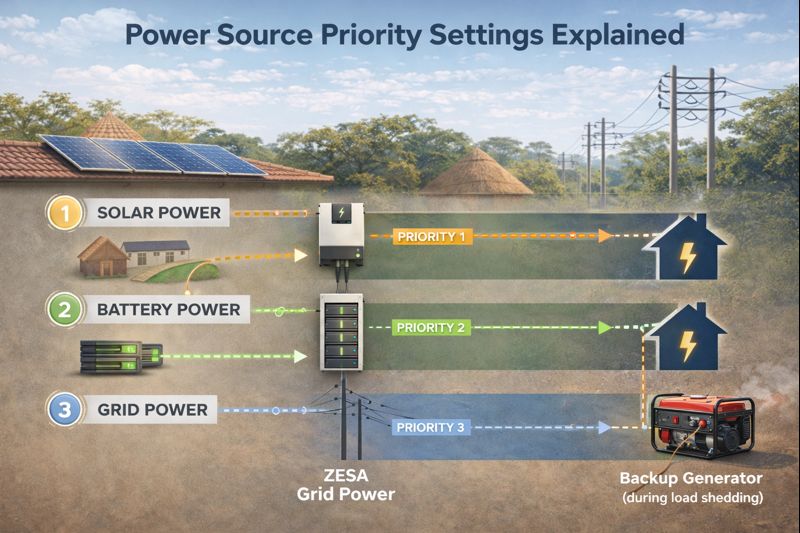
You decide how the system uses solar, batteries, ZESA, and the generator.
5.1 Common Priority Modes
Hybrid inverters usually offer several priority options, such as:
- Solar → Battery → Grid
Solar powers the home first, batteries support when solar is low, and ZESA is used last. - Solar → Grid → Battery
Solar is used first, ZESA supports next, and batteries are preserved for outages. - Solar → Battery → Generator
Ideal where ZESA is unreliable or unavailable for long periods.
Each mode suits a different household lifestyle.
5.2 Choosing the Right Priority for Zimbabwean Conditions
In Zimbabwe, priority settings should consider:
- High fuel prices
- Frequent load shedding
- Battery replacement costs
Most homeowners aim to:
- Maximise solar usage
- Protect battery lifespan
- Minimise generator runtime
A well-configured system saves money while maintaining reliability.
6. Advantages of Hybrid Solar Systems for Zimbabwean Homes
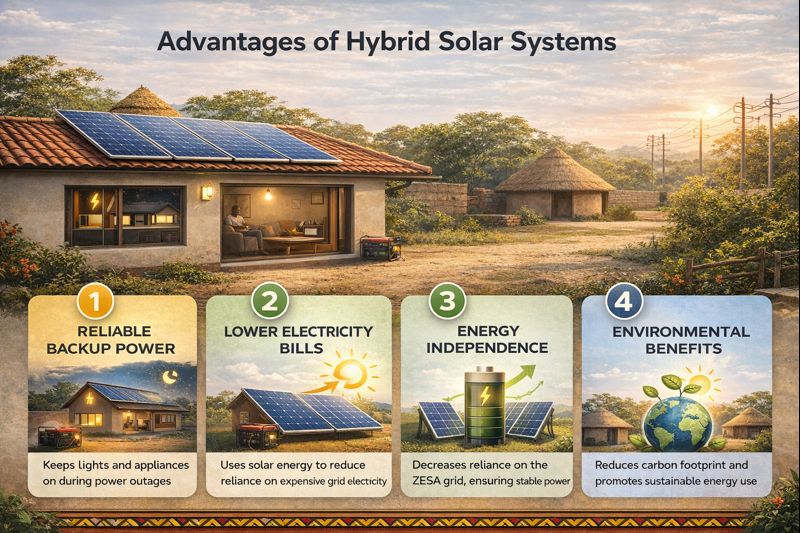
Hybrid solar systems are not just about convenience. They offer practical, long-term benefits.
6.1 Improved Power Reliability
With multiple power sources:
- Power interruptions are rare
- Switching happens automatically
- Your home stays functional during outages
This is especially important for households working from home or running small businesses.
6.2 Lower Generator Fuel Costs
Generators become a backup, not the main source.
This means:
- Less fuel consumption
- Fewer generator servicing costs
- Reduced noise and fumes
Over time, fuel savings alone justify the hybrid approach.
6.3 Better Battery Protection
Hybrid systems manage batteries intelligently.
They:
- Prevent deep discharges
- Avoid unnecessary cycling
- Extend battery lifespan
This reduces replacement frequency and long-term costs.
6.4 Flexibility and Scalability
Hybrid systems grow with your needs.
You can:
- Add more panels later
- Increase battery capacity
- Integrate new technology as it becomes available
This flexibility makes hybrid solar systems a future-proof solution for Zimbabwean homes.
7. Common Misconceptions About Hybrid Solar Systems
Hybrid systems are popular, but they are also misunderstood. Clearing up these misconceptions helps you set realistic expectations.
7.1 “Hybrid Systems Eliminate ZESA Completely”
A hybrid system does not automatically remove ZESA from your home.
Instead:
- ZESA becomes a support or backup source
- You choose when and how it is used
- The system reduces reliance on the grid but does not forbid it
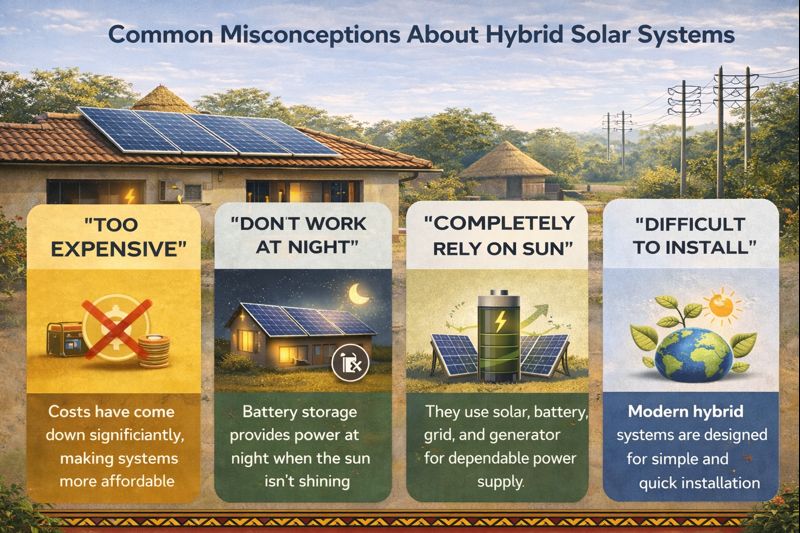
This flexibility is what makes hybrid systems practical in Zimbabwe.
7.2 “Hybrid Solar Is Only for Large or Expensive Homes”
Hybrid systems are not only for large houses.
They can work well for:
- Small to medium households
- Homes with essential loads only
- Families upgrading gradually over time
You can start small and expand later.
7.3 “Generators Become Useless in Hybrid Systems”
Generators still have a role.
In reality:
- They run less often
- They operate more efficiently
- They only start when genuinely needed
Hybrid systems reduce generator dependence, not eliminate it.
8. Hybrid vs Off-Grid vs Grid-Tied Systems (Practical Comparison)
Choosing the right solar system depends on your location, budget, and power needs.
Here is how the main options compare in a Zimbabwean context.
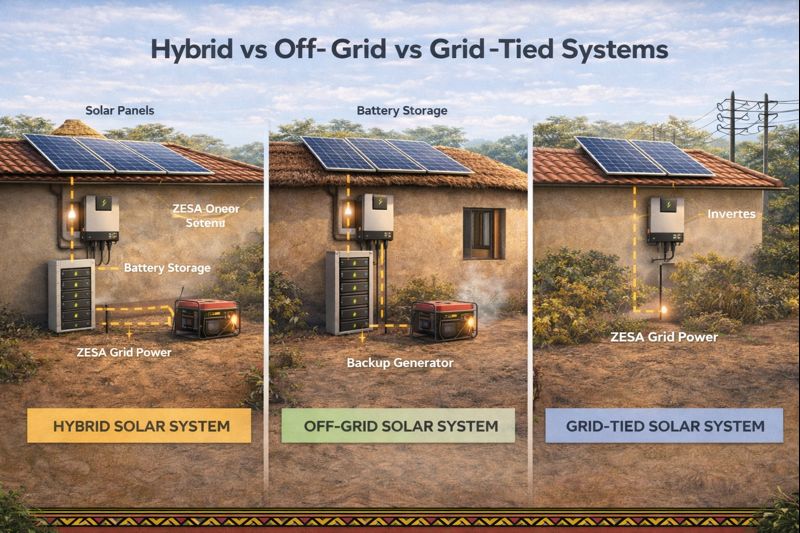
8.1 Performance During Load Shedding
- Hybrid systems
Continue running using solar, batteries, and generator support. - Off-grid systems
Depend entirely on solar and batteries. Long cloudy periods can cause outages. - Grid-tied systems
Shut down completely when ZESA goes off.
8.2 Upfront Cost Comparison
- Grid-tied systems
Lowest upfront cost but least reliable. - Off-grid systems
Higher cost due to larger batteries and panels. - Hybrid systems
Moderate to high upfront cost with better long-term value.
8.3 Maintenance and Complexity
- Hybrid systems have more components
- Proper installation is essential
- Monitoring helps detect issues early
Despite the complexity, most homeowners find the reliability worth it.
8.4 Best Use Cases in Zimbabwe
Hybrid systems work best for:
- Homes with frequent outages
- Areas with unstable grid supply
- Households already using generators
9. How to Size a Hybrid Solar System Correctly
Sizing determines how well your system performs.
Undersizing leads to frustration. Oversizing wastes money.
9.1 Load Assessment Basics
Start by listing:
- Essential appliances
- Their power ratings
- How long they run daily
Focus on what must stay on during outages.
9.2 Battery Capacity Planning
Battery size depends on:
- Desired backup hours
- Night-time consumption
- Generator availability
Most Zimbabwean homes aim for overnight coverage at minimum.
9.3 Solar Panel Sizing for Hybrid Systems
Panels should:
- Power daytime loads
- Recharge batteries fully
- Handle seasonal sun variations
More panels mean faster charging and less grid or generator use.
10. Common Design Mistakes to Avoid
Many hybrid solar problems come from poor design, not bad equipment.
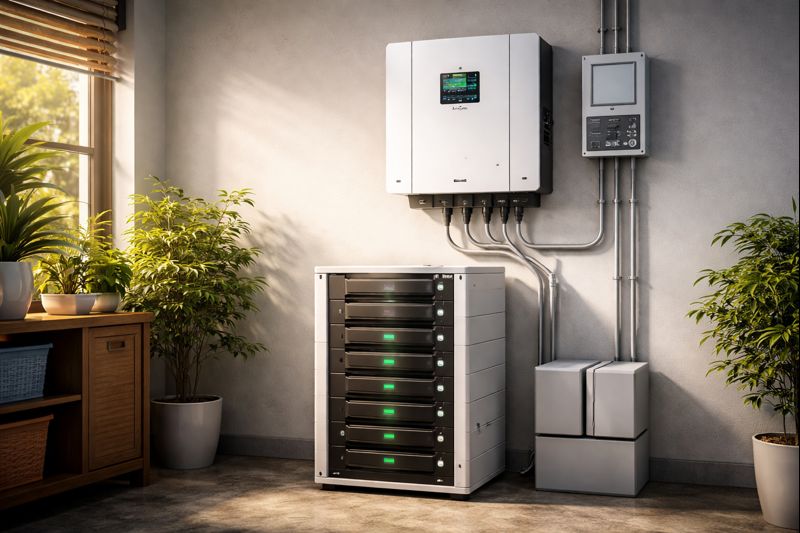
Knowing these mistakes helps you avoid unnecessary costs and frustration.
- Undersized batteries
Batteries that are too small drain quickly and force frequent generator use. - Overloading the inverter
Running appliances beyond inverter capacity causes shutdowns and long-term damage. - Poor generator integration
Incorrect wiring or settings can prevent the generator from starting when needed. - Ignoring surge protection
Power surges damage inverters, batteries, and appliances, especially during grid switching. - No load prioritisation
Mixing essential and non-essential loads reduces backup time during outages.
Good design ensures the system works smoothly in real-life Zimbabwean conditions.
11. Is a Hybrid Solar System Worth It for Your Home?
Hybrid systems are powerful, but they are not for everyone.
You should consider your usage patterns, location, and long-term plans.
11.1 Ideal Candidates for Hybrid Solar
A hybrid system makes sense if:
- You experience frequent or unpredictable power cuts
- You already own a generator and want to reduce fuel costs
- You want flexibility to expand your system later
- You rely on electricity for work, security, or home businesses
For many Zimbabwean homes, hybrid systems offer the best balance between reliability and cost.
11.2 When Hybrid May Not Be Necessary
Hybrid systems may be unnecessary if:
- Your electricity usage is very low
- ZESA supply in your area is stable
- You only need basic lighting and phone charging
In these cases, simpler systems may be more cost-effective.
12. Installation, Safety, and Protection Considerations
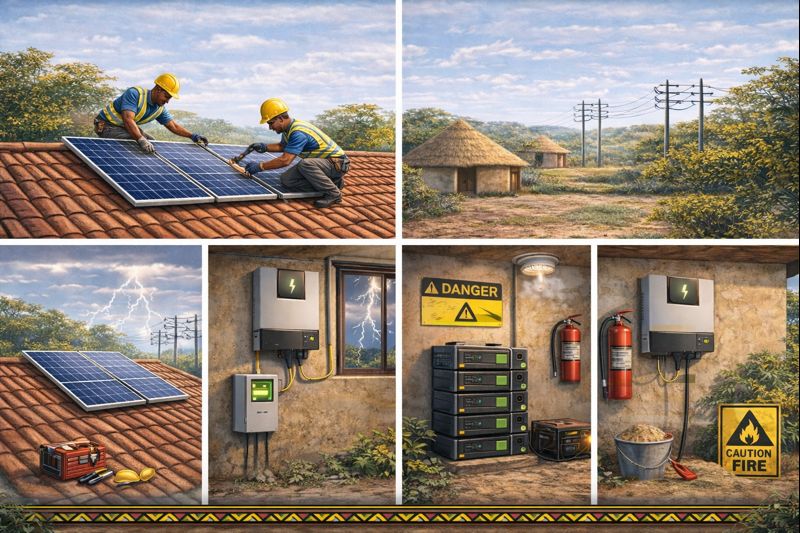
A hybrid system is only as good as its installation.
Poor workmanship leads to failures, safety risks, and shortened equipment lifespan.
Important considerations include:
- Proper cable sizing and routing
- Correct earthing and grounding
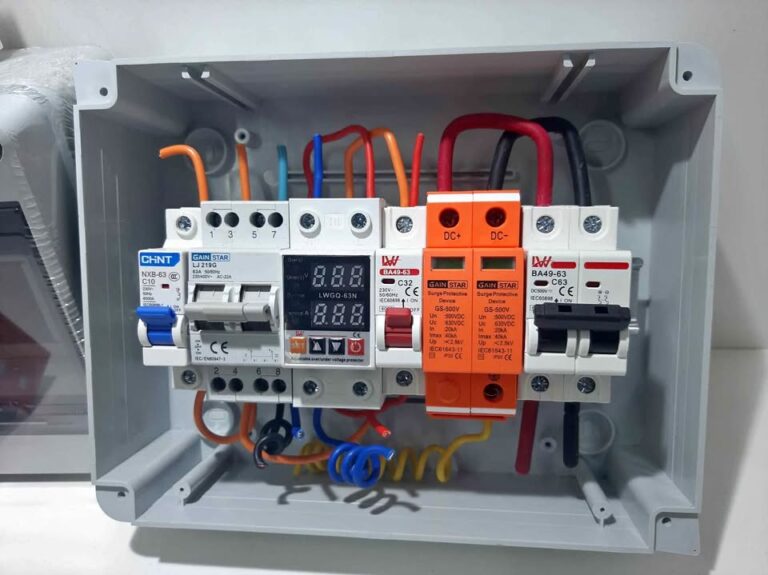
- Use of protection devices for AC and DC circuits
- Secure mounting of panels and equipment
Professional installation ensures:
- Compliance with safety standards
- Reliable performance
- Protection against electrical faults and lightning
Cutting corners during installation often leads to higher costs later.
13. Maintenance Tips for Long-Term Performance
A hybrid solar system does not need daily attention, but it does need basic care.
Simple maintenance keeps the system reliable and extends the life of your equipment.
Key areas to focus on:
- Solar panels
Clean panels regularly, especially during dry and dusty months. Dust reduces charging efficiency. - Batteries
Monitor battery performance through the inverter display or monitoring app. Watch for reduced backup time. - Hybrid inverter
Ensure ventilation openings remain clear. Heat buildup shortens inverter lifespan. - Generator
Run the generator periodically, even if rarely used. This prevents starting issues during emergencies. - System monitoring
Check system logs or alerts to catch faults early before they become major problems.
A well-maintained system performs better during load shedding and costs less to own over time.
14. Final Thoughts: Making Hybrid Solar Work for You
Hybrid solar systems work because they match Zimbabwe’s reality.
They do not depend on perfect sunshine or a reliable grid. They adapt.
If you want:
- Reliable power during outages
- Lower fuel and electricity costs
- Flexibility to grow your system over time
Then a hybrid solar system is worth serious consideration.
The key is not just buying good equipment, but designing the system correctly for your home, usage habits, and future needs.
When done right, hybrid solar becomes a long-term energy solution, not a temporary fix.
Final Advice and What to Do Next
If there is one thing to remember, it is this: a hybrid solar system only works well when it is designed properly.
Do not choose a hybrid system just because it sounds advanced. Choose it because it fits your lifestyle, your power usage, and Zimbabwe’s power realities. Focus on:
- Correct system sizing
- Quality components
- Proper installation and protection
- Realistic expectations about batteries, ZESA, and generators
A well-designed hybrid system gives you peace of mind. Your lights stay on during load shedding. Your generator runs less. Your batteries last longer. Over time, the system pays for itself through reliability and reduced fuel and electricity costs.
If you are planning to install solar for the first time, or you are upgrading an existing setup, get professional advice before buying equipment. The right guidance upfront saves you money and prevents frustration later.
Ready to take the next step?
Speak to a solar expert who understands Zimbabwean conditions and can design a hybrid system tailored to your home or business. A properly planned system will serve you reliably for years, not just during the next power cut.
Reliable power is not about luck. It is about making informed choices.