Common Dongyin Solar Pump Installation Mistakes in Zimbabwe and How to Avoid Them
Why Proper Installation Matters More Than the Pump Brand
If you’re using a Dongyin solar pump in Zimbabwe, the pump itself is rarely the problem.
Most performance issues I see come from how the pump was installed, not the brand or model. A well-installed Dongyin pump can run reliably for years. A poorly installed one can fail within months.
Solar pumping is not the same as running a generator or connecting ZESA power. It depends entirely on correct sizing, wiring, and placement. Small mistakes add up fast.
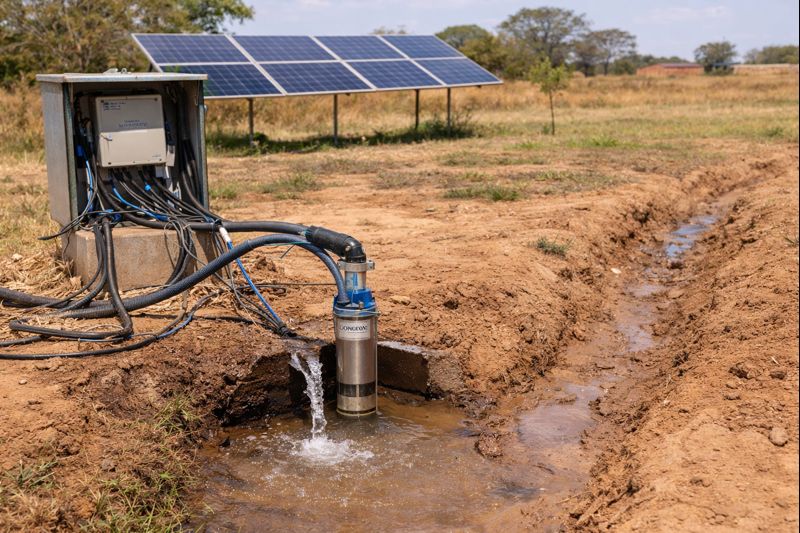
This guide is for you if:
- You already have a Dongyin solar pump and it’s underperforming
- You’re planning to install one for a borehole or water supply
- You want to avoid costly trial-and-error fixes
I’ll walk you through the most common installation mistakes I see in Zimbabwe, starting with the basics and moving into more technical issues. I’ll also show you exactly how to avoid them.
Table of Contents
Mistake #1: Choosing the Wrong Dongyin Pump Model for the Borehole
This is the most common and most expensive mistake.
Many people choose a pump based on borehole depth alone. That approach almost always leads to problems.
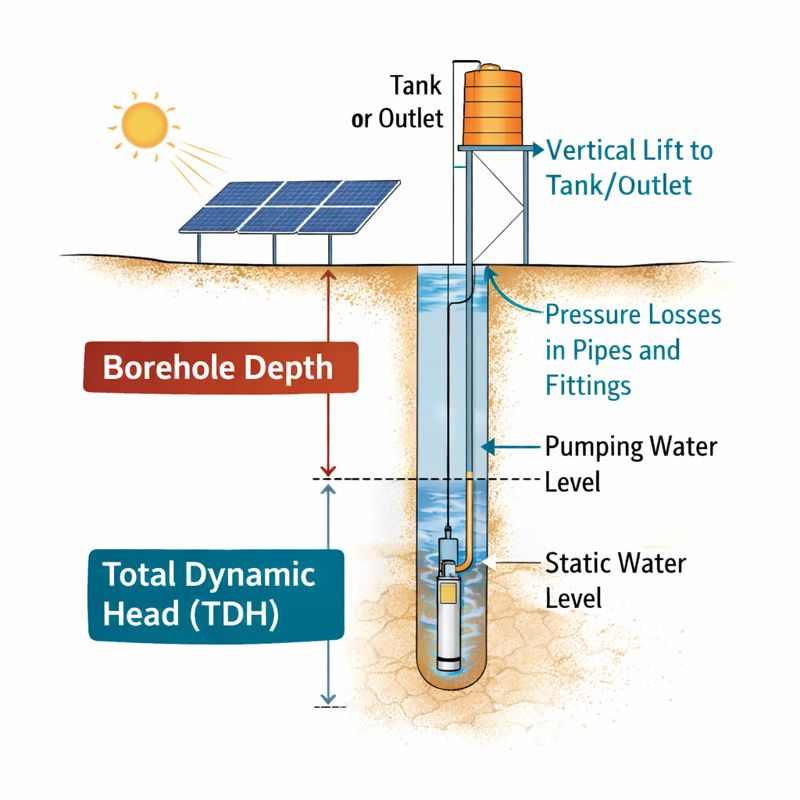
Confusing Borehole Depth with Total Dynamic Head (TDH)
Borehole depth is not the same as the work your pump must do.
Total Dynamic Head (TDH) includes:
- Static water level (where water sits naturally)
- Pumping water level (where it drops to when pumping)
- Vertical lift to the tank or outlet
- Pressure losses in pipes and fittings
In Zimbabwe, especially in granite-rich areas, water levels can drop significantly during the dry season. If your pump was sized only for the drilling depth, it may struggle or shut down when water levels change.
Symptoms of this mistake include:
- Low water output even in full sun
- Pump cutting out midday
- Pump running but delivering very little water
How to avoid it
- Always base pump selection on tested pumping water level, not just borehole depth
- Factor in tank height and pipe distance
- Use Dongyin pump performance curves, not guesswork
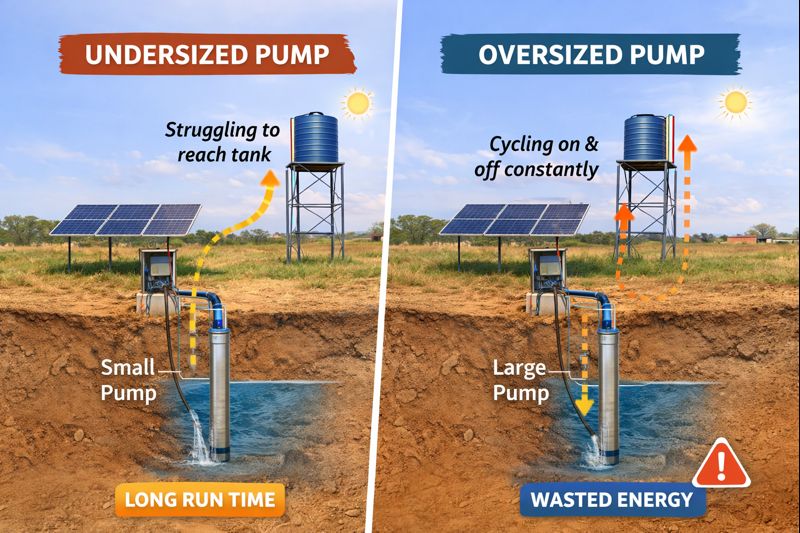
Undersizing or Oversizing the Pump
Bigger is not always better.
An undersized pump:
- Struggles to reach the tank
- Runs for long hours under stress
- Fails earlier than expected
An oversized pump:
- Requires more solar panels than installed
- Cycles on and off frequently
- Wastes energy and shortens controller life
Both problems are common on farms and homes where installers rush the job or reuse old calculations.
How to avoid it
- Match pump capacity to actual daily water demand
- Consider usage patterns (household vs irrigation vs livestock)
- Choose a pump that operates efficiently within your expected head range
Mistake #2: Incorrect Solar Panel Sizing for the Pump
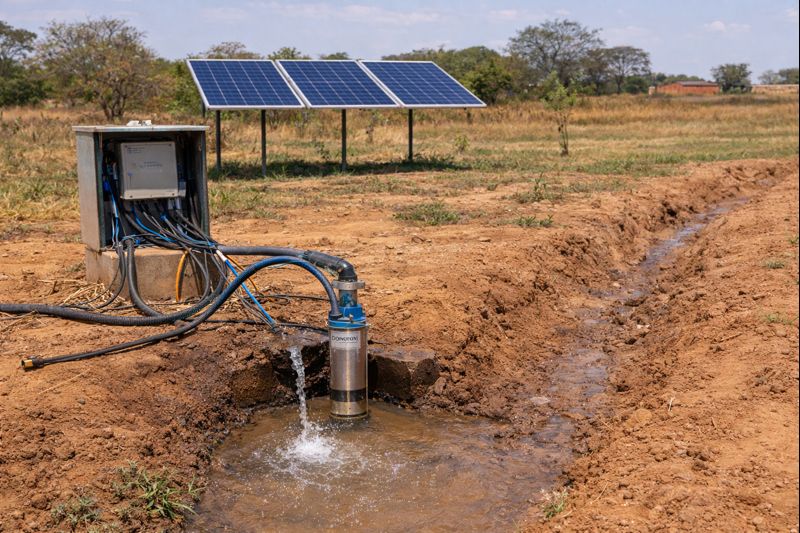
Even the correct pump will fail if the solar array is wrong.
Dongyin solar pumps are DC-driven. That means they rely directly on solar panel voltage and current. If the panels don’t meet requirements, the system becomes unstable.
Using Too Few Solar Panels
This mistake shows up immediately.
Common signs include:
- Pump starts late in the morning
- Pump stops whenever clouds pass
- Low pressure despite strong sunlight
In Zimbabwe, dust, heat, and seasonal sun angles already reduce panel output. Running a pump on the bare minimum panel count leaves no safety margin.
How to avoid it
- Size panels for real-world conditions, not brochure ratings
- Allow extra capacity for dusty panels and heat losses
- Ensure startup voltage is always reached early in the day
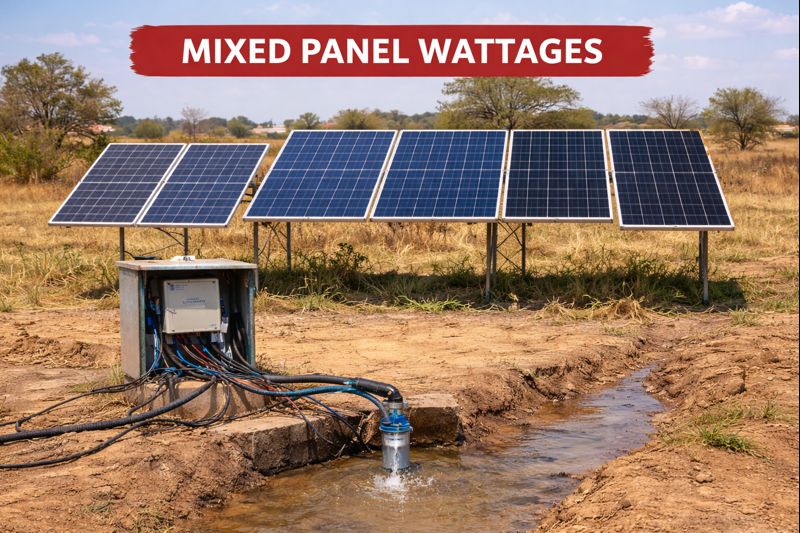
Mixing Panel Wattages or Brands
Mixing panels looks harmless, but it causes long-term issues.
Different panels produce different voltages and currents. When mixed:
- The lowest-performing panel limits the entire string
- The controller works harder to stabilise power
- Efficiency drops over time
I often see this where old panels are reused or added later without recalculating the system.
How to avoid it
- Use identical panel wattage and specifications
- Avoid mixing brands unless electrical specs fully match
- If expanding later, redesign the array instead of patching it
Mistake #3: Poor Solar Array Placement and Orientation
You can have the right pump and the right panels and still get poor results if the panels are badly positioned.
Solar pumping depends on consistent, uninterrupted sunlight. Small placement errors reduce output more than most people expect.
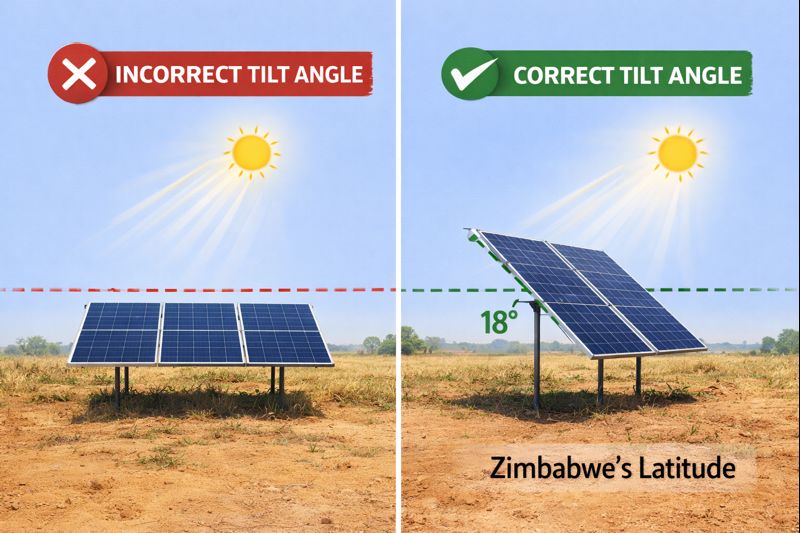
Wrong Tilt Angle for Zimbabwe’s Latitude
Zimbabwe sits in a high-sun region, but that doesn’t mean “flat” panels work best.
Panels installed too flat:
- Collect more dust
- Lose output in winter
- Drain water poorly after rain
Panels installed too steep:
- Lose midday performance
- Reduce total daily energy
Many installations use guesswork instead of proper tilt angles.
How to avoid it
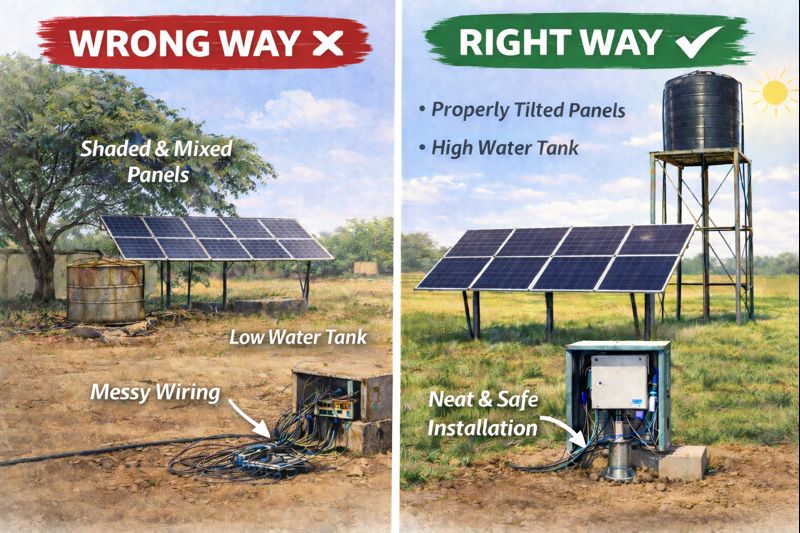
- Set panel tilt close to Zimbabwe’s latitude for year-round performance
- Adjust slightly steeper if winter water demand is higher
- Ensure panels face true north, not “approximately north”
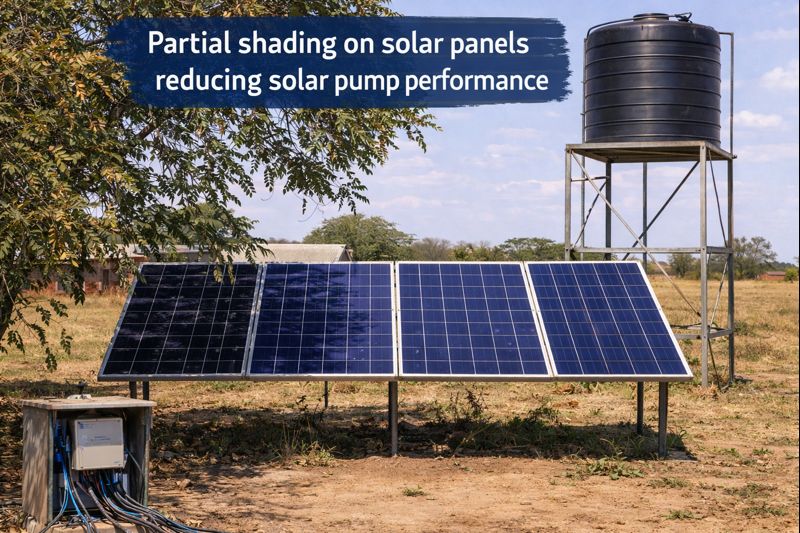
Shading Issues That Kill Performance
This is one of the most underestimated problems.
Solar pumps are extremely sensitive to shading. Even partial shade on one panel can drop the output of the entire array.
Common shading sources in Zimbabwe include:
- Trees that grow over time
- Nearby buildings or boundary walls
- Water tanks casting shadows in the afternoon
Dust buildup makes this worse by reducing usable light even further.
How to avoid it
- Check for shading from sunrise to sunset
- Allow for future tree growth, not just current height
- Keep panels clean, especially during the dry season
Mistake #4: Incorrect Cable Selection and Wiring Practices
DC solar pumps pull high current. Poor wiring quietly damages performance every day.
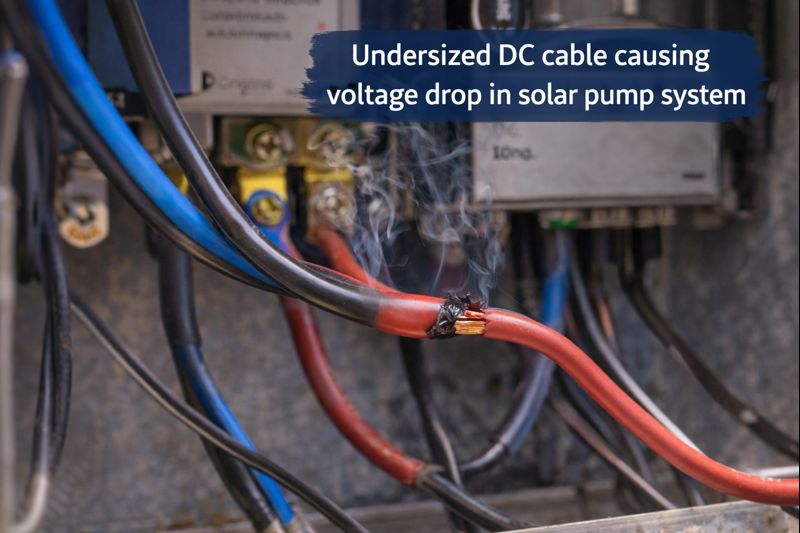
This mistake doesn’t always cause immediate failure, which makes it dangerous.
Using Undersized DC Cables
Thin cables look fine but create resistance.
That resistance causes:
- Voltage drop before power reaches the pump
- Heat buildup inside the cable, a fire hazard
- Reduced pump speed and water output
In long borehole installations, this problem becomes severe.
How to avoid it
- Size cables based on distance and current, not availability
- Use proper DC-rated solar cable, not house wiring
- Keep voltage drop within safe limits
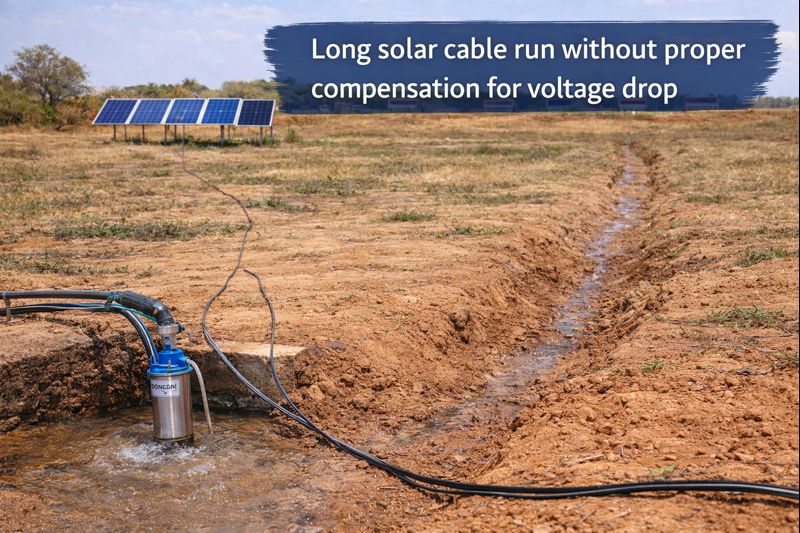
Long Cable Runs Without Compensation
Many boreholes sit far from where panels are mounted.
Long cable runs without adjustment cause:
- Hard pump starting
- Controller faults
- Intermittent shutdowns
Installers sometimes compensate incorrectly by oversizing the pump instead of fixing wiring losses.
How to avoid it
- Increase cable thickness for longer distances
- Minimise cable length where possible
- Recalculate voltage at the pump, not just at the panels
Mistake #5: Skipping Essential Pump Protection Components
This mistake often shows up months later, after damage is already done.
Zimbabwe’s environment is tough on equipment. Solar pumps need protection to survive long-term.
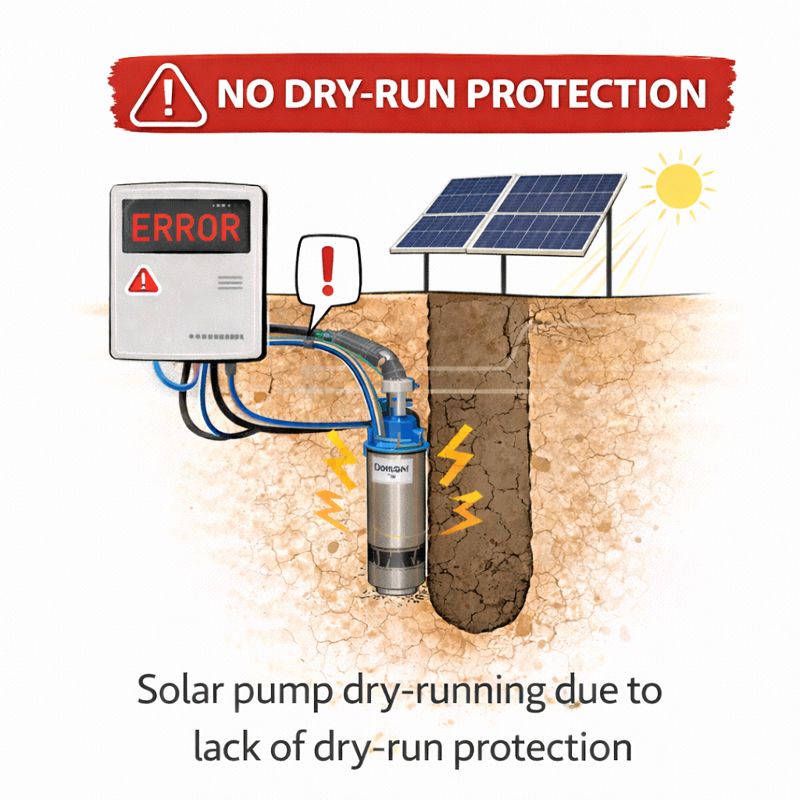
No Dry-Run Protection
Borehole water levels change.
During the dry season:
- Water tables drop
- Pumps can run without enough water
- Motors overheat and fail
Without dry-run protection, the pump keeps running even when water is gone.
How to avoid it
- Install a controller with dry-run detection
- Use water level sensors where possible
- Set conservative shutdown thresholds
No Surge or Lightning Protection
Zimbabwe experiences frequent lightning, especially during the rainy season.
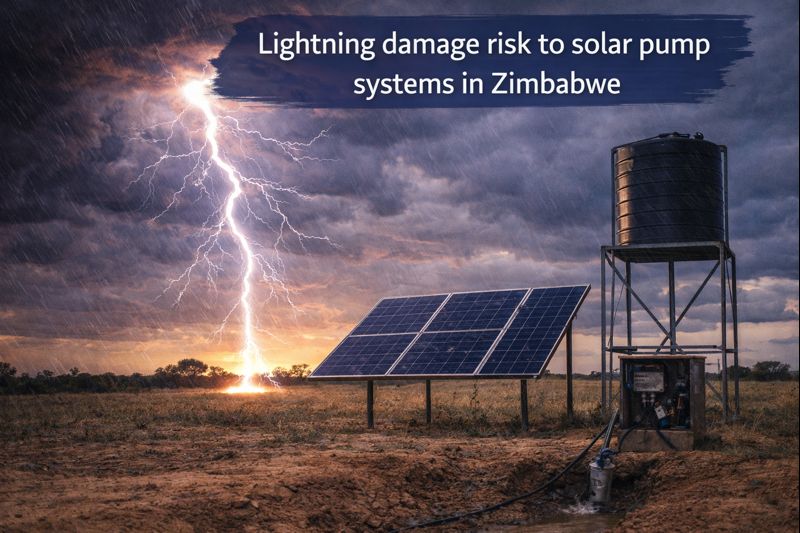
A single surge can:
- Destroy the pump controller
- Damage the motor windings
- Wipe out the entire solar system
Many installations skip protection to save money, then spend far more on replacements.
How to avoid it
- Install surge protection on the DC side
- Properly earth the system
- Use lightning arrestors in high-risk areas
Mistake #6: Poor Borehole Installation Practices
What happens inside the borehole matters just as much as what’s happening above ground.
Many pump failures start with how the pump is positioned and secured.
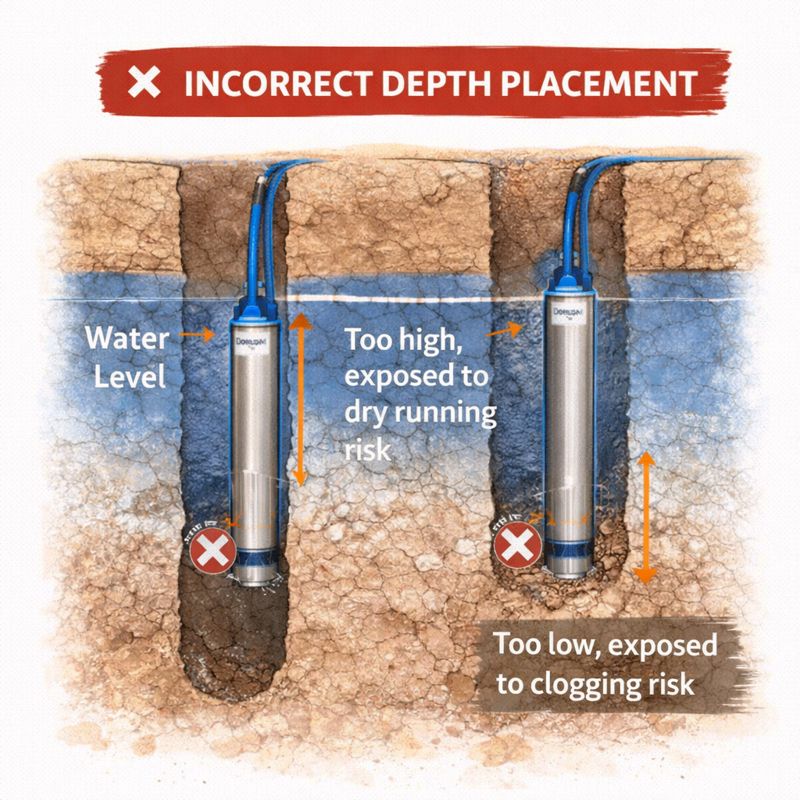
Incorrect Pump Depth Placement
Placing the pump too high or too low creates different problems.
If the pump sits too high:
- It draws air when water levels drop
- It dry-runs during peak usage
- Output becomes inconsistent
If the pump sits too low:
- It pulls in sand and silt
- Wear increases on impellers
- Motor life shortens
This is common in Zimbabwe where boreholes vary widely in yield and recovery rate.
How to avoid it
- Install the pump well below the pumping water level
- Allow extra margin for dry-season drops
- Avoid placing the pump at the very bottom of the borehole
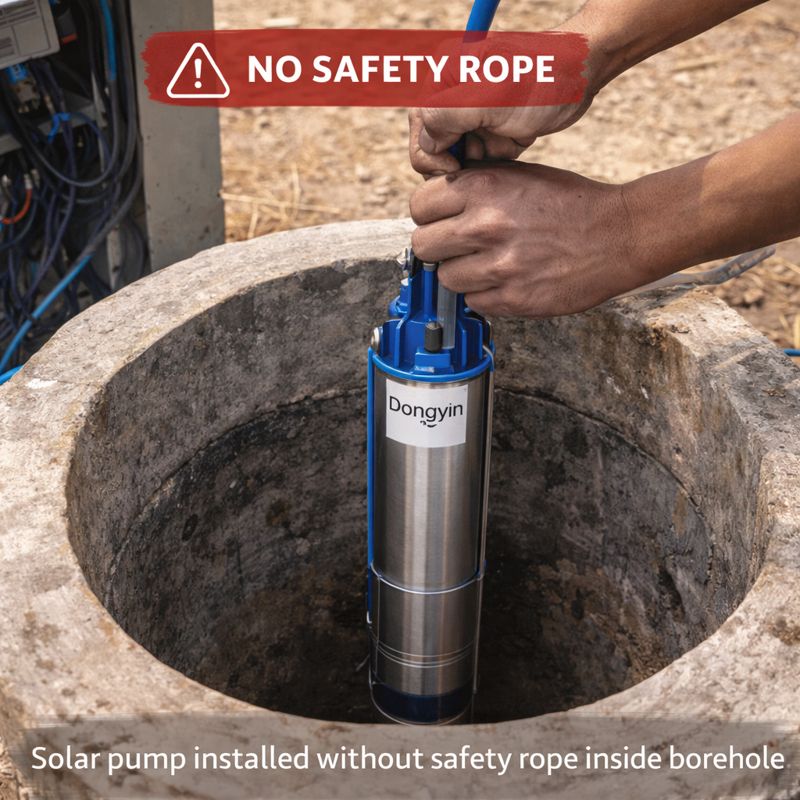
No Safety Rope or Improper Mounting
This mistake turns maintenance into a disaster.
Without a safety rope or proper mounting:
- Pumps can fall deeper into the borehole
- Retrieval becomes expensive or impossible
- Boreholes can be permanently damaged
I’ve seen perfectly good pumps lost due to poor suspension.
How to avoid it
- Use a strong, corrosion-resistant safety rope
- Secure the pump properly to rising main pipes
- Check mounting during installation and servicing
Mistake #7: Ignoring Water Storage and System Design
Solar pumps work best when they pump water, not pressure.
Trying to replicate a grid-powered pressure system often leads to disappointment.
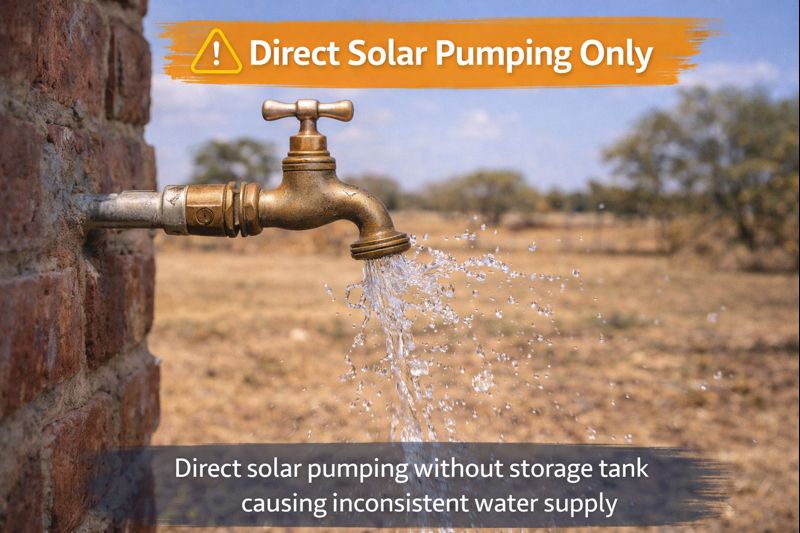
Relying on Direct Pumping Only
Direct pumping means using water as it’s pumped.
This causes problems because:
- Solar output fluctuates throughout the day
- Pressure changes constantly
- Water availability becomes unpredictable
In Zimbabwe, cloudy afternoons and dusty panels make this worse.
How to avoid it
- Use elevated storage tanks
- Pump water during peak sun hours
- Use gravity to supply water consistently
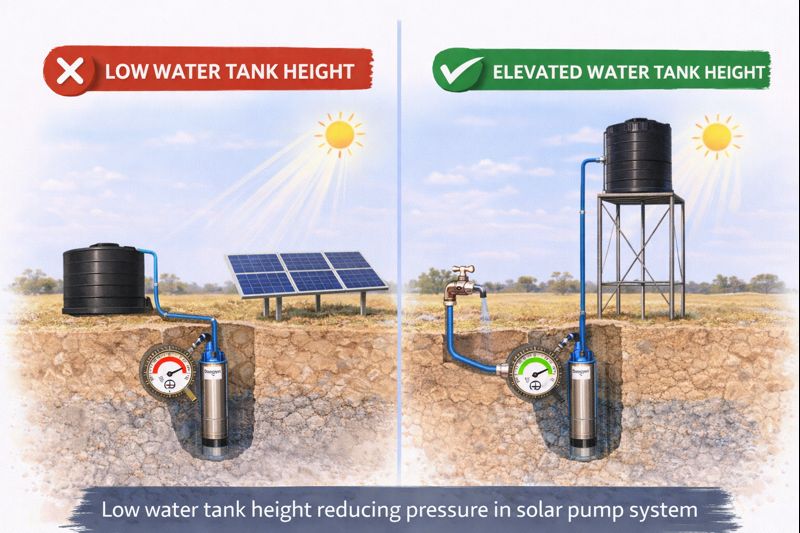
Incorrect Tank Height and Pipe Sizing
A tank that’s too low defeats the whole system.
Common issues include:
- Weak pressure at taps
- Slow irrigation flow
- Pump running longer than necessary
Small pipes also restrict flow and increase losses.
How to avoid it
- Install tanks high enough to provide gravity pressure
- Use correct pipe diameters for flow rate
- Keep pipe layouts simple and direct
Mistake #8: Inexperienced or Untrained Installers
Solar pumping looks simple. It isn’t.
Many failures happen because installers treat solar pumps like electrical appliances.
Solar Is Not Generator or ZESA Installation
Solar systems behave differently.
Common shortcuts include:
- Ignoring voltage requirements
- Guessing panel numbers
- Skipping commissioning tests
These shortcuts work briefly, then fail.
How to avoid it
- Use installers with solar pumping experience
- Ask how sizing was calculated
- Avoid “one-size-fits-all” solutions
No Commissioning or System Testing
A proper installation doesn’t end when the pump starts.
Without testing:
- Problems stay hidden until damage occurs
- Performance is never verified
- Warranty claims become difficult
How to avoid it
- Test flow rate, voltage, and current
- Confirm dry-run protection works
- Record baseline performance for future checks
Advanced Installation Considerations for Long-Term Reliability
Once the basics are correct, a few advanced decisions can greatly extend system life.
Seasonal Water Table Changes in Zimbabwe
Water availability changes throughout the year.
Ignoring this leads to:
- Dry-running in October and November
- Reduced output during droughts
- Unexpected system shutdowns
How to avoid it
- Design for worst-case water levels
- Monitor borehole recovery rates
- Adjust usage during dry months
Integrating Dongyin Pumps with Hybrid or Backup Systems
Some applications need water even when the sun isn’t perfect.
Hybrid setups help:
- Large households
- Farms with fixed irrigation schedules
- Commercial water supply
These systems require careful design to avoid damaging the pump.
How to avoid it
- Use compatible controllers
- Avoid direct grid connection unless approved
- Design backup systems intentionally, not as afterthoughts
Frequently Asked Questions (FAQs)
These are questions I get asked regularly by homeowners, farmers, and businesses across Zimbabwe.
How long should a Dongyin solar pump last if installed correctly?
If you size and install it properly, a Dongyin solar pump can run reliably for many years. Most early failures I see are caused by dry-running, poor wiring, or wrong panel sizing.
Can I add more solar panels later if performance is low?
Yes, but only if the controller and wiring can handle the extra capacity. Adding panels without recalculating voltage and current can cause controller damage.
Is it okay to reuse old solar panels for a Dongyin pump?
It depends on their condition and electrical specs. Old or mismatched panels often reduce performance and cause unstable operation.
Do I need a storage tank, or can I pump directly to taps?
For Zimbabwean conditions, storage tanks are strongly recommended. They stabilise supply and reduce stress on the pump.
Why does my pump stop working during very hot days?
High temperatures reduce panel efficiency and increase electrical resistance. Poor cable sizing and minimal panel margins make this worse.
Conclusion: Get the Installation Right and the Pump Will Follow
Dongyin solar pumps are reliable machines.
When they fail early or underperform, the cause is almost always installation-related.
If you take one thing from this guide, let it be this:
Solar pumping is a system, not just a pump.
When you:
- Choose the right pump for your borehole
- Size panels for real Zimbabwean conditions
- Install proper wiring, protection, and storage
You get:
- Consistent water supply
- Lower maintenance costs
- A system that survives droughts, dust, and power uncertainty
Cutting corners during installation always costs more later.
Final Advice: Don’t Let Small Mistakes Ruin a Good Solar Pump
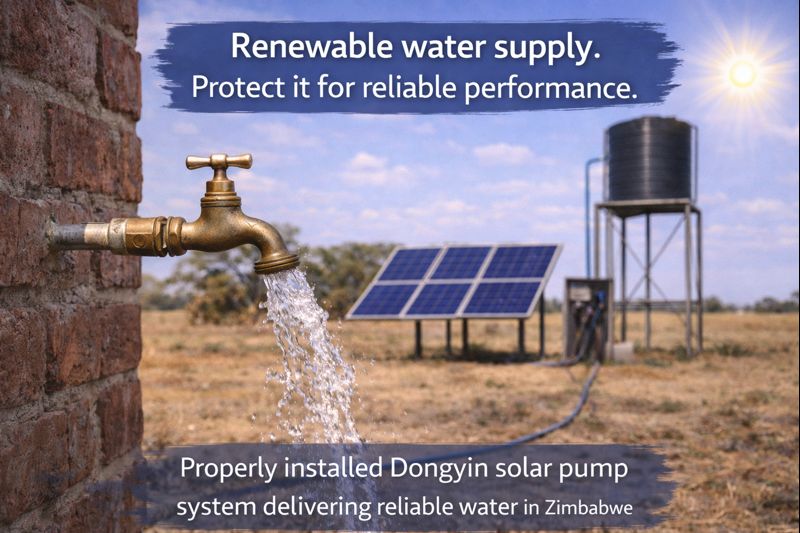
A Dongyin solar pump is a solid investment for Zimbabwean conditions.
But the pump alone does not guarantee results.
Every mistake covered in this guide comes down to one thing: rushing decisions.
When you rush:
- You guess instead of measuring
- You undersize to save money
- You skip protection hoping for the best
Solar pumping does not forgive shortcuts.
If you plan properly, install correctly, and design for Zimbabwe’s climate and water realities, your system will reward you with:
- Reliable water, even during dry months
- Lower running and repair costs
- Peace of mind when ZESA is unavailable
The goal is not just to pump water today.
The goal is to still be pumping water five or ten years from now.
If you’re:
- Planning a new Dongyin solar pump installation
- Experiencing low output, frequent shutdowns, or early failures
- Unsure whether your panels, wiring, or pump size are correct
Do not guess.
Get your system assessed properly before small problems turn into expensive repairs.
A correct solar pump setup saves you money, protects your borehole, and gives you consistent water when you need it most.
If you want help choosing the right pump, sizing panels correctly, or fixing an underperforming installation, now is the right time to act — before the next dry season exposes the weaknesses in your system.
Done right, solar pumping works.