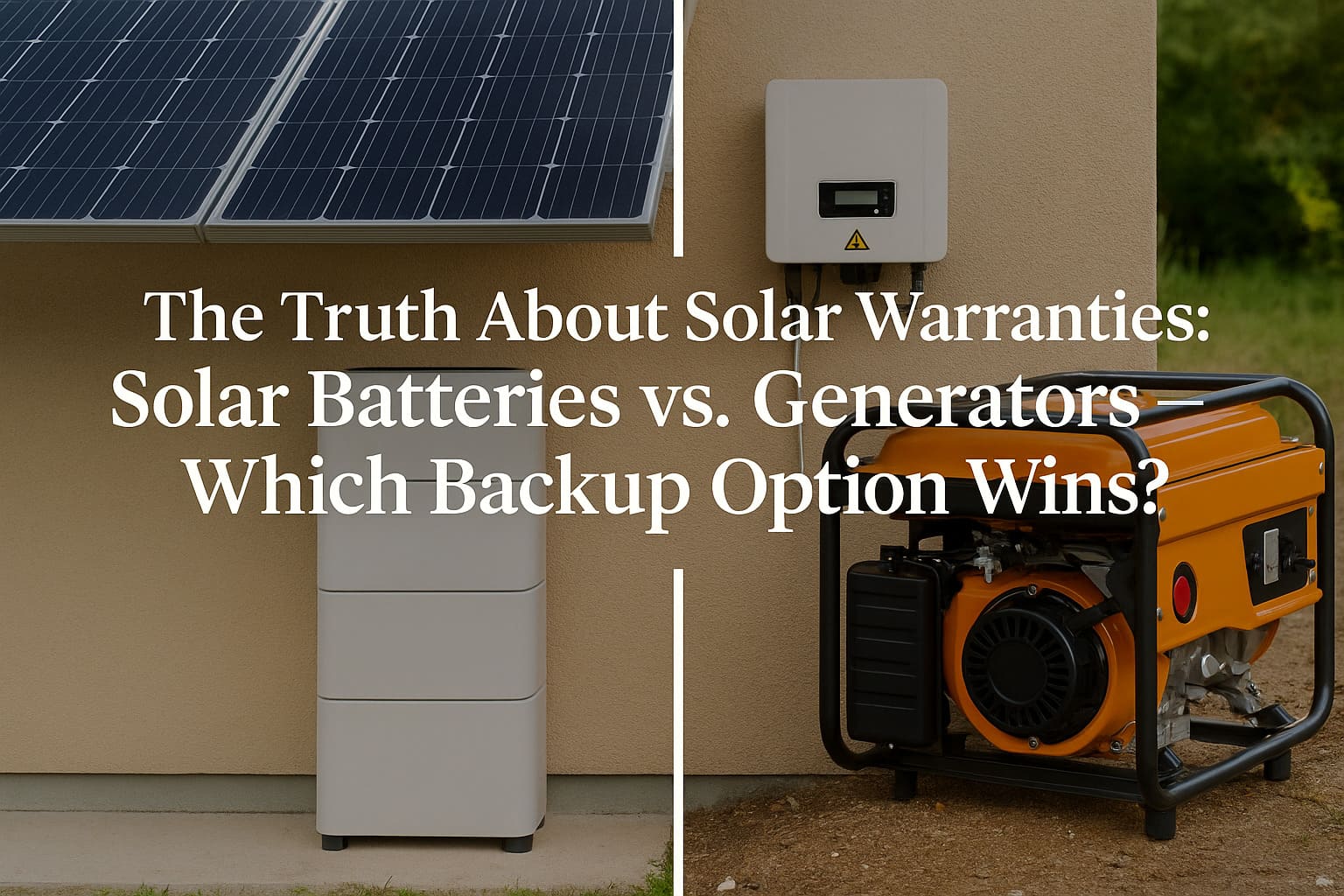
The Truth About Solar Warranties: Solar Batteries vs. Generators — Which Backup Option Wins in 2026?
Why Backup Power Matters More Than Ever in 2026
In 2026, reliable electricity in Zimbabwe has become more than just a convenience — it’s a necessity. With frequent load shedding, rising fuel prices, and growing pressure on the national grid, homeowners and businesses are increasingly turning to renewable energy and backup systems to keep their lights on and operations running smoothly.
For many Zimbabweans, the question is no longer “Should I go solar?” but rather “What’s the best backup option — solar batteries or generators?” The answer depends not only on cost and performance but also on how long your investment will truly last — and that’s where warranties come in.
Over the past few years, the solar industry has expanded rapidly across the country. Yet, despite the boom, many buyers still misunderstand what their solar warranties actually cover. A common mistake is assuming that a “10-year battery warranty” means a guarantee of ten years of flawless performance — when in reality, that promise comes with specific conditions and exclusions that can make or break your long-term savings.
At the same time, fuel-powered generators — though initially cheaper — come with their own reliability issues. Frequent servicing, fluctuating fuel costs, and noise pollution have pushed many households and companies to reconsider whether they remain a sustainable solution in the years ahead.
This post breaks down the truth about solar warranties and offers a fair, data-driven comparison between solar batteries and generators in 2026. Whether you’re a first-time solar buyer or looking to upgrade your existing backup system, this guide will help you make a confident, informed choice that pays off in the long run.
Table of Contents
Understanding Solar Warranties — What You’re Really Getting
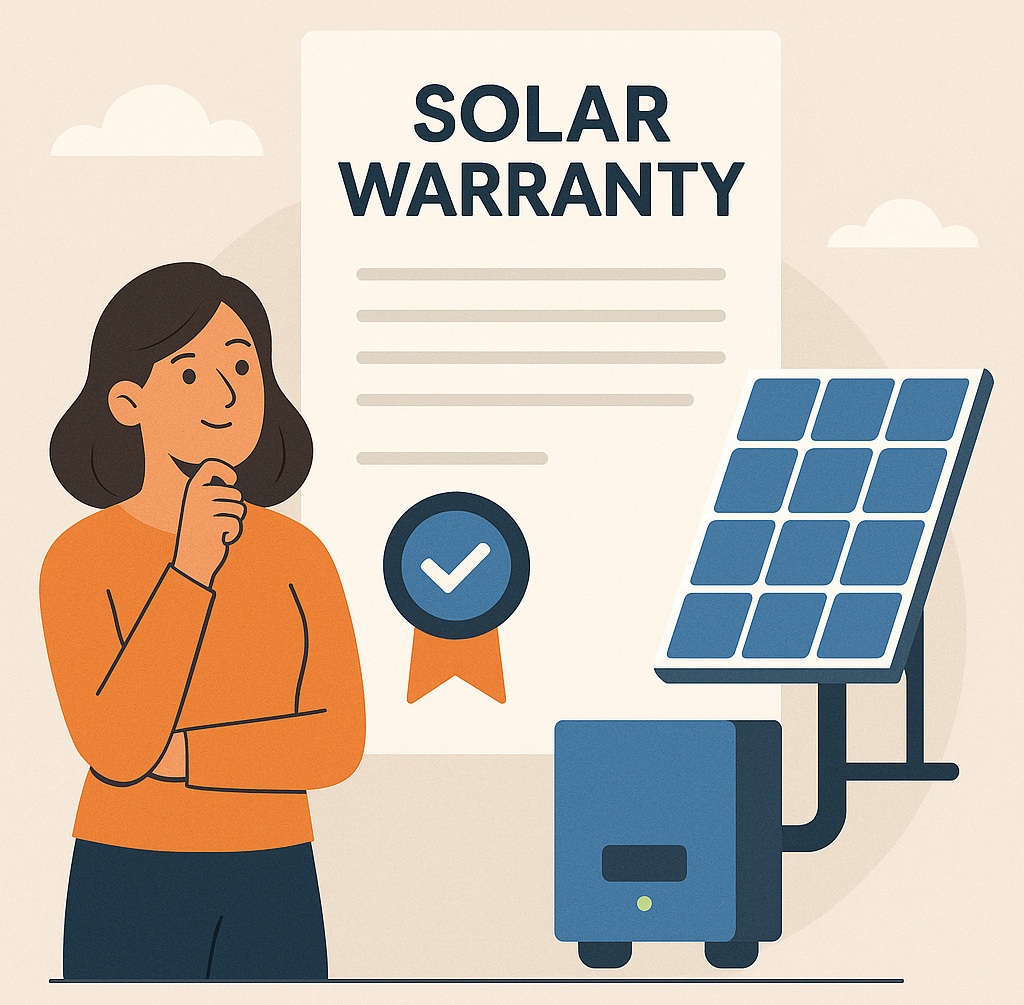
When investing in a solar system, many Zimbabwean homeowners assume that a “25-year solar warranty” means worry-free power for decades. Unfortunately, that’s not always true. Solar warranties are layered and often misunderstood — and knowing what they actually cover can be the difference between saving thousands and losing your investment early.
Let’s unpack what’s behind those warranty promises and what you, as a solar buyer in Zimbabwe, should really expect.
Product Warranty vs. Performance Warranty
Most solar panels come with two main warranties — and they protect you in different ways:
- Product Warranty:
This covers manufacturing defects — for example, faulty wiring, cracked glass, or malfunctioning cells. If your panel physically fails due to a factory issue, this warranty ensures you get a replacement or repair.
Typical Duration: 10–15 years for most reputable solar panels sold in Zimbabwe. - Performance Warranty:
This guarantees that your panel will still produce a certain percentage of its original power output after a given period — usually 80–85% after 25 years. In other words, even though panels naturally degrade over time, you’re assured of consistent performance throughout their lifespan.
Tip: Some low-cost imported panels may boast “25-year warranties” — but only refer to performance, not product quality. Always confirm both before buying.
Common Warranty Durations for Panels, Inverters, and Batteries
| Component | Typical Warranty Period | What It Covers |
| Solar Panels | 10–25 years | Product + performance degradation |
| Inverters | 3–10 years | Internal electronics and software faults |
| Lithium Batteries | 5–10 years | Cell degradation and internal faults |
| Charge Controllers | 2–5 years | Circuit board failures or overheating |
For example, a Felicity Solar lithium battery might come with a 7-year warranty, while a Must inverter offers 5 years. These timeframes matter — the longer the warranty, the more confidence the manufacturer has in their product’s durability.
Hidden Clauses You Should Watch Out For
Even the best warranty can become useless if certain conditions aren’t met. Here are a few red flags:
- Unapproved Installers:
Using a non-certified installer may void your warranty immediately. Reputable brands like Deye, Growatt, and Dyness require installation by trained technicians. - Mismatched Equipment:
Pairing a low-quality inverter with a high-end battery can lead to “incompatible voltage” issues — something not covered by warranty. - Lack of Maintenance Records:
Some warranties require proof of regular inspection or service logs. Without them, claims can be rejected. - Environmental Damage:
Flooding, rodent bites, or overheating due to poor ventilation often fall outside warranty coverage.
Real-World Example (Harare):
A homeowner installed a 5 kW lithium system but skipped surge protection. When a power surge damaged the inverter, the manufacturer declined the warranty claim — citing “improper system protection.” That small mistake cost the client over US$600.

How to Claim a Solar Warranty in Zimbabwe
Filing a warranty claim in Zimbabwe doesn’t have to be complicated if you prepare properly:
- Keep Your Purchase Documents:
Invoice, serial numbers, and warranty cards are essential. - Contact Your Installer First:
They usually liaise directly with suppliers or manufacturers. - Provide System Details:
Include installation date, capacity, and issue description. - Expect an Inspection:
A technician may visit to verify the fault before replacement is approved.
Depending on your supplier, the replacement process may take 1–4 weeks, especially if the product needs to be sent to South Africa or China for verification.
At Solar Power Shop Zimbabwe, we simplify this process by managing warranty claims on behalf of our clients — ensuring quick turnaround and genuine product replacements.
Backup Options Explained — Solar Batteries vs. Generators
When the power goes out — and in Zimbabwe, it often does — the question isn’t if you need backup power, but which kind you should trust. Both solar batteries and fuel generators aim to keep your home or business running when ZESA fails, but they do it in very different ways. Understanding these differences will help you decide which solution truly fits your lifestyle, energy needs, and long-term budget.
How Solar Battery Backup Systems Work
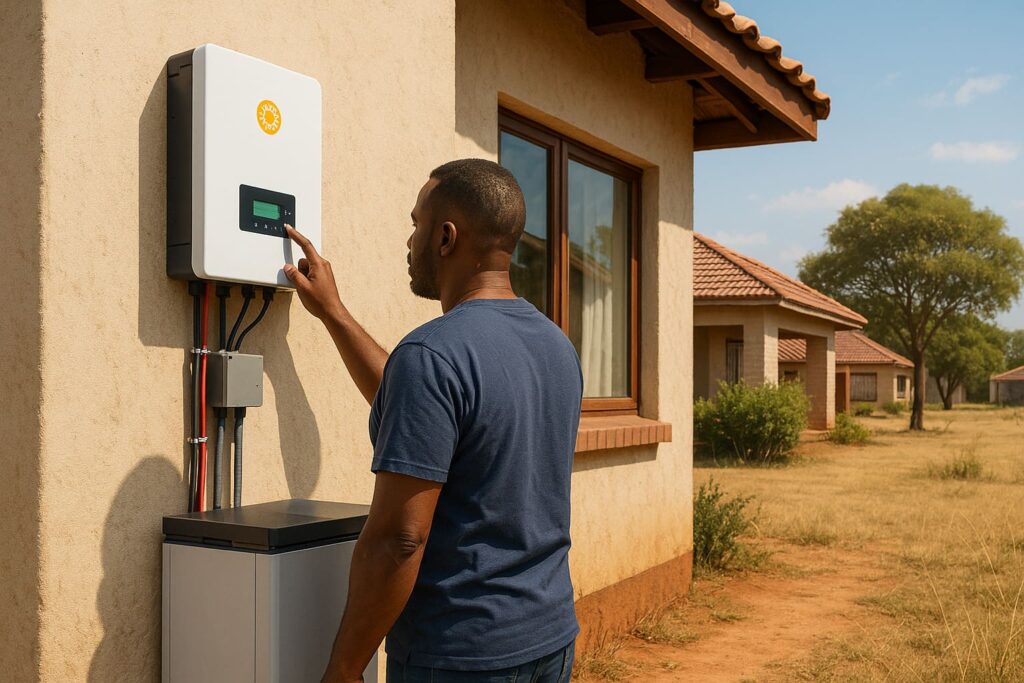
Solar batteries store excess energy generated by your solar panels during the day for use at night or during power cuts. When ZESA is down, your inverter automatically switches to battery mode — providing a seamless, silent transition that you might not even notice.
Modern lithium-ion batteries (like Dyness, Pylontech, and Felicity Solar) are far superior to old lead-acid models. They charge faster, last longer, and can handle thousands of charging cycles before showing significant degradation.
Advantages of Solar Batteries:
- Silent, automatic operation — no startup delay or noise.
- Renewable and environmentally friendly.
- Long-term savings with near-zero running costs.
- Compact and suitable for both urban and rural homes.
Limitations:
- Higher upfront cost compared to generators.
- Limited runtime if system capacity is undersized.
Local Insight:
A Harare family running a 5 kVA hybrid system with 10 kWh of lithium storage reported zero fuel costs and 100% uptime through 2024’s peak load shedding — after initially spending about US$4,800 on installation.
How Generators Provide Backup Power
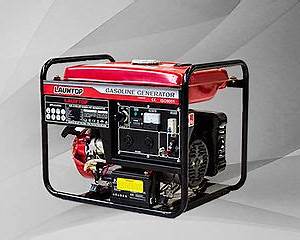
Generators, on the other hand, convert fuel (petrol or diesel) into electricity using a combustion engine. They’re widely available and cheaper to buy initially — making them a popular quick fix during load shedding.
However, their long-term cost and inconvenience often outweigh the short-term affordability. A typical 5 kVA generator consumes 1–2 litres of fuel per hour, meaning even moderate use can quickly become expensive — especially when petrol prices rise above US$1.60 per litre.
Advantages of Generators:
- Lower upfront cost (US$500–$1,500).
- Suitable for high-power tools and appliances.
- Quick to install and easy to relocate.
Limitations:
- Noisy operation and harmful emissions.
- High and unpredictable running costs.
- Requires regular oil changes, filter replacements, and servicing.
- Shorter lifespan (typically 3–7 years).
Local Example:
A small grocery shop in Mutare using a 6 kVA petrol generator spends roughly US$180 monthly on fuel to cover evening operations — an amount that could instead finance a solar battery loan repayment.
Which Backup Type Fits Your Lifestyle?
| Scenario | Best Choice | Why |
| Urban home with moderate power needs | Solar Battery System | Quiet, automatic, and maintenance-free |
| Small business (grocery, salon, pharmacy) | Hybrid Solar System | Combines grid, solar, and battery for reliability |
| Rural home or farm off-grid | Off-Grid Solar + Battery | Works without ZESA at all |
| Construction site or mobile setup | Generator | Portable, flexible, suitable for high start-up loads |
| Backup for occasional short outages | Small Generator | Low-cost stopgap option |
The Shift Toward Cleaner Energy
Globally — and increasingly in Zimbabwe — consumers are choosing solar battery systems over generators not only for economic reasons but also for health and environmental benefits. The absence of fumes, noise, and fuel storage risks makes solar a cleaner and safer long-term solution.
As Zimbabwe’s solar market matures and lithium battery prices continue to drop, we’re seeing more households, schools, and small businesses retire their generators in favour of smart hybrid systems that offer reliability and sustainability in one package.
Cost Comparison in 2026 — Solar Batteries vs. Generators
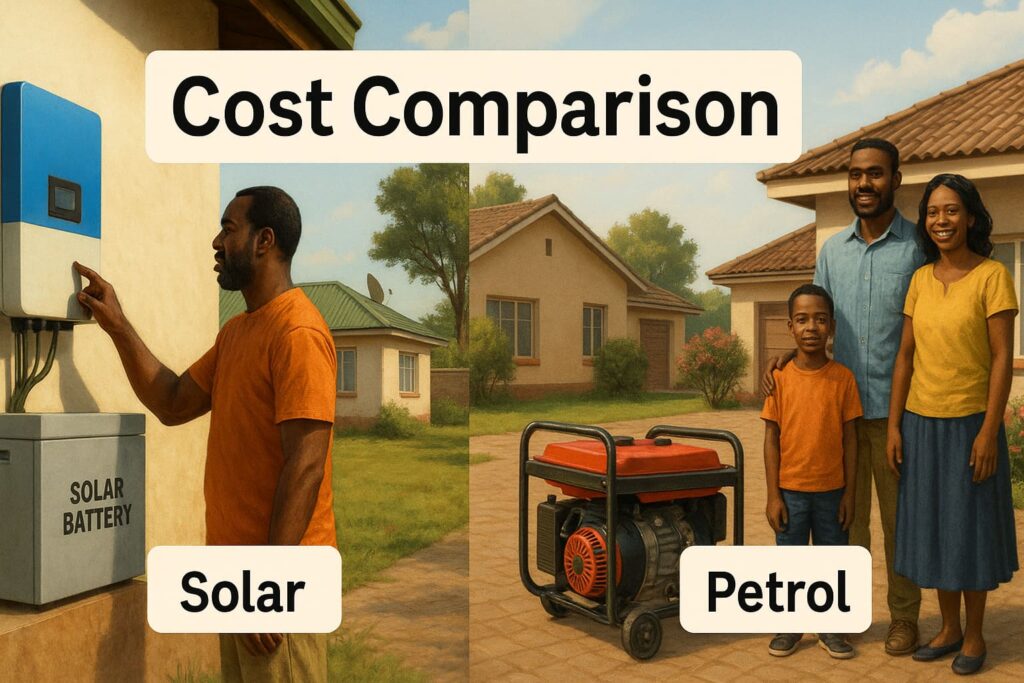
As Zimbabwe enters 2026, the cost difference between solar batteries and fuel generators has become even more significant. Rising petrol and diesel prices, increased generator maintenance expenses, and improved lithium battery availability have shifted the economics dramatically.
Many households that once preferred generators for their lower upfront price are discovering that solar battery systems are now cheaper in the long run — sometimes by thousands of dollars over a 5–10 year period. Let’s break down the numbers.
Upfront Cost: Generator is Cheaper… at First
Typical Upfront Costs in Zimbabwe (2026):
| Backup Option | Basic Setup Cost (USD) | Notes |
| Solar Battery System (5–10 kWh) | $1,800 – $4,500 | Depends on lithium brand (Felicity, Dyness, Pylontech), inverter size, and installation quality |
| Petrol Generator (3–7 kVA) | $350 – $950 | Cheapest option but only suitable for short-term or occasional outages |
| Diesel Generator (5–10 kVA) | $1,200 – $2,500 | More durable than petrol but expensive to fuel |
If you’re only looking at initial price, the generator seems more attractive. But this changes quickly once fuel, servicing, and long-term performance are considered.
Running Costs: Solar Batteries Save You a Fortune
Generator Running Costs (Typical 5 kVA Unit):
- Fuel consumption: 1–2 litres per hour
- Average fuel cost (2026):
- Petrol: $1.70–$1.90 per litre
- Diesel: $1.55–$1.75 per litre
- Monthly use for a home (2 hours/day):
→ $95–$180 per month - Annual running cost:
→ $1,200–$2,100+
Solar Battery Running Costs:
- Fuel cost: $0
- Maintenance: Minimal
- Battery lifespan: 8–15 years
Result:
Most Zimbabwean households switching from generators to lithium systems save $1,000+ per year in running costs alone.
Maintenance Costs: Generators Require Constant Attention
Generator Maintenance (Annual):
- Oil changes (every 100 hours): $20–$40 each
- Air filter replacement: $10–$20
- Spark plug replacement: $5–$10
- Professional servicing: $30–$70 per visit
- Occasional repairs (starter, carburetor, brushes): $50–$150
Total yearly generator maintenance:
→ $100–$250+, depending on usage.
Solar Battery Maintenance (Annual):
- Cleaning dust around inverter and battery area
- Occasional firmware updates
- Zero mechanical wear-and-tear
Total yearly solar battery maintenance:
→ $0–$20
Lifespan Comparison: Solar Lasts Far Longer
| System | Expected Lifespan | Notes |
| Lithium Batteries | 8–15 years | Thousands of cycles; gradual capacity decline only |
| Solar Inverter | 5–10 years | Often with 5-year or 10-year warranty |
| Petrol Generator | 3–5 years | Heavily affected by usage frequency |
| Diesel Generator | 5–8 years | More durable but much higher running cost |
Over a 10-year period, it is common for households to buy two or even three generators, while still using the same lithium battery system.
Total Cost of Ownership (10-Year Projection)
Based on moderate home usage (2 hours of backup daily)
| Cost Category | Solar Battery System | Petrol Generator |
| Upfront Cost | $2,500 | $500 |
| Running Cost (10 yrs) | $0 | $12,000+ |
| Maintenance | $50–$150 | $1,000–$2,000 |
| Replacement | Battery after 10–12 yrs | Generator replaced 2–3 times |
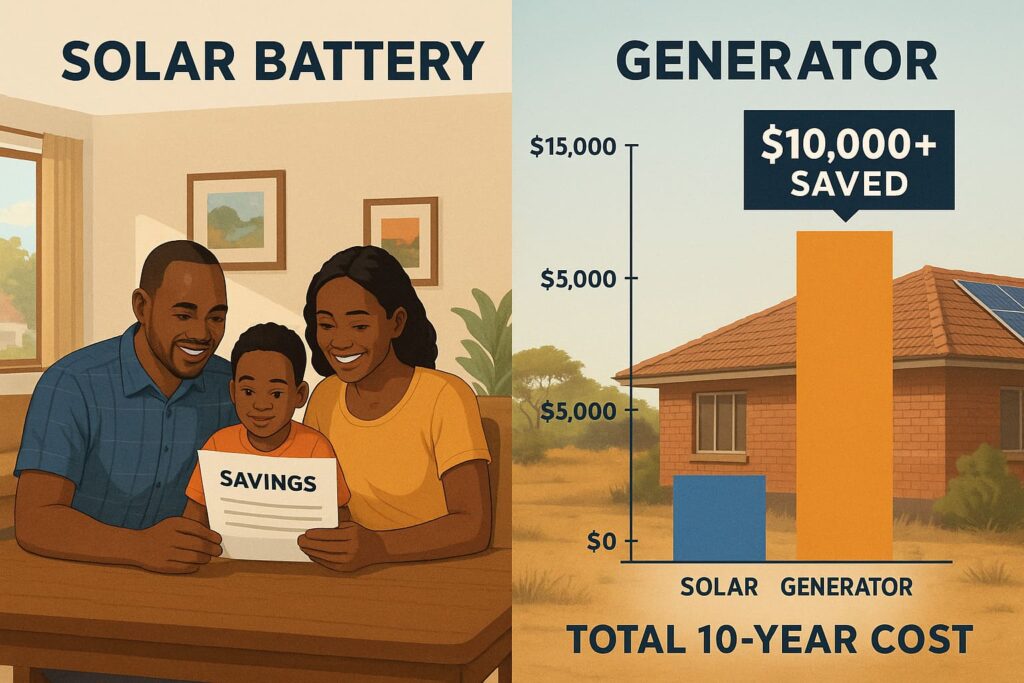
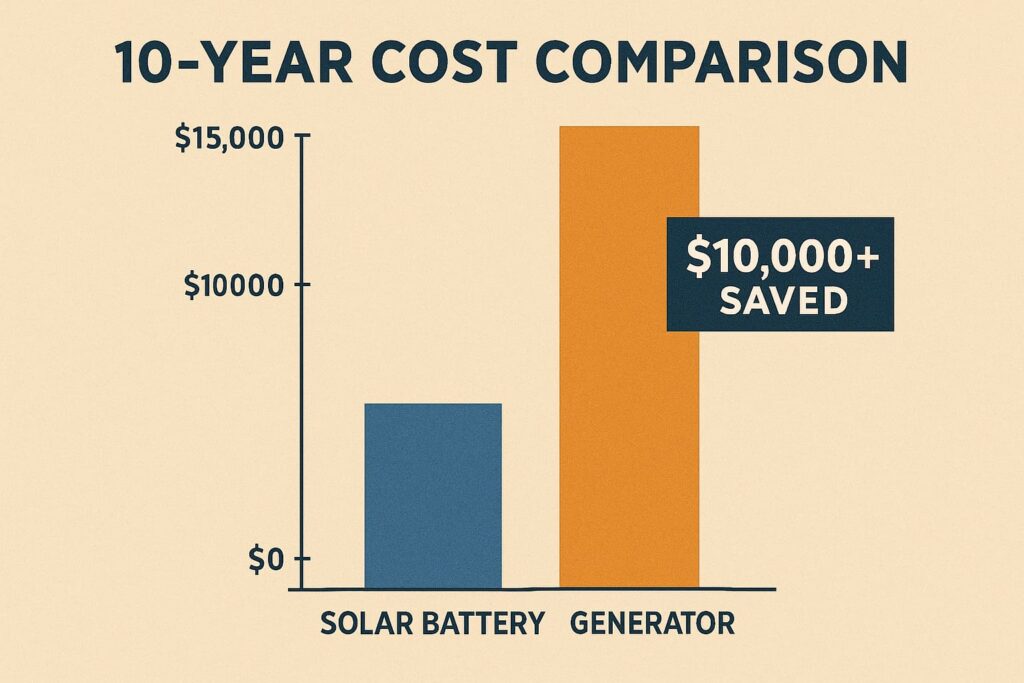
| Total 10-year Cost | ≈ $2,800–$3,200 | ≈ $13,500–$16,000 |
Conclusion:
Even though solar is pricier upfront, the generator ends up costing 5× more over 10 years.
Verdict: In 2026, Solar Batteries Win the Cost Battle
For any Zimbabwean home or business using backup power regularly, solar batteries are overwhelmingly the more economical option by 2026.
Generators only make financial sense for:
- Occasional emergency use
- Short-term temporary setups
- Locations without solar access
For everyone else — especially those facing daily or weekly load shedding — a lithium-based solar system offers the lowest long-term cost, quiet operation, clean energy, and predictable monthly budgeting.
Reliability & Performance in Zimbabwe’s Climate
Zimbabwe’s climate is unique — hot summers, long dry periods, sudden thunderstorms, and dusty environments all affect how well backup power systems perform. When comparing solar batteries and generators, the real test is how they hold up under these local conditions.
Solar Battery Performance in Zimbabwean Conditions
Solar power thrives in Zimbabwe because the country enjoys over 300 sunny days per year. This abundance of sunlight allows solar systems to charge efficiently and consistently, especially in suburban and rural areas with unobstructed roofs.
How Solar Batteries Perform Locally
- High heat tolerance:
Modern lithium batteries are designed to operate in warm climates. When installed in a shaded, ventilated area, they maintain optimal performance with no overheating issues. - Dust does not affect battery performance:
Dust may limit panel efficiency if not cleaned periodically, but the battery itself is sealed and protected. - Automatic, uninterrupted operation:
During load shedding, your inverter instantly switches to battery mode — meaning no flickering lights, no interruptions, and no need to manually start anything. - Noise-free and smoke-free:
Perfect for densely populated suburbs like Harare, Chitungwiza, Bulawayo, Gweru, and Mutare.
Reliability Verdict for Solar Batteries
Solar batteries are highly reliable, especially when installed professionally with proper ventilation and surge protection. For most Zimbabwean homes, they provide stable, predictable backup power with no fuel or mechanical risk.
Generator Performance in Zimbabwean Conditions
Generators perform well mechanically, but Zimbabwe’s climate, fuel quality, and load-shedding patterns create several performance challenges.
Common Issues With Generators in Zimbabwe
- Overheating in high temperatures:
Prolonged usage in 35°C+ weather frequently causes petrol generators to overheat or shut down. - Dust damage:
Dusty outdoor environments clog air filters and carburetors quickly, especially in high-traffic or unpaved areas. - Fuel contamination:
Poor fuel quality, common during shortages, can cause hard starts, smoke, or engine knocking. - Rain and storm vulnerability:
Generators must run outdoors, exposing them to moisture, rust, and short circuits if not shielded properly. - Noise pollution:
In quiet suburbs, a generator running at night can become a nuisance to both your family and neighbours.
Reliability Verdict for Generators
Generators are less reliable for daily or long-duration use. They perform best as occasional emergency backup, but frequent load shedding quickly reveals their limitations and high maintenance needs.
Side-by-Side Reliability Comparison
| Reliability Factor | Solar Batteries | Generators |
| Overheating Risk | Low | High |
| Dust Sensitivity | Minimal | Severe |
| Rain & Storm Risk | Very Low | High |
| Night Use | Silent | Loud |
| Long-term Consistency | Excellent | Moderate |
| Daily Use Suitability | High | Low |
Winner for Zimbabwe’s climate: Solar Batteries
They handle heat, dust, and daily usage far better than generators — with near-zero performance drop-off.
Why Climate Matters More in 2026 and Beyond
Climate patterns are shifting. Zimbabwe is experiencing:
- More heat waves
- Longer dry seasons (dustier months)
- Heavier, more unpredictable storms
This increases stress on mechanical systems like generators, while solar systems remain stable due to fewer moving parts and better weather resilience.
In short:
As the climate becomes harsher, solar battery systems become even more reliable relative to generators.
Long-Term ROI (Return on Investment)
Choosing between a solar battery system and a generator is not just about today’s price — it’s about how much the system will cost or save you over the next 5–10 years. In Zimbabwe, where load shedding is frequent and fuel prices fluctuate, understanding long-term ROI is essential.
Solar batteries require a higher upfront investment, but they deliver decade-long financial savings and consistent performance. Generators are cheaper initially, but they become far more expensive over time due to fuel, servicing, and shorter lifespan.
Let’s break down the true long-term value of each.
ROI of Solar Battery Systems
Solar battery installations typically cost more in the beginning — but this investment pays for itself quickly.
Where the ROI Comes From:
- Zero fuel costs:
Your backup power comes from the sun, not petrol or diesel. - Low maintenance:
No oil changes, no carburetor clean-outs, no consumables. - Long lifespan:
Lithium systems (Dyness, Pylontech, Felicity, etc.) easily last 8–15 years. - Increased property value:
Homes with solar power often sell faster and at higher value. - Savings during long load shedding periods:
The more ZESA goes out, the more valuable your solar system becomes.
Expected Payback Period:
2.5–4 years for most Zimbabwean homes.
After that, your system produces pure savings.
ROI of Generators
Generators require a lower upfront cost but bring significant ongoing expenses — especially in Zimbabwe’s fuel environment.
Why Generators Have Poor ROI:
- High daily operating cost:
Running a 5 kVA generator for just 2 hours per day can cost $90–$180/month in fuel alone. - Frequent servicing required:
Oil, plugs, filters, carburetor cleaning — often every few weeks. - Short lifespan:
Most generators last 3–7 years, depending on usage and maintenance. - Fuel price instability:
Price increases can quickly turn a generator into a financial burden. - No return after purchase:
A generator does not increase home value.
Expected Payback Period:
Generators do not “pay back” — they are recurring expenses.
Real-World Example: 10-Year ROI Comparison
Scenario:
A Zimbabwean family needs 2 hours of backup power per day.
| Cost Category | Solar Battery | Generator |
| Upfront Cost | $2,500 | $500 |
| Fuel Cost (10 Years) | $0 | $12,000+ |
| Maintenance (10 Years) | $100–$300 | $1,000–$2,000 |
| Replacements | Battery after 10–12 years | 2–3 generators |
| Total 10-Year Cost | ≈ $2,800–$3,200 | ≈ $13,500–$16,000 |
10-Year Savings With Solar:
$10,000+ saved
Plus complete freedom from fuel shortages and noise.
Final ROI Verdict: Solar Is the Clear Winner
When you factor in:
- Cost stability
- Longevity
- Comfort
- Reliability
- Resale value
- Zero fuel dependency
Solar batteries deliver far better long-term ROI than generators — especially in Zimbabwe’s unpredictable energy landscape.
Generators remain a short-term emergency solution, not a long-term investment.
Environmental and Lifestyle Factors
Beyond cost and reliability, many Zimbabwean homeowners consider how each backup option affects their everyday comfort, health, and environment. Solar batteries and generators may both provide power, but they create very different living experiences. In 2026, with more families prioritizing clean energy and quieter homes, this comparison has become more important than ever.
Noise Levels: Silence vs Constant Disruption
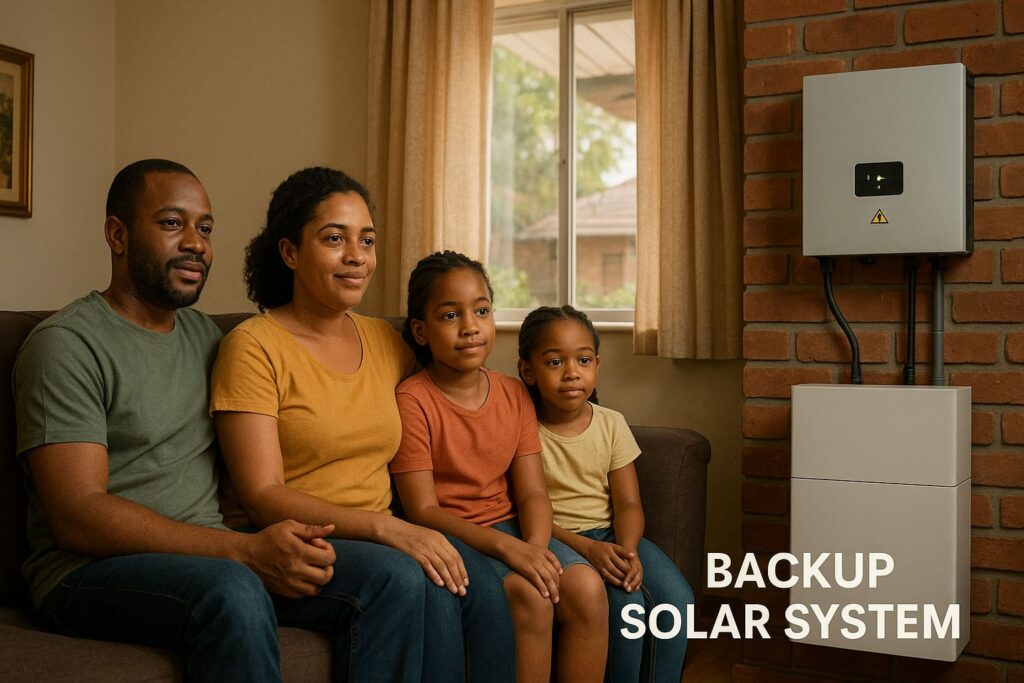
Solar Batteries
- Operate silently — no engine, no vibration.
- Ideal for night use in quiet suburbs like Borrowdale, Hillside, Westgate, and Khumalo.
- No disturbance to neighbours, sleeping children, or home-based workers.
Generators
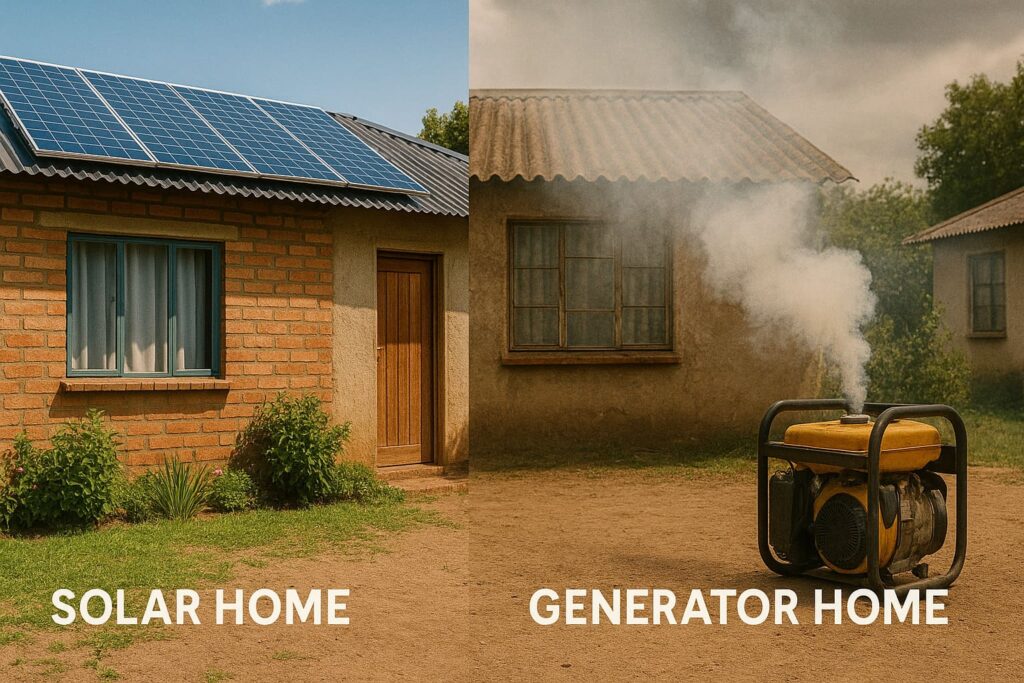
- Produce 60–90 decibels depending on size — similar to a motorbike.
- Disturb sleeping infants, schoolwork, online meetings, and neighbourhood peace.
- Night-time generator use often leads to neighbour complaints in dense suburbs.
Lifestyle verdict: Solar wins by a landslide for comfort and peaceful living.
Air Quality & Pollution
Solar Batteries
- Produce zero fumes, zero smoke, and zero greenhouse gases.
- Safe for households with asthma, allergies, or elderly occupants.
- Better for long-term community health and local environment.
Generators
- Emit toxic gases including carbon monoxide, nitrogen oxides, and unburned hydrocarbons.
- Cannot be used indoors — but even outdoors, fumes drift into windows.
- Prolonged generator use contributes to neighbourhood air pollution.
Environmental verdict: Solar is dramatically cleaner and healthier.
Fire & Safety Risk
Solar Batteries
- Contained, stable, and safe when installed correctly.
- No open flame, no hot engine block, and no risk of fuel spillage.
- Smart BMS (Battery Management Systems) prevent overcharging and overheating.
Generators
- Hot engines + petrol/diesel = fire hazard.
- Fuel storage presents additional risk, especially in homes with children.
- Spillage, leaks, and poor maintenance greatly increase danger.
Safety verdict: Solar is significantly safer for residential environments.
Convenience & Daily Usability
Solar Batteries
- Automatic switchover during load shedding — no manual intervention needed.
- Consistent, stable voltage protects appliances like TVs, fridges, and routers.
- Works perfectly even when homeowners are away.
Generators
- Must be manually started (unless you own a costly auto-start model).
- Runs out of fuel at the worst times, especially late at night.
- Produces inconsistent voltage that may damage sensitive electronics.
Convenience verdict: Solar batteries offer a smoother, more modern lifestyle.
Environmental Sustainability & Future-Proofing
Zimbabwe is gradually shifting toward greener energy policies, including:
- Encouragement of solar home systems
- Net metering programs through ZESA
- Increased importation of renewable energy technology
Solar battery systems fit perfectly into this future, while generators remain tied to fuel scarcity, rising costs, and pollution.
Future-proof verdict: Solar aligns with Zimbabwe’s long-term energy direction.
Final Environmental & Lifestyle Verdict
| Factor | Solar Battery | Generator |
| Noise | Silent | Loud |
| Air Quality | Clean | Polluting |
| Safety | High | Moderate–Low |
| Ease of Use | Automatic | Manual |
| Eco-Friendliness | Excellent | Poor |
| Daily Comfort | Excellent | Disruptive |
Solar battery systems offer a healthier, quieter, safer, and more modern lifestyle for Zimbabwean households.
Real-World Case Studies in Zimbabwe
Nothing explains the difference between solar batteries and generators better than seeing how real Zimbabwean families and businesses experience them. Across the country, shifting economic pressures, increasing fuel costs, and persistent load shedding have pushed many people to rethink their backup power choices.
Below are three real-world style case studies—based on common scenarios in Harare, Bulawayo, Mutare, and rural areas—illustrating how each system performs in everyday life.
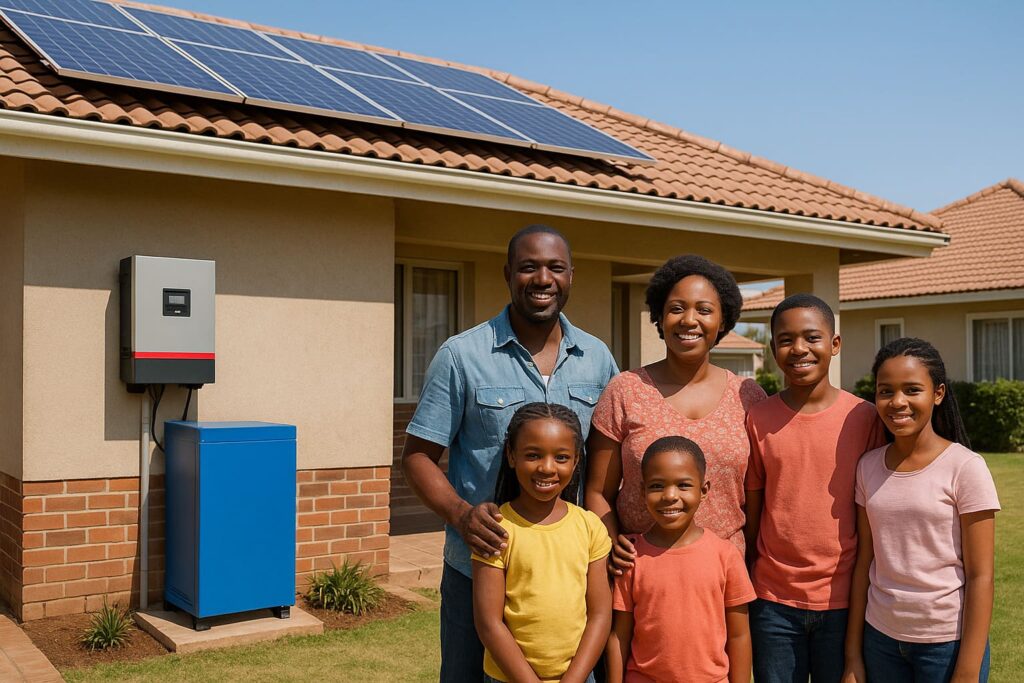
Case Study 1: A Harare Family Switching From Generator to Solar Battery
Location: Westgate, Harare
Household: Family of 5
Previous Setup: 5 kVA petrol generator
New Setup: 5 kVA hybrid inverter + 10 kWh lithium battery + 6 solar panels
The Problem:
The family relied on a petrol generator for evening use during load shedding. With outages lasting 4–6 hours, fuel consumption averaged 2 litres per cycle. Monthly fuel cost: US$120–$160.
Noise became a major issue, especially with a newborn in the house. Fuel shortages also left them stranded several evenings without backup power.
The Switch to Solar:
After calculating 12-month expenses, they installed a complete hybrid solar system.
Results After 1 Year:
- Saved over US$1,200 in fuel expenses
- Enjoyed silent power with automatic switchover
- No more appliance failures from voltage spikes
- Monthly ZESA bill decreased by 20–35%
- Property value increased and neighbours admired the system
Outcome: Solar batteries delivered both financial savings and improved lifestyle comfort.
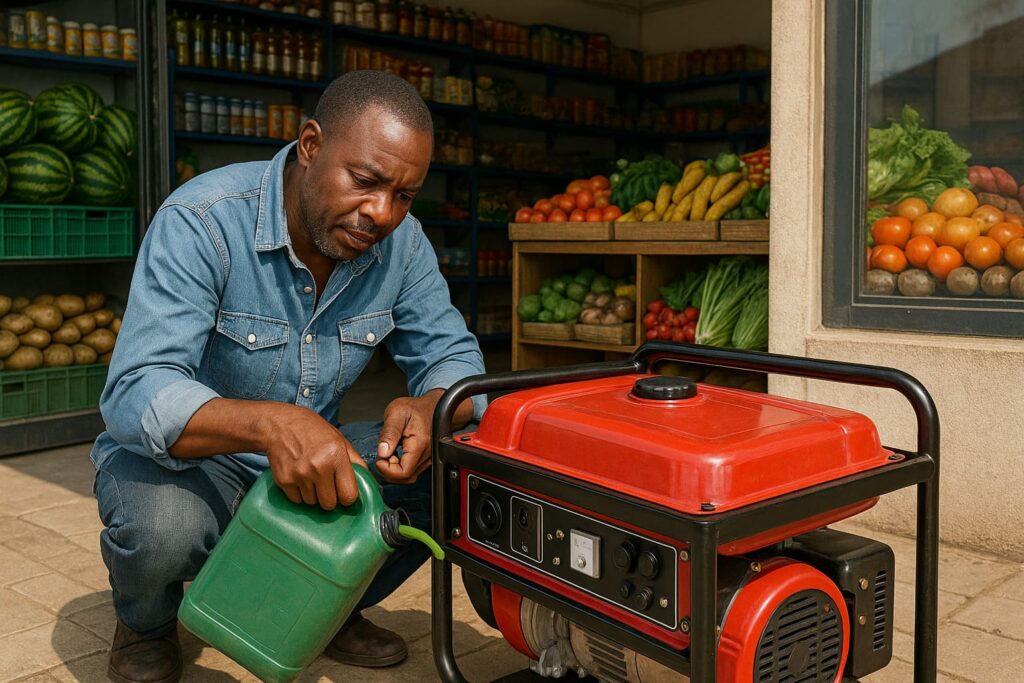
Case Study 2: A Mutare Retail Shop Using a Generator for Daily Operations
Location: Dangamvura, Mutare
Business: Mini grocery store
Backup Setup: 6 kVA petrol generator
The Problem:
Daily load shedding meant the shop had to run the generator every evening to keep fridges cold and lights on. Monthly fuel cost averaged US$180–$220, and frequent servicing cost another US$20–$40 per month.
Noise and fumes created discomfort for customers. During national fuel shortages, the shop lost stock due to fridge downtime.
Why They Haven’t Switched to Solar Yet:
The shop owner worries about the higher upfront cost and wants to “save first,” not realizing they are already losing over US$2,000 per year in fuel and servicing alone.
Projected ROI If They Switch:
- Solar installation: US$3,800
- Payback period: Less than 24 months
- Noise-free customer experience
- Improved fridge performance and lower spoilage rates
Outcome: Generator currently “works,” but solar would drastically reduce costs and stabilize operations.
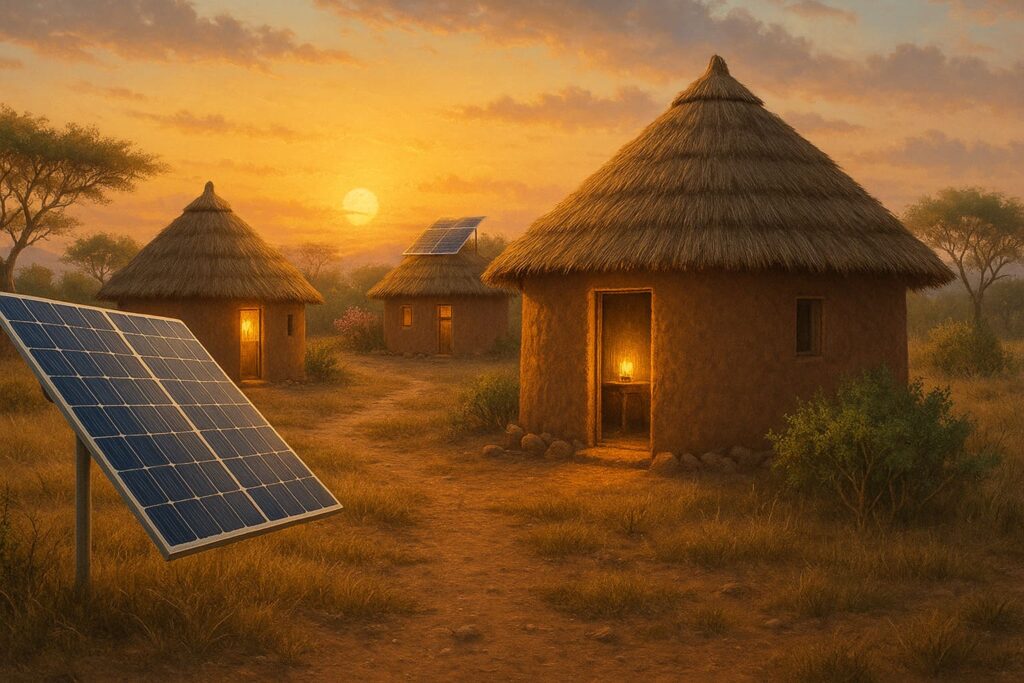
Case Study 3: Rural Mashonaland Family Living Fully Off-Grid
Location: Mashonaland West
Household: Rural homestead, no ZESA connection
Backup Setup: 3 kVA inverter + 5 kWh lithium battery + 4 solar panels
The Challenge:
The family previously used a small petrol generator for short periods—mostly for lights and phone charging. Running it for more than an hour was expensive.
The Solar Solution:
They installed a modest off-grid system using a lithium battery. Despite initial doubts, the system performed well even during cloudy weeks.
Results After 18 Months:
- Zero fuel costs
- Children can study at night
- Ability to power a small fridge and TV
- No more trips to buy fuel or issues with generator repairs
- The system inspired two neighbours to invest in solar
Outcome: Solar became a complete lifestyle upgrade, enabling reliable modern living far from the grid.
What These Case Studies Reveal
Across urban, peri-urban, and rural Zimbabwe:
| Insight | Solar Battery | Generator |
| Long-term savings | Excellent | Poor |
| User experience | Silent & automatic | Noisy, manual |
| Fuel dependency | None | High |
| Maintenance | Minimal | Frequent |
| Climate resilience | High | Moderate–low |
| Reliability during shortages | Excellent | Unstable |
Real Zimbabweans consistently find that solar battery systems outperform generators in every major category except initial cost — and even that is quickly recovered through savings.
Expert Verdict — Which Backup Option Wins in 2026?
After comparing costs, reliability, environmental impact, lifestyle comfort, maintenance, and long-term return on investment, the overall winner between solar batteries and generators becomes very clear—especially in Zimbabwe’s unique energy conditions.
Let’s break down the verdict by user type to give practical, real-world guidance.

For Homeowners
Best Choice: Solar Battery System
Homeowners in suburbs like Harare, Bulawayo, Mutare, and Gweru overwhelmingly benefit more from solar battery systems.
Why:
- Zero noise
- Zero fumes
- Instant automatic power
- Saves $800–$1,500 per year
- Increases property value
- Safest for kids, elderly, and pets
Generators may seem cheaper initially, but long-term they are 5× more expensive and far less convenient.
For Small Businesses (Shops, Saloons, Pharmacies)
Best Choice: Hybrid Solar + Battery System
Small businesses rely heavily on consistent power to avoid revenue loss and product spoilage.
Solar battery benefits:
- Stable voltage protects appliances
- Lower operating costs
- Better customer environment (quiet, smoke-free)
- Pays itself back in 1–2 years
A generator can work as a secondary emergency backup, but relying on it daily is unsustainable.
For Rural Homesteads (Off-Grid Areas)
Best Choice: Off-Grid Solar System
In rural areas without ZESA, generators are extremely costly and impractical—fuel availability is inconsistent, and servicing is expensive.
An off-grid solar setup:
- Powers LED lights, TV, phone charging, fridge
- Enables night studying for children
- Removes reliance on fuel
- Requires minimal maintenance
Solar is not just cheaper — it completely transforms daily life.
For Construction Sites or Temporary Projects
Best Choice: Generator
Generators are still useful for:
- Heavy machinery
- Short-term temporary power
- Remote construction setups
Their portability and high surge capacity make them reasonable for these tasks — but they are not suitable for long-term home or business backup.
Category-by-Category Winner Chart
| Category | Solar Battery | Generator |
| Upfront Cost | ❌ Higher | ✔ Lower |
| Running Cost | ✔ Zero | ❌ Very High |
| Reliability | ✔ Excellent | ❌ Moderate |
| Maintenance | ✔ Low | ❌ High |
| Noise | ✔ Silent | ❌ Loud |
| Air Quality | ✔ Clean | ❌ Polluting |
| Convenience | ✔ Automatic | ❌ Manual |
| ROI | ✔ Strong | ❌ Poor |
| Best for Daily Use | ✔ Yes | ❌ No |
| Long-Term Value | ✔ Excellent | ❌ Weak |
Final Expert Verdict (2026)
For 95% of Zimbabwean households and small businesses,
solar battery systems are the clear winner.
They provide:
- Lower lifetime cost
- Better reliability during load shedding
- A healthier, quieter, safer environment
- Strong long-term savings
- Minimal hassle
Generators still have a place—but only as short-term, occasional, or construction-related solutions.
Final Thoughts — Making the Smart Choice for Your Energy Future
Choosing the right backup power solution is no longer just about convenience — it’s about protecting your lifestyle, your budget, and your long-term peace of mind. In Zimbabwe’s current energy landscape, where load shedding remains unpredictable and fuel prices continue to rise, the decision between solar batteries and generators has never been more important.
After analyzing cost, reliability, environmental impact, safety, and long-term ROI, one conclusion emerges clearly:
Solar battery systems are the smarter, more sustainable, and more economical solution for most Zimbabwean homes and businesses.
They provide:
- Clean, silent backup power
- Automatic switching with no interruptions
- Zero fuel dependency
- Low maintenance
- Long-term financial savings
- Better indoor air quality
- Improved property value
- A future-proof energy solution
Generators still have a place — particularly for temporary use, construction sites, or situations where a high surge load is needed. But for daily living, family comfort, business continuity, or off-grid rural life, generators simply cannot compete with the long-term advantages of solar.
Your Next Step: Invest in a Backup System That Works for You
Whether you’re:
- A homeowner tired of fuel runs during peak outages
- A business owner losing money to fridge downtime
- A rural family seeking dependable daily power
- Or someone ready to lower their long-term energy costs
A well-sized solar battery system will transform how you experience power in Zimbabwe.
Why Choose Solar Power Shop Zimbabwe
If you want a reliable, certified installation backed by real warranties and fast support, Solar Power Shop offers:
- High-quality lithium batteries (Felicity Solar, Pylontech, Dyness, etc.)
- Professional wiring and surge protection
- ZESA-compliant hybrid inverter setups
- Remote monitoring systems
- Warranty support handled locally
- FREE consultation to size your system correctly
Your energy future doesn’t have to be stressful, noisy, or expensive — not when cleaner, smarter power is now within reach.
Call to Action
Ready to switch to solar?
Let’s help you choose the perfect backup power system for your home or business.
Contact Solar Power Shop Zimbabwe today for a free system evaluation and quotation.
Together, we’ll build a backup power solution that saves you money and gives you true energy independence.