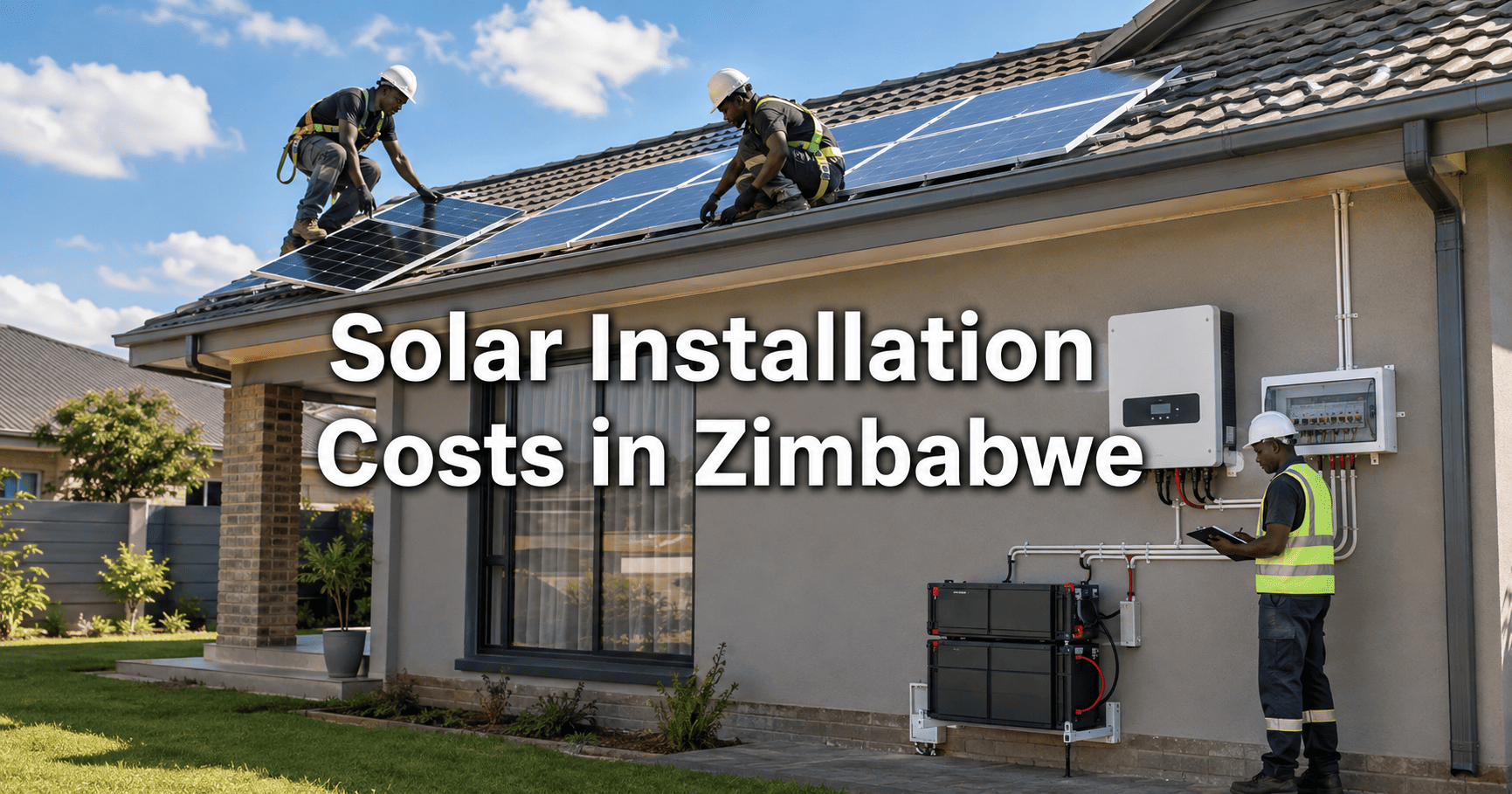
Solar Installation Costs in Zimbabwe
Solar installation costs in Zimbabwe cannot be accurately represented by one fixed national price.
Two customers may buy the same inverter, battery and solar panels but receive different installation quotations because their properties have different roofs, wiring, cable distances, mounting requirements and locations.
A straightforward installation on a single-storey urban home may require less labour and fewer additional materials than an installation involving:
- A high or difficult roof
- Long cable distances
- An old distribution board
- Underground trenching
- A remote rural location
- Generator integration
- Multiple buildings
- Additional battery storage
- A borehole pump
- Extensive protection and earthing work
At Solar Power Shop, the advertised solar-package price covers the equipment listed in that package. Installation labour and any additional materials required for the specific property are quoted separately. Delivery may also be charged depending on location.
This guide explains the main factors affecting solar installation costs and what customers should expect to see in a professional quotation.
Does the Solar Package Price Include Installation?
No. Solar Power Shop’s standard hybrid-kit prices do not include installation labour.
The listed package may include:
- Solar panels
- Hybrid inverter
- Lithium or gel battery
- Protection kit
- Mounting kit
- Cables included with the package
However, the complete installation may require additional materials after the property has been assessed.
These can include:
- Extra solar cable
- Longer battery cables
- AC supply cable
- Cable trays or conduit
- Additional breakers
- Isolators
- Distribution-board work
- Earthing materials
- Surge protection
- Special mounting structures
- Trenching materials
- Changeover equipment
- Generator-integration components
Customers should therefore distinguish between:
- The equipment-package price
- Installation labour
- Additional site-specific materials
- Delivery or transport where applicable
You can compare the equipment-package prices in our Solar System Prices in Zimbabwe: Buyer’s Guide.
Why Solar Installation Prices Differ
A proper solar installation is not simply a matter of attaching panels to a roof and connecting a battery.
The installer must determine:
- What the customer wants to power
- How much electricity the appliances consume
- The inverter and battery requirements
- The number of solar panels
- Suitable panel-string design
- Panel position and mounting method
- Cable sizes and routes
- Earthing requirements
- Electrical protection
- Inverter and battery location
- Integration with ZESA
- Integration with a generator, if present
- Distribution-board changes
- Testing and commissioning
The installation quotation reflects the work and materials required to complete these tasks safely.
1. Solar-System Size
Larger systems normally cost more to install because they involve more equipment, heavier components and more complicated electrical work.
For example, a 1kVA system may contain:
- One solar panel
- One small battery
- One inverter
- A compact mounting arrangement
A 5kVA system may contain:
- Six or more solar panels
- A heavier 48V lithium battery
- A larger inverter
- More substantial wiring
- More protection equipment
- A larger mounting structure
A 10kVA or 15kVA system may require:
- Multiple batteries
- Larger solar arrays
- Several panel strings
- More than one MPPT input
- Heavy-duty cabling
- Battery racks or cabinets
- Three-phase considerations
- More complex distribution
- A longer installation period
The number of components and time required will affect the labour quotation.
2. Number of Solar Panels
Installing more solar panels increases:
- Mounting-rail requirements
- Roof work
- Clamps and fasteners
- Cable length
- Connectors
- Panel-string complexity
- Labour time
- Testing requirements
A standard Solar Power Shop 5kVA hybrid package uses six 450W panels, but another 5kVA-class system may require more panels according to its energy requirements.
Our guide explaining how many solar panels a 5kVA system needs shows why inverter size alone does not determine the panel count.
3. Roof Type
The roof material and design affect the mounting method.
Common roof types include:
- Concrete tiles
- Metal sheets
- IBR roofing
- Chromadek roofing
- Flat concrete slabs
- Thatched roofing
- Custom architectural roofs
Different roofs may require different:
- Brackets
- Rails
- Fasteners
- Waterproofing methods
- Structural support
- Safety equipment
- Labour time
An installer should not use one mounting method for every roof.
Incorrect drilling or fastening can cause:
- Roof leaks
- Loose panels
- Damaged tiles
- Rust
- Structural weakness
- Wind-related failure
The quotation must allow for a secure mounting method appropriate to the property.
4. Roof Height and Accessibility
A low, accessible single-storey roof is generally easier to work on than:
- A double-storey house
- A steep roof
- A commercial building
- A roof with limited access
- A fragile or deteriorated roof
- A roof surrounded by obstacles
Difficult access may require:
- Additional technicians
- Scaffolding
- Ladders
- Safety harnesses
- Roof walkways
- Special lifting equipment
- More installation time
The installer should assess whether the roof can safely carry the mounting structure and panels.
The United States Department of Energy’s solar site-assessment and installation guide identifies roof area, orientation, structural considerations, shading and equipment locations as important planning factors.
5. Roof Condition
An old or damaged roof should be repaired before panels are installed.
Warning signs include:
- Cracked tiles
- Rusted sheets
- Loose fasteners
- Existing leaks
- Rotten timber
- Weak roof sections
- Significant sagging
Installing panels over a roof that soon needs replacement creates additional future costs because the solar array may need to be removed and reinstalled.
Roof repairs are normally separate from the solar installation quotation unless explicitly included.
6. Ground-Mounted Versus Roof-Mounted Panels
A ground-mounted array may be recommended when:
- The roof is too small
- The roof is heavily shaded
- The roof faces an unsuitable direction
- The roof condition is poor
- The property requires a large array
- A farm or rural property has suitable ground space
Ground mounting may require:
- A custom steel structure
- Concrete foundations
- Excavation
- Additional security
- Longer cable runs
- Trenching
- Fencing
- Vegetation control
This can make the installation more expensive than a straightforward roof installation.
However, ground mounting may improve orientation, access and maintenance where conditions are suitable.
7. Panel Orientation and Shading
Panels should be positioned to make good use of available sunlight while avoiding unnecessary shade.
Shading may come from:
- Trees
- Chimneys
- Water tanks
- Satellite dishes
- Nearby buildings
- Utility poles
- Other roof sections
A poor installation location can reduce energy production even when premium panels are used.
A site assessment may identify the need to:
- Move the array to another roof section
- Divide the array into suitable strings
- Use a ground-mounted structure
- Trim vegetation where appropriate
- Extend cables to reach a better location
These changes may affect the quotation.
The World Bank-supported Global Solar Atlas provides independent information about Zimbabwe’s solar resource and photovoltaic power potential, but the individual property must still be assessed for orientation and shading.
8. Distance Between Panels and Inverter
Longer cable routes require more material and labour.
The installer must consider the distance between:
- Panels and inverter
- Inverter and battery
- Inverter and distribution board
- ZESA supply and inverter
- Generator and inverter
- Main house and secondary buildings
- Inverter and monitoring equipment
Long cable distances can increase:
- Cable cost
- Conduit or trunking
- Voltage drop
- Installation time
- Trenching
- Protection requirements
Cable size should be calculated from current, distance, voltage and permitted voltage drop. It should not be selected only according to what is cheapest or readily available.
9. Inverter and Battery Location
The inverter and battery need a suitable installation location.
The area should consider:
- Manufacturer clearance requirements
- Ventilation
- Direct sunlight
- Rain and moisture
- Dust
- Excessive heat
- Accessibility
- Security
- Distance from the distribution board
- Noise
- Maintenance access
- Exposure to children or household traffic
A wall may need a solid mounting surface for a heavy inverter. A large battery may require:
- A floor-standing position
- Wall brackets
- A cabinet
- A rack
- A dedicated equipment room
- Additional ventilation or security
The Department of Energy’s PV planning guidance notes that inverters and balance-of-system equipment require suitable mounting space and cable routes.
10. Battery Size and Quantity
One compact lithium battery is normally quicker to install than a bank containing multiple modules.
Additional batteries may require:
- A rack or cabinet
- Busbars
- Parallel battery cables
- Communication cables
- Battery addressing
- Current balancing
- Larger protection devices
- More configuration
- Additional testing
Battery cables carry high current and must be correctly sized and protected.
Customers comparing battery options should read our guide to lithium battery prices in Zimbabwe, which explains how voltage, usable capacity, current limits, communication and warranty affect cost.
11. Existing Distribution Board
The condition of the property’s distribution board can significantly affect installation cost.
A modern, clearly labelled distribution board may be relatively easy to integrate.
An older board may require:
- Replacement breakers
- Reorganisation
- New labelling
- Separation of essential and non-essential circuits
- Removal of unsafe wiring
- Installation of additional protection
- A new enclosure
- Changeover arrangements
- Earthing corrections
These improvements are not unnecessary extras. The solar inverter becomes part of the property’s electrical system and must be connected safely.
12. Essential and Non-Essential Load Separation
Some customers want the solar system to power only selected circuits during load shedding.
Essential loads may include:
- Lights
- Refrigerator
- Deep freezer
- Wi-Fi
- Television
- Security equipment
- Home-office circuits
Non-essential or heavy loads may include:
- Electric geyser
- Full electric stove
- Oven
- Large air conditioners
- High-power workshop equipment
- Other appliances that exceed the system design
Separating circuits can prevent accidental overloads, but it may require distribution-board work and additional wiring.
Read What Can a 5kVA Solar System Run in Zimbabwe? before deciding which circuits should receive backup power.
13. Solar Protection Equipment
A complete installation should consider protection on both the DC and AC sides.
Depending on the design, this may include:
- DC isolators
- DC breakers or fuses
- AC breakers
- Surge-protection devices
- Battery isolator or fuse
- Correct earthing
- Lightning-related protection
- Appropriate enclosures
- Cable protection
- Warning labels
The standard Solar Power Shop packages include a protection kit, but the final site may require additional protection according to its wiring, distances and equipment.
Protection must be correctly rated. Installing an oversized breaker simply to prevent nuisance tripping can leave cables and equipment inadequately protected.
Learn more about how solar protection kits prevent damage from power surges, lightning and ZESA faults.
14. Earthing Requirements
Correct earthing helps provide a safe path for fault current and supports the operation of protection devices.
The installer may need to assess:
- Existing property earth
- Earth electrode
- Earth conductor
- Panel-frame bonding
- Inverter earthing
- Surge-protection earthing
- Generator earthing arrangements
- Neutral-earth configuration
A missing or inadequate earth may require additional materials and work.
Earthing should not be omitted to reduce the quotation.
15. Integration With ZESA
A hybrid system may need to operate with:
- Solar panels
- Battery storage
- ZESA supply
- Household loads
The installer must configure priorities and operating modes according to the customer’s needs and inverter capabilities.
Examples include:
- Solar-first operation
- Battery reserve
- Grid charging
- Time-based charging
- Essential-load backup
- Export restrictions
- Grid bypass
Integration may require additional breakers, cabling, changeover equipment and distribution-board work.
Our guide to how hybrid solar systems combine batteries, ZESA and generators explains these operating arrangements.
16. Generator Integration
Some customers want the generator to assist when solar, battery and ZESA are insufficient.
Generator integration may require:
- Compatible inverter input
- Changeover equipment
- Correct neutral and earth arrangements
- Generator-capacity assessment
- Frequency and voltage checks
- Automatic-start controls
- Additional cabling
- Configuration and testing
Not every generator works reliably with every hybrid inverter.
Generator integration should be included in the original quotation if the customer requires it.
17. Borehole and Pump Requirements
A borehole pump can affect both system size and installation design.
The installer needs:
- Pump voltage
- Motor rating
- Starting current
- Borehole depth
- Total pumping head
- Pump controller information
- Cable distance
- Required water flow
- Operating schedule
The pump may be connected to the household inverter, given a dedicated solar-pumping system or managed through a separate controller.
Pump starting requirements can increase inverter and battery demands. Long outdoor cable routes and trenching can also increase installation costs.
18. Trenching and Underground Cables
Trenching may be needed when equipment is spread across:
- The main house
- Cottage
- Borehole
- Pump house
- Ground-mounted array
- Workshop
- Office
- Agricultural buildings
A trench may require:
- Excavation
- Conduit
- Armoured cable
- Warning tape
- Backfilling
- Surface restoration
- Waterproof terminations
The required depth and construction should suit the installation and applicable electrical requirements.
19. Travel and Delivery
Solar Power Shop installs throughout Zimbabwe.
Customers can visit the Harare or Mutare branch or communicate online. Delivery and travel requirements depend on the project location.
A nearby urban installation may have different transport costs from an installation in a remote area requiring:
- Long-distance travel
- Overnight accommodation
- Multiple site visits
- Difficult road access
- Transport of large mounting structures
- Additional security arrangements
Delivery may therefore be charged separately depending on location.
20. Installation Labour
Labour cost reflects more than the time spent physically attaching equipment.
A professional installation may involve:
- Site assessment
- System design
- Load calculation
- Material planning
- Transport
- Roof mounting
- Electrical installation
- Battery installation
- Inverter configuration
- Labelling
- Testing
- Commissioning
- Customer training
- Documentation
- Follow-up support
A quotation that appears cheaper because it excludes proper testing, protection or commissioning may create larger repair costs later.
The Zimbabwe Energy Regulatory Authority maintains a public list of trained solar PV system designers and installers for people seeking solar-related assistance.
21. Testing and Commissioning
The system should be tested before handover.
Commissioning may include checking:
- Panel-string voltage
- Panel polarity
- Insulation and connections
- Battery voltage
- Communication
- Charge and discharge operation
- ZESA input
- Inverter output
- Load operation
- Protection devices
- Earthing
- Monitoring
- Fault alarms
- Shutdown procedure
The installer should also configure:
- Battery type
- Charge current
- Low-battery limit
- Grid-charging rules
- Solar priority
- Output priority
- Export settings where applicable
- Time schedules where supported
The United States Department of Energy’s installation and commissioning guidance identifies structural, site, electrical and commissioning considerations as important parts of a PV project.
22. Monitoring and Customer Training
Modern inverters may include local displays or online monitoring.
Setup may involve:
- Wi-Fi configuration
- Mobile application
- Customer account
- Data logger
- Battery communication
- Notification settings
- Remote monitoring
- Firmware configuration
The customer should understand:
- How to check battery state of charge
- How to read the current load
- How to identify solar production
- Which appliances must not run together
- How to respond to overload warnings
- How to shut the system down safely
- Who to contact when a fault occurs
Training and monitoring configuration may form part of a professional installation service.
What Should a Solar Installation Quotation Include?
A clear quotation should identify:
Equipment
- Inverter brand and model
- Battery brand and model
- Solar-panel brand, wattage and quantity
- Mounting equipment
- Protection equipment
- Monitoring accessories
Labour
- Panel mounting
- Inverter and battery installation
- Wiring
- Distribution-board work
- Configuration
- Testing
- Commissioning
Additional materials
- Cable type, size and estimated length
- Conduit or trunking
- Isolators
- Breakers
- Fuses
- Surge protection
- Earthing equipment
- Mounting structure
- Battery rack or cabinet
Other costs
- Delivery
- Travel
- Accommodation where applicable
- Trenching
- Roof repairs where agreed
- Additional electrical work
Commercial terms
- Payment terms
- Quotation-validity period
- Installation schedule
- Equipment warranty
- Workmanship warranty
- Customer responsibilities
- Exclusions
Avoid accepting a quotation that gives only one total without identifying the main equipment and scope.
Questions to Ask Before Accepting a Quotation
Ask the installer:
- Is this an equipment-only or fully installed price?
- Which materials are included?
- Is delivery included?
- Is distribution-board work included?
- Is earthing included?
- Which protection devices will be installed?
- Is panel mounting included?
- Are long cable runs included?
- Is generator integration included?
- Is monitoring setup included?
- Will I receive system training?
- What warranties apply?
- What could cause the price to change?
- Who provides after-sales support?
- Will the system be tested and commissioned before handover?
These questions help customers compare quotations on equal terms.
Cheap Installation Versus Good Value
The cheapest installation quotation is not necessarily the best value.
A low price may exclude:
- Proper protection
- Correct mounting
- Sufficient cable size
- Earthing
- Distribution-board corrections
- Testing
- Labelling
- Monitoring setup
- Customer training
- Workmanship support
Solar equipment is a long-term investment. Poor installation can cause:
- Inverter faults
- Battery shutdowns
- Roof leaks
- Reduced solar production
- Repeated overloads
- Burnt cables
- Damaged appliances
- Unsafe exposed conductors
- Expensive reinstallation
Our article comparing DIY solar installation with professional installation explains why installation quality matters.
Can You Reduce Installation Costs Safely?
Yes, but cost reduction should come from good planning rather than removing safety requirements.
Complete a load assessment first
Buying the correct system prevents expensive replacement or expansion immediately after installation.
Prepare the installation area
Clear safe access to the roof, inverter location and distribution board.
Decide on future expansion
Tell the installer if you intend to add batteries, panels, a pump or another building.
Repair the roof beforehand
Complete necessary roof work before panels are mounted.
Group installation work
Where practical, complete distribution-board improvements and solar installation as one planned project.
Use suitable existing infrastructure
Safe, correctly sized existing conduits or cable routes may reduce additional work, but they must be inspected first.
Avoid unnecessary equipment changes
Do not buy components before confirming that they are compatible.
Request a detailed quotation
A clear scope reduces unexpected variations during installation.
Frequently Asked Questions
How much does it cost to install solar in Zimbabwe?
There is no universal flat rate. The cost depends on system size, roof type, cable distances, property wiring, protection, mounting, delivery, location and installation complexity.
Does the Solar Power Shop kit price include installation?
No. The listed package covers the specified equipment. Installation labour and additional site-specific materials are quoted separately.
Is delivery included?
Delivery may be charged depending on location. Confirm delivery and travel arrangements when requesting a quotation.
Does Solar Power Shop install outside Harare and Mutare?
Yes. Solar Power Shop installs throughout Zimbabwe. Customers may visit either branch or contact the company online.
Why does the installer need to see the property?
A site assessment identifies roof conditions, shading, cable routes, distribution-board condition, equipment locations and additional materials.
Is electrical protection included?
The standard packages include a protection kit, but the final property may need additional correctly rated equipment based on its design.
Can I install the system myself to save money?
Solar systems involve DC voltage, high battery fault current, rooftop work and integration with household wiring. Incorrect installation can damage equipment or create serious safety risks.
Can an installer quote without knowing my appliances?
An initial estimate may be possible, but a final system design should consider appliance wattage, starting requirements and daily operating time.
Does a larger battery increase installation cost?
It can. Large or multiple batteries may require heavier cables, busbars, protection, communication, racks, configuration and more labour.
Will I need to replace my distribution board?
Not always. Replacement or modification depends on its condition, available space, circuit arrangement and safety.
Request a Detailed Solar Installation Quotation
A useful solar quotation should cover the entire project—not only the inverter, panels and battery.
The final cost may include:
- Equipment
- Installation labour
- Additional materials
- Distribution-board work
- Mounting
- Protection
- Earthing
- Testing
- Commissioning
- Delivery or travel
Solar Power Shop installs solar systems across Zimbabwe. Customers can visit either branch or contact the company online to discuss their appliances, property, location and preferred system.
Compare current hybrid solar kits or request a detailed custom quotation for equipment, installation, additional materials and delivery where applicable.
Every property is different. A final installation price should be based on the selected equipment, site assessment and agreed scope of work.