Solar System Prices in Zimbabwe: Buyer’s Guide
The cost of installing solar in Zimbabwe can vary considerably. One household may only need enough backup power for lights, a television and Wi-Fi, while another may want to run refrigerators, a borehole pump, office equipment or other demanding appliances.
This is why asking, “How much does a solar system cost?” does not always produce one simple answer.
The price depends on several factors, including:
- The size and capacity of the inverter
- The number and wattage of the solar panels
- The type and capacity of the battery
- The appliances you want to power
- How long you need the battery to last
- The installation location and complexity
- Additional wiring and installation materials
- Delivery requirements
To make comparison easier, Solar Power Shop offers several hybrid solar kits for different household requirements and budgets. In this guide, we compare current solar system prices in Zimbabwe, explain what is included in each package and help you understand the additional costs you should consider before buying.
Important: Package prices and equipment availability can change. Installation, site-specific materials and delivery may be charged separately. Contact Solar Power Shop for a detailed quotation based on your property and energy requirements.
Quick Comparison of Solar System Prices in Zimbabwe
The following prices apply to the listed equipment packages:
| Hybrid solar kit | Package price | Solar panels | Battery | Inverter |
|---|---|---|---|---|
| 1kVA kit | US$520 | 1 × 450W monocrystalline panel | 12V 100Ah Eco lithium-ion or 200Ah gel battery | 1kVA hybrid inverter |
| 1.5kVA kit | US$700 | 2 × 450W monocrystalline panels | 12V 100Ah lithium-ion battery | 1.5kVA hybrid inverter |
| 2kVA kit | US$760 | 2 × 450W monocrystalline panels | 12V 100Ah lithium-ion battery | 2kVA hybrid inverter |
| 3.2kVA kit | US$995 | 4 × 450W monocrystalline panels | 24V 100Ah lithium-ion battery | 3.2kVA hybrid inverter |
| 5kVA kit | US$1,760 | 6 × 450W monocrystalline panels | 48V 100Ah lithium-ion battery | 5.5kVA hybrid inverter |
Each package also includes a protection kit, mounting kit and cables.
You can compare the latest prices and request a detailed estimate on our hybrid solar kits page.
What Is Included in the Solar Kit Price?
Each advertised hybrid solar kit includes the main equipment required to build the specified system:
- Monocrystalline solar panels
- A battery
- A hybrid inverter
- A solar protection kit
- A panel mounting kit
- Cables included with the package
The exact quantities and specifications depend on the selected package.
However, the displayed package price should not automatically be treated as the complete installed cost for every property. Installation labour and additional materials required for your particular site are quoted separately.
For example, one property may require:
- Longer cable runs
- A specialised mounting structure
- Changes to an existing distribution board
- Additional breakers or isolators
- Trenching or underground cables
- Extra protection equipment
- Work at height
- Integration with an existing solar system, generator or ZESA supply
Solar Power Shop therefore recommends obtaining a detailed quotation before making a final buying decision.
1kVA Solar Kit – US$520
The 1kVA kit is the most affordable package in this range.
It includes:
- 1 × 450W monocrystalline solar panel
- 1 × 12V 100Ah Eco lithium-ion battery or 200Ah gel battery
- 1 × 1kVA hybrid inverter
- Protection kit
- Mounting kit
- Cables
This package is generally intended for light, essential loads. Depending on the actual appliance ratings and usage pattern, it may be suitable for items such as:
- LED lights
- Phone charging
- Wi-Fi router
- Television or decoder
- A laptop
- Other small electronic devices
A 1kVA system should not be purchased with the expectation that it will power heavy appliances such as electric stoves, geysers, kettles, large pumps or several high-consumption appliances simultaneously.
This package is best suited to someone who wants basic backup power during load shedding without investing in a larger household system.
1.5kVA Solar Kit – US$700
The 1.5kVA hybrid kit includes:
- 2 × 450W monocrystalline solar panels
- 1 × 12V 100Ah lithium-ion battery
- 1 × 1.5kVA hybrid inverter
- Protection kit
- Mounting kit
- Cables
Compared with the 1kVA package, the 1.5kVA kit provides additional inverter capacity and twice the listed solar-panel capacity.
It may be suitable for a small home requiring essential backup for:
- Lighting
- Television and decoder
- Wi-Fi
- Laptops
- Phone charging
- Selected low-power appliances
The exact operating time will depend on the combined load, battery condition, sunlight available for charging and how the system is configured.
If you are interested in this system size, you can also review the available 1.5kVA solar system packages.
2kVA Solar Kit – US$760
The 2kVA hybrid kit includes:
- 2 × 450W monocrystalline solar panels
- 1 × 12V 100Ah lithium-ion battery
- 1 × 2kVA hybrid inverter
- Protection kit
- Mounting kit
- Cables
This system provides more inverter capacity than the 1.5kVA option while retaining a compact battery and panel configuration.
It can be considered by households that need essential backup but want slightly more flexibility when using several modest appliances. However, the total load still needs to be managed carefully.
The fact that an appliance can start on an inverter does not necessarily mean it should be used continuously. Battery capacity, surge requirements and daily energy consumption must all be considered.
Before choosing this package, write down the wattage of every appliance you want to use and estimate how many hours each appliance will run. Our step-by-step solar system sizing guide explains this process in more detail.
3.2kVA Solar Kit – US$995
The 3.2kVA hybrid kit includes:
- 4 × 450W monocrystalline solar panels
- 1 × 24V 100Ah lithium-ion battery
- 1 × 3.2kVA hybrid inverter
- Protection kit
- Mounting kit
- Cables
This package is designed for households that need more than basic lighting and entertainment backup.
Depending on the appliance ratings and how loads are managed, it may support a practical combination of:
- Household lighting
- Television and decoder
- Wi-Fi
- Laptops and desktop computers
- Refrigerator
- Selected small appliances
Large heating appliances must still be treated carefully. Kettles, irons, microwaves, electric stoves and geysers consume considerably more power than lights and electronics.
Before adding cooking appliances to any system, read our guide explaining whether a four-plate electric stove and oven can run on solar in Zimbabwe.
You can also examine the available 3kVA solar system packages when comparing options around this capacity.
5kVA Solar Kit – US$1,760
The 5kVA package includes:
- 6 × 450W monocrystalline solar panels
- 1 × 48V 100Ah lithium-ion battery
- 1 × 5.5kVA hybrid inverter
- Protection kit
- Mounting kit
- Cables
This is the largest of the standard hybrid kits in this comparison.
A properly configured system in this range offers considerably more flexibility than the smaller packages and may suit a medium-sized household with multiple essential appliances.
Depending on the actual load assessment and usage schedule, a system of this size may be considered for combinations involving:
- Household lighting
- Televisions and entertainment equipment
- Wi-Fi and computers
- Refrigerators or freezers
- Security equipment
- Selected kitchen appliances
- Other moderate household loads
The inverter rating is only one part of the calculation. The battery determines how much stored energy is available, while the solar panels affect how quickly the battery can recharge during suitable sunlight.
A customer who needs longer battery runtime may require additional battery capacity even when the inverter is large enough to run the appliances.
For a clearer explanation of battery capacity, read Choosing the Right Solar Battery Capacity for Your Home.
Does the Package Price Include Installation?
No. Installation is charged separately.
Customers should contact Solar Power Shop for a quotation covering:
- Installation labour
- Additional installation materials
- Any electrical alterations
- Site-specific mounting requirements
- Extra cabling where required
- Transport or delivery where applicable
This approach allows the quotation to reflect the actual work required rather than adding the same installation charge to every property.
A simple urban installation with short cable distances may not have the same cost as an installation on a large rural property, farm or business premises.
Professional installation also helps ensure that the inverter, panels, battery, protection equipment and electrical distribution are correctly matched. If you are considering installing equipment yourself, review our comparison of DIY solar installation versus a professional setup.
Is Delivery Included?
Delivery depends on the customer’s location and may be charged separately.
Solar Power Shop installs systems throughout Zimbabwe. Customers can visit either branch in person or make contact online to discuss:
- Package availability
- Installation requirements
- Delivery arrangements
- Payment
- A detailed quotation
Because transport requirements differ between Harare, Mutare and other parts of Zimbabwe, customers should confirm the applicable delivery charge before completing the purchase.
Why Two Similar-Sized Systems Can Have Different Prices
A solar system should not be judged only by the number printed on the inverter.
Two systems advertised as 5kVA can have very different prices because they may include different:
- Battery capacities
- Battery chemistries
- Solar-panel quantities
- Panel wattages
- Inverter brands
- Protection equipment
- Monitoring capabilities
- Installation materials
- Warranties
- Support arrangements
A cheaper package may have enough inverter capacity to run an appliance but insufficient battery storage to run it for the required time.
Likewise, a large battery connected to too few solar panels may recharge slowly. That can become a problem during extended load shedding or cloudy conditions.
The complete design must balance three things:
- Inverter capacity: the amount of power the system can supply at a particular time.
- Battery capacity: how much energy can be stored for use when solar or ZESA power is unavailable.
- Solar-panel capacity: how much energy can be generated under suitable sunlight.
Our guide to hybrid solar systems in Zimbabwe explains how these components work together with ZESA and generators.
Important Costs Buyers Sometimes Forget
When budgeting for solar, consider more than the advertised equipment price.
Installation labour
Professional installation is quoted separately because properties have different layouts and electrical requirements.
Additional materials
The package includes the listed mounting kit, cables and protection kit. However, your installation may require extra or specialised materials after a site assessment.
Delivery
Delivery may be charged depending on the destination and installation arrangements.
Additional batteries
A customer who wants longer nighttime operation or extended backup may need more battery storage.
Additional solar panels
More panels may be recommended when energy consumption is high or faster daytime charging is required.
Electrical corrections
Unsafe or outdated wiring may need attention before the solar system can be connected properly.
Future expansion
If you expect your electricity requirements to grow, discuss expandability before buying. Selecting a system with a sensible upgrade path can be more economical than replacing major components later.
How to Choose the Right Solar Package
1. List the appliances you want to power
Record every appliance, its wattage and the approximate number of hours it will be used each day.
Separate essential appliances from optional ones.
2. Consider starting power
Some appliances, including refrigerators, freezers and pumps, can require more power when starting than during normal operation.
3. Decide how long backup must last
A system designed for two hours of essential backup will have different battery requirements from one expected to operate throughout the night.
4. Consider daytime and nighttime use
Solar panels produce energy during suitable daylight, while nighttime use depends mainly on stored battery energy or another available power source.
5. Allow for future requirements
Consider whether you may later add:
- Another refrigerator or freezer
- A borehole pump
- Security equipment
- A home office
- More battery storage
- More solar panels
6. Request a professional assessment
A professional assessment helps prevent the two most common buying problems: purchasing an undersized system that constantly overloads or paying for capacity that the household does not need.
Read our guide to the top mistakes people make when going solar before committing to a package.
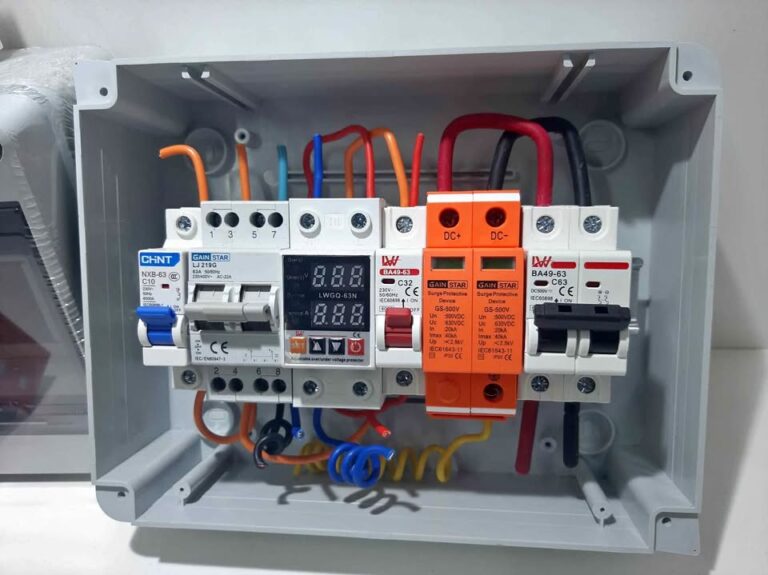
Why Protection Equipment Matters
Each listed kit includes a protection kit, but the final protection design must still suit the installation.
Solar equipment can be affected by:
- Lightning
- Electrical surges
- ZESA voltage fluctuations
- Incorrect isolation
- Poor earthing
- Inadequate circuit protection
Protection equipment is not an unnecessary extra. It helps reduce the risk of damage to panels, inverters, batteries and household appliances.
Learn more about how solar protection kits prevent damage from power surges, lightning and ZESA faults.
What If You Need More Than a 5kVA System?
The hybrid kits listed above range from 1kVA to 5kVA, but larger homes, farms and businesses may require a bigger system.
Solar Power Shop also provides larger-package options, including:
- 5.2kVA solar system packages
- 10kVA solar system packages
- 15kVA solar system packages
Larger systems may be more appropriate when the property has borehole pumps, multiple refrigerators, office equipment, machinery, air-conditioning or other substantial loads.
These systems should be selected after a proper load and site assessment.
Buying Solar for Family in Zimbabwe While Abroad
Customers outside Zimbabwe can contact Solar Power Shop online to discuss a system for parents, relatives, a business or property in Zimbabwe.
The process should begin with a clear list of appliances and the property location. Solar Power Shop can then advise on the package, installation requirements, delivery and any additional materials.
Diaspora customers can read our detailed guide to buying solar for parents or family in Zimbabwe while living abroad.
Frequently Asked Questions
How much is a complete solar system in Zimbabwe?
Solar Power Shop’s listed hybrid equipment packages currently range from US$520 for a 1kVA kit to US$1,760 for a 5kVA kit. Installation, additional site-specific materials and possible delivery charges are quoted separately.
What is included in a solar kit?
The listed kits include solar panels, a battery, a hybrid inverter, a protection kit, a mounting kit and cables. The quantities and specifications depend on the package selected.
Is solar installation included in the package price?
No. Installation labour and additional installation materials are quoted separately according to the property and work required.
Is delivery free throughout Zimbabwe?
Not necessarily. Delivery may be charged depending on the customer’s location. Confirm delivery arrangements when requesting your quotation.
Does Solar Power Shop install outside Harare and Mutare?
Yes. Solar Power Shop provides installation services throughout Zimbabwe. Customers can contact either branch in person or communicate with the company online.
Can a 1kVA solar system run a refrigerator?
That depends on the refrigerator’s running and starting requirements, the other connected loads and the system configuration. Obtain a load assessment instead of choosing solely by the inverter rating.
Is a 5kVA system enough for a whole house?
It depends on which appliances are used simultaneously and how much battery runtime is required. Heavy appliances such as stoves, geysers, kettles and pumps can significantly increase the required capacity.
Can I add more batteries or panels later?
Many systems can be expanded, but compatibility and equipment limits must be checked first. Discuss future expansion before selecting the inverter, battery voltage and initial panel arrangement.
Which is better: a gel or lithium battery?
Both can be used in suitable applications, but they differ in usable capacity, charging behaviour, lifespan, weight and price. The right choice depends on the intended usage and budget.
Get a Detailed Solar Quotation
The best solar system is not automatically the cheapest or the largest. It is the system correctly matched to your appliances, operating hours, property and budget.
Solar Power Shop offers hybrid solar packages from 1kVA to 5kVA, as well as larger options for homes, businesses, farms and other demanding applications.
Customers can visit either Solar Power Shop branch, contact the company online or request a quotation for installation anywhere in Zimbabwe.
Compare current hybrid solar kit prices or request a custom solar quotation based on your specific requirements.
Prices and package availability may change. Installation, additional site-specific materials and delivery, where applicable, are quoted separately.