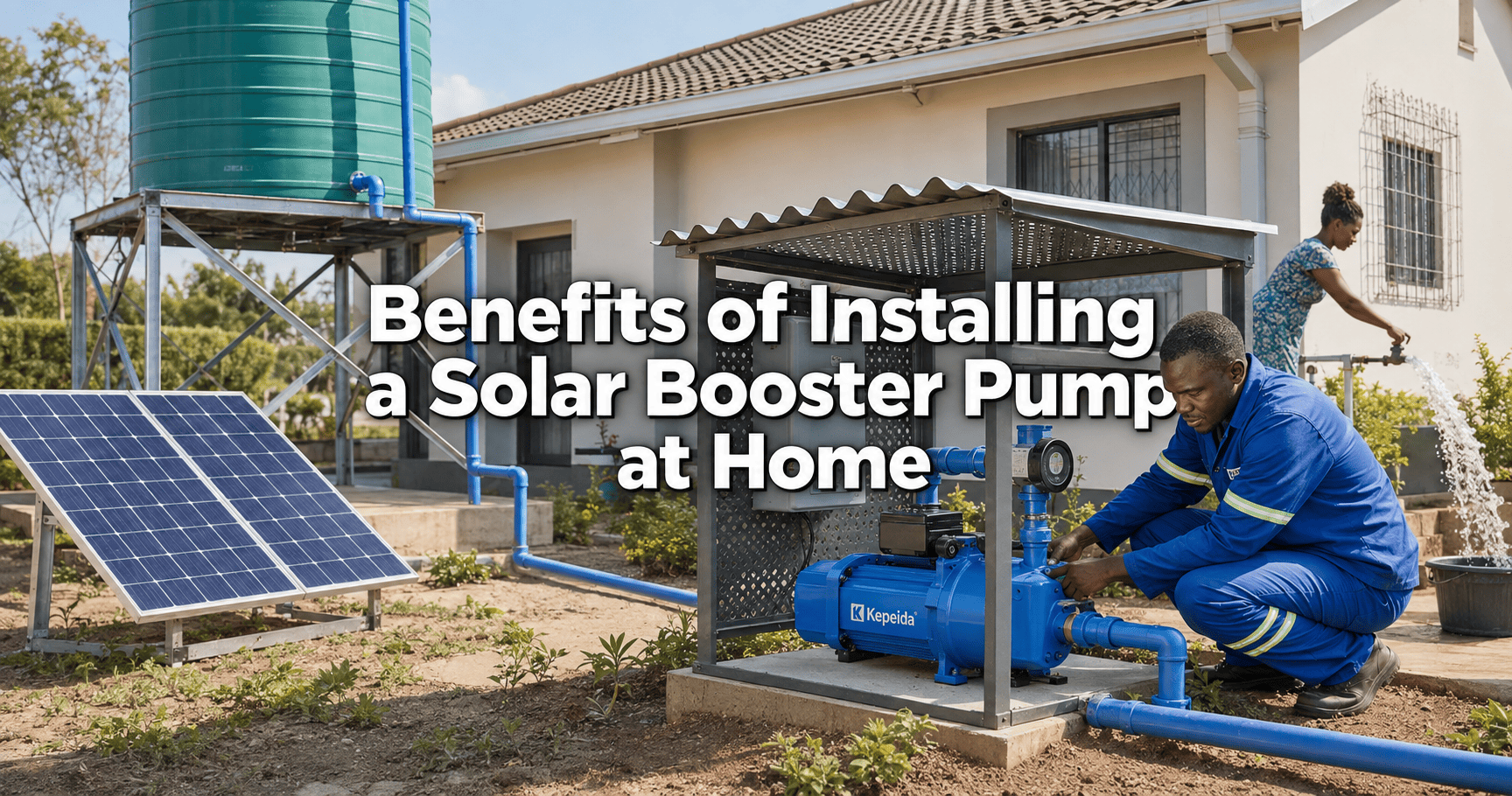
Benefits of Installing a Solar Booster Pump at Home
Low water pressure can make everyday household activities unnecessarily frustrating.
A shower may produce only a weak stream, taps can take too long to fill containers, and appliances may not receive the water flow they require. The problem often becomes more noticeable when several taps are opened at the same time.
Homes supplied from elevated water tanks frequently depend on gravity to create pressure. If the tank is not high enough above the outlets, the resulting pressure may be insufficient.
A solar booster pump can improve the pressure and flow of water leaving the tank while reducing dependence on ZESA. It can be especially useful for Zimbabwean homes that already use boreholes, storage tanks or off-grid solar equipment.
This guide explains the benefits of installing a solar booster pump at home, how the system works and what should be checked before choosing one.
What is a solar booster pump?
A solar booster pump is a surface-mounted water pump used to increase the pressure of water moving through a plumbing system.
In a typical domestic installation, water is first stored in a tank. The booster pump then draws water from the tank and pushes it towards taps, showers, toilets, appliances or irrigation outlets at a higher pressure.
A basic arrangement may look like this:
Water source → storage tank → solar booster pump → household plumbing
The pump may receive electricity from:
- Dedicated solar panels
- A suitable battery bank
- A compatible solar controller
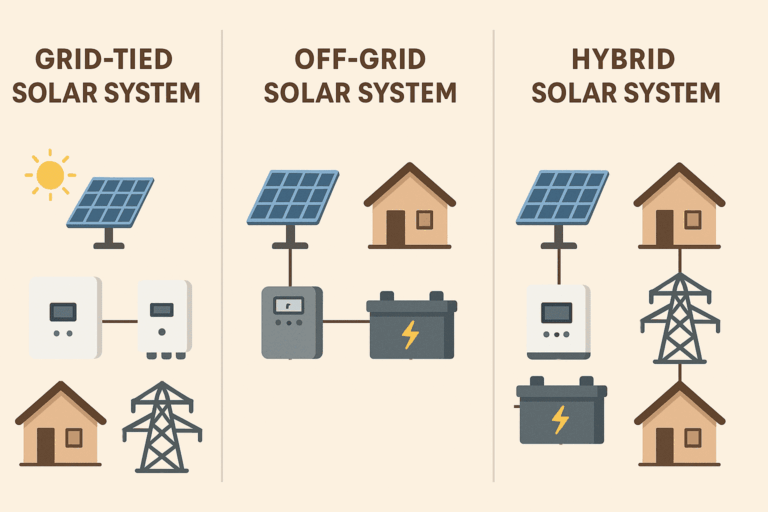
- A correctly designed hybrid power system
The exact electrical arrangement depends on the pump model and its voltage, current and controller requirements.
A booster pump should not be confused with a submersible borehole pump. The submersible pump lifts water from underground into the tank, while the booster pump increases pressure between the storage tank and the points where the water is used.
What problem does a booster pump solve?
Water pressure created by gravity depends mainly on the vertical height between the tank’s water level and the outlet.
A tank installed only slightly above the shower may not create enough pressure for a satisfying flow. Pressure can fall further when water must travel through long pipes, narrow pipes, bends, filters and several open taps.
Common signs of inadequate pressure include:
- Weak showers
- Taps flowing slowly
- Toilets taking too long to refill
- Washing machines struggling to fill
- Poor garden-hose pressure
- Water flow dropping when another tap opens
- Upper-floor outlets receiving little water
- Gas or electric water heaters failing to operate correctly because of insufficient flow
A correctly selected booster pump adds pressure to the system instead of relying entirely on the height of the storage tank.
Grundfos describes domestic booster pumps as solutions for low or varying pressure that affects showers, taps and household comfort.
1. Improved shower pressure
One of the most noticeable benefits of a solar booster pump is improved shower performance.
When a tank relies only on gravity, the shower pressure may be weak—particularly if the tank is close to the bathroom roof level. A booster pump can increase pressure so that water reaches the shower head more effectively.
This may result in:
- A stronger shower stream
- Better operation of mixer showers
- More consistent hot-and-cold water mixing
- Reduced waiting time
- Improved performance in bathrooms farther from the tank
The pump must still be correctly sized. Excessive pressure can damage unsuitable pipes, valves or a non-pressure solar geyser.
If the home has a solar water heater, confirm that it can safely operate at the proposed boosted pressure. A gravity or non-pressure geyser should not be treated as a pressurised system.
Read our solar geyser buying guide before connecting a booster pump to a solar hot-water installation.
2. More consistent pressure when several taps are open
Water pressure often drops when several people use water at the same time.
For example:
- Someone may be showering
- A toilet may be refilling
- The washing machine may be taking in water
- Another person may open the kitchen tap
A properly selected booster system can provide better flow under these changing conditions.
More advanced constant-pressure systems automatically adjust pump speed according to demand. Simpler pumps may operate through a pressure switch, flow switch or controller.
Franklin Electric explains that constant-pressure booster systems adjust to changing demand to maintain more consistent household pressure.
The exact result depends on the pump curve, available inlet water, pipe sizes and the number of outlets operating simultaneously.
3. Reduced dependence on ZESA
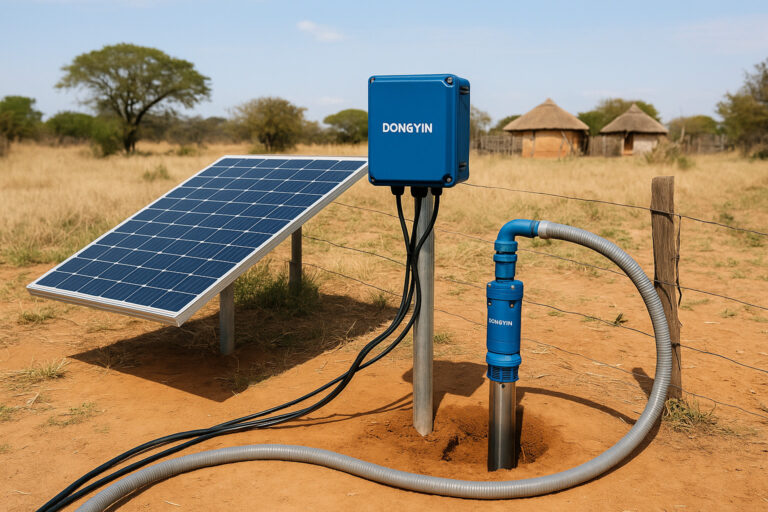
A DC solar booster pump can operate from an appropriately designed solar power source instead of relying completely on grid electricity.
This is useful during:
- Load shedding
- Extended power cuts
- Unstable grid conditions
- Off-grid living
- Periods when household backup power must be reserved for essential appliances
A dedicated solar pumping arrangement can provide daytime pressure without adding the pump to the home’s AC inverter load.
However, the system must be designed for the actual pump. The solar array or battery supply must provide the correct:
- Operating voltage
- Starting power
- Current
- Controller input
- Electrical protection
Do not connect panels directly to a pump unless the pump and controller are specifically designed for that arrangement.
4. Lower electricity costs
Once installed, a solar booster pump can use energy produced by the sun instead of purchasing grid electricity during normal solar operation.
The total saving depends on:
- Pump power
- Daily operating time
- Household water use
- Solar-array size
- Battery use
- ZESA electricity costs
- System efficiency
A booster pump normally operates only when water is required or when the control system detects falling pressure. A correctly sized automatic system therefore does not need to run continuously.
Using solar energy can be particularly valuable where a conventional pump would operate frequently throughout the day.
The financial benefit should still be compared with the initial cost of the pump, panels, controller, protection equipment and installation.
5. Better use of stored borehole water
Many Zimbabwean homes use a borehole pump to fill a storage tank.
The tank creates a buffer between the borehole and the home. Water remains available even when:
- The borehole pump is not operating
- Solar production is low
- ZESA is unavailable
- Borehole pumping is scheduled for certain times
- The borehole requires recovery time
A booster pump can then supply the household from the tank at a more useful pressure.
This separates two different jobs:
- The borehole pump lifts water into storage.
- The booster pump distributes stored water around the home.
Separating these functions can reduce unnecessary starting of the submersible borehole pump every time someone opens a tap.
For help designing the pumping side, read our guide to choosing a solar system for a borehole pump.
6. No need for an excessively high tank stand
Increasing tank height can improve gravity pressure, but building a very tall tank stand is not always practical.
A higher structure may involve:
- Greater construction cost
- Structural engineering
- More difficult tank maintenance
- Increased wind exposure
- Safety concerns
- Additional pumping head when filling the tank
- Restrictions caused by the property layout
A booster pump may provide the required pressure without raising the tank to an impractical height.
The tank still needs a secure and suitable base. The booster pump is not a substitute for safe tank installation.
7. Improved operation of household appliances
Some appliances require a minimum water flow or pressure.
Low pressure may affect:
- Washing machines
- Dishwashers
- Water filters
- Instantaneous water heaters
- Irrigation controllers
- Mixer taps
A booster pump can help these appliances receive more consistent water flow.
Before increasing pressure, check the appliance manuals and plumbing ratings. More pressure is not always better. The target should be adequate, controlled pressure rather than the maximum pressure the pump can produce.
8. Better garden and irrigation performance
A home booster pump can also support light garden watering and suitable irrigation applications.
Improved pressure can help with:
- Garden hoses
- Drip-irrigation zones
- Small sprinklers
- Vegetable gardens
- Greenhouse watering
- Filling livestock troughs
The pump must provide both the required flow and pressure for the irrigation equipment.
A pump designed for household boosting may not be suitable for a large irrigation system. Multiple sprinklers, long pipelines or a large cultivated area may require a dedicated agricultural pumping system.
Solar Power Shop also provides water-pumping kits and water-pumping packages for different applications.
9. Useful operation in remote and off-grid homes
Some rural homes have reliable water storage but no dependable grid connection.
A solar booster pump can provide pressurised water without requiring:
- A permanent ZESA connection
- Daily generator operation
- Fuel for routine water use
- A large household inverter solely for pumping
This can improve comfort in off-grid homes by supporting showers, taps and sanitation.
Solar pumping solutions can also be expanded gradually. A household may begin with a tank and booster pump before later installing a larger solar-electric system.
10. Automatic operation
A properly configured booster pump can start automatically when water is required and stop when the tap is closed.
Depending on the system, automatic operation may use:
- A pressure switch
- A flow switch
- A pressure controller
- A pressure tank
- A variable-speed drive
- Dry-run protection
Automatic control means the homeowner does not need to switch the pump on manually before using a tap.
The selected control system should prevent rapid starting and stopping. Repeated short cycling can increase wear and may indicate an undersized pressure tank, a leak, incorrect settings or a control fault.
11. Potentially quieter and more efficient operation
A correctly sized modern booster pump can provide pressure without the excessive noise and energy use associated with an unsuitable oversized pump.
Noise depends on:
- Pump construction
- Mounting
- Pipe vibration
- Pump speed
- Distance from living areas
- Condition of bearings
- Presence of air in the suction pipe
The pump should be installed on a firm base with appropriate pipe support. It should not be mounted directly against a bedroom wall if operating noise is a concern.
A larger pump is not automatically quieter or better. Oversizing can cause excessive pressure, higher power use and frequent cycling.
What is the difference between a booster pump and a borehole pump?
| Booster pump | Borehole pump |
|---|---|
| Usually installed above ground | Installed inside the borehole |
| Takes water from a tank or available supply | Lifts groundwater to the surface |
| Improves distribution pressure | Overcomes borehole depth and pumping head |
| Commonly supplies taps and showers | Commonly fills a storage tank |
| Not designed for deep submersion | Designed for submersible operation |
| Selected using household pressure and flow | Selected using total dynamic head and borehole yield |
A surface booster pump cannot replace a submersible pump in a deep borehole.
If your main problem is getting water out of the borehole, read our comparison of AC and DC solar borehole pumps.
If the tank already fills correctly but the pressure at the taps is weak, a booster pump may be the appropriate solution.
Introducing the 1HP Kepeida DC solar booster pump
Solar Power Shop lists a 1HP Kepeida DC solar booster pump designed for surface-mounted solar pumping applications.
The published specifications include:
- Power: 1HP
- Maximum suction head: 9 metres
- Maximum head: 15 metres
- Published flow rate: 21,000 litres per hour
The current listed sale price is US$160, reduced from US$200. Prices and availability can change, so confirm the current amount before ordering.
Maximum head, suction and flow figures should not be treated as simultaneous performance. Actual output depends on the installation, pipework and operating pressure.
The pump must be assessed against the property’s:
- Required pressure
- Required flow
- Suction conditions
- Pipe length
- Pipe diameter
- Number of outlets
- Electrical supply
- Control requirements
What does “suction head” mean?
Suction head refers to the vertical distance the surface pump must lift water before it reaches the pump inlet.
A published maximum suction head of 9 metres does not mean the pump should always be installed 9 metres above the water.
Actual suction performance can be reduced by:
- Long inlet pipes
- Narrow pipe diameter
- Air leaks
- Blocked strainers
- Bends and fittings
- High water temperature
- Elevation
- Poor priming
The pump should be positioned as close to the water tank as practical and within the manufacturer’s installation limits.
Where possible, a flooded suction arrangement—with the tank outlet above the pump inlet—can make priming and operation more reliable.
Is a solar booster pump suitable for every home?
No. The plumbing and water supply must be assessed first.
A booster pump may be unsuitable or require additional controls when:
- The source tank regularly runs empty
- The incoming pipe is too narrow
- The plumbing cannot withstand the pressure
- A non-pressure solar geyser is connected
- The pump would draw directly from unreliable municipal mains
- The required pressure exceeds the pump’s capability
- The home requires more flow than the pump can deliver
- The electrical supply is incompatible
- Local water regulations restrict direct boosting from mains
The cause of low pressure should also be identified before installing a pump.
Low flow can be caused by:
- A partly closed valve
- Blocked filters
- Mineral scale
- Leaking pipes
- An empty tank
- Undersized plumbing
- Air entering the suction line
- A damaged non-return valve
- A restriction in the solar geyser
- Inadequate municipal supply
A booster pump will not repair these faults.
How to choose the right booster pump
Consider the following factors.
Required flow rate
Estimate how many outlets may operate at the same time. A shower and kitchen tap require less flow than several bathrooms, a washing machine and garden sprinklers operating together.
Required pressure
Determine the pressure needed at the most distant or highest outlet.
The pump must overcome elevation, pipe friction and the pressure required by the outlet.
Source of the water
Confirm whether the pump will draw from:
- A ground-level storage tank
- An elevated tank
- A rainwater tank
- A borehole storage system
- Another approved supply
Suction conditions
Check the vertical distance, pipe length, pipe size and whether the pump can maintain a reliable prime.
Pipe sizes
Narrow pipes restrict flow and increase friction. Installing a powerful pump on unsuitable plumbing may not solve the problem.
Number of bathrooms
A small single-bathroom home has different requirements from a multi-storey house with several bathrooms.
Electrical requirements
Confirm the pump voltage, controller requirements, panel configuration and battery compatibility.
Hot-water system
Make sure geysers, mixers, valves and pipes can safely handle the boosted pressure.
Does a solar booster pump need batteries?
Not necessarily.
A DC booster pump can operate from dedicated solar equipment during daylight if the pump and controller are designed for solar-direct operation.
However, most household water demand also occurs:
- Early in the morning
- In the evening
- At night
- During cloudy periods
If pressurised water is needed outside solar-production hours, the system may require:
- A suitable battery supply
- A hybrid solar system
- Alternative AC operation, where supported
- A pressure tank that reduces frequent starts
- A separate backup-power arrangement
The best design depends on when the household uses water.
Do not connect a DC pump to a battery bank unless the voltages are compatible and the system includes suitable protection.
How many solar panels does a booster pump need?
The number of panels cannot be calculated accurately from horsepower alone.
The installer needs to know:
- Pump operating voltage
- Rated input power
- Starting requirement
- Controller voltage range
- Maximum controller voltage
- Panel operating voltage
- Panel open-circuit voltage
- Required operating hours
- Battery arrangement, if used
Solar panels can be damaged or the pump controller can fail if the voltage configuration is incorrect.
Panel performance also changes with temperature, cloud cover, dust and time of day. The array may require additional capacity so that the pump operates reliably outside peak midday sunshine.
For general panel information, read our comparison of monocrystalline and polycrystalline solar panels.
Important protection features
A home booster-pump installation may require:
- Dry-run protection
- Overcurrent protection
- DC isolator
- Correct fuses or circuit breakers
- Surge-protection device
- Earthing
- Pressure-relief protection
- Non-return valve
- Inlet strainer
- Tank-level control
- Weather protection
- Suitable pipe supports
Dry-run protection is particularly important. If the tank becomes empty and the pump continues operating, the pump may overheat or suffer seal damage.
Grundfos recommends considering dry-run protection and inlet-water cleanliness when boosting from a storage tank.
Electrical protection also matters because long outdoor cables and nearby lightning can expose pumping equipment to voltage surges. Read why solar-system protection kits are essential.
Installation considerations
A professional installation should consider:
- Pump position
- Weather protection
- Drainage around the pump
- Pipe diameter
- Suction-pipe airtightness
- Priming requirements
- Non-return valve position
- Pressure-control settings
- Vibration isolation
- Electrical protection
- Tank-level protection
- Access for maintenance
- Compatibility with the hot-water system
The pump should not be left exposed to rain or standing water unless its enclosure is specifically rated for that environment.
Installation labour and site-specific materials are charged separately by Solar Power Shop. Delivery may also be charged depending on the customer’s location.
Our guide to solar installation costs in Zimbabwe explains why quotations vary between properties.
Solar booster-pump maintenance
Routine maintenance may include:
- Checking for water leaks
- Cleaning the inlet strainer
- Inspecting electrical connections
- Checking the non-return valve
- Examining pipes for air leaks
- Listening for unusual noise
- Checking pump pressure
- Testing dry-run protection
- Cleaning solar panels
- Inspecting the controller
- Keeping the pump enclosure dry
- Checking for frequent starting and stopping
If the pump begins cycling rapidly, losing prime, making unusual noise or delivering less water, switch it off and investigate the cause.
Do not continue running a pump that has no water supply.
Common mistakes to avoid
Choosing by horsepower only
A 1HP rating does not tell you the exact pressure and flow the pump will provide at your operating point.
Confusing a booster pump with a borehole pump
A surface booster pump is not intended to lift water from a deep borehole.
Ignoring maximum pressure
Too much pressure can damage pipes, geysers, valves and appliances.
Using narrow suction pipes
This can restrict flow and make priming difficult.
Installing without dry-run protection
An empty tank can leave the pump operating without water.
Connecting panels without checking voltage
Incorrect panel configuration can damage the pump or controller.
Boosting a non-pressure geyser
A gravity solar geyser may not safely withstand boosted pressure.
Assuming installation is included
The pump price normally does not cover all plumbing, electrical and installation work.
Frequently asked questions
Will a solar booster pump improve shower pressure?
Yes, provided weak pressure is caused by insufficient supply pressure and the pump is correctly selected. Blocked pipes, an empty tank or plumbing faults should be ruled out first.
Can a booster pump draw water directly from a borehole?
A normal surface booster pump is not a substitute for a submersible borehole pump. It has limited suction capability and is generally intended to boost water from a tank or shallow source.
Can the pump work at night?
It can operate at night if it has a compatible battery or alternative power supply. A solar-direct system without batteries depends on available sunlight.
Can I connect a booster pump to my solar geyser?
Only if the geyser and plumbing are designed for the boosted pressure. A non-pressure gravity geyser should not be pressurised without an approved system design.
Does a booster pump run continuously?
An automatic system should run when water is required and stop when demand ends. Continuous operation may indicate a leak, controller problem or unsuitable configuration.
Is a bigger booster pump always better?
No. An oversized pump can create excessive pressure, consume more energy and cycle frequently. It should be selected according to the required flow and pressure.
Does the pump need a pressure tank?
Some systems benefit from a pressure tank because it can reduce rapid cycling and provide a small reserve of pressurised water. Other integrated or flow-controlled systems may use a different control method.
Is installation included in the pump price?
No. Installation and site-specific materials are quoted separately. Delivery charges may also depend on the location.
Is a solar booster pump worth installing?
A solar booster pump can be a worthwhile home improvement when the property has stored water but insufficient pressure.
Its main benefits include:
- Stronger shower pressure
- Better flow at taps
- More consistent pressure
- Improved appliance operation
- Better garden watering
- Reduced dependence on ZESA
- Lower routine electricity consumption
- Practical use of stored borehole water
- Improved comfort in off-grid homes
- Automatic operation when properly configured
The system must still be matched to the water source, plumbing, electrical supply and household demand.
Request a solar booster-pump quotation
Solar Power Shop supplies solar water-pumping solutions for homes, farms and businesses throughout Zimbabwe.
Customers can review the 1HP Kepeida DC solar booster pump, browse the available water-pumping packages or contact Solar Power Shop for assistance.
Installation and additional materials are quoted separately, while delivery charges may apply depending on the location.
Before requesting a quotation, provide details about the water tank, number of bathrooms, required outlets, pipe sizes, current pressure problems and available solar power.