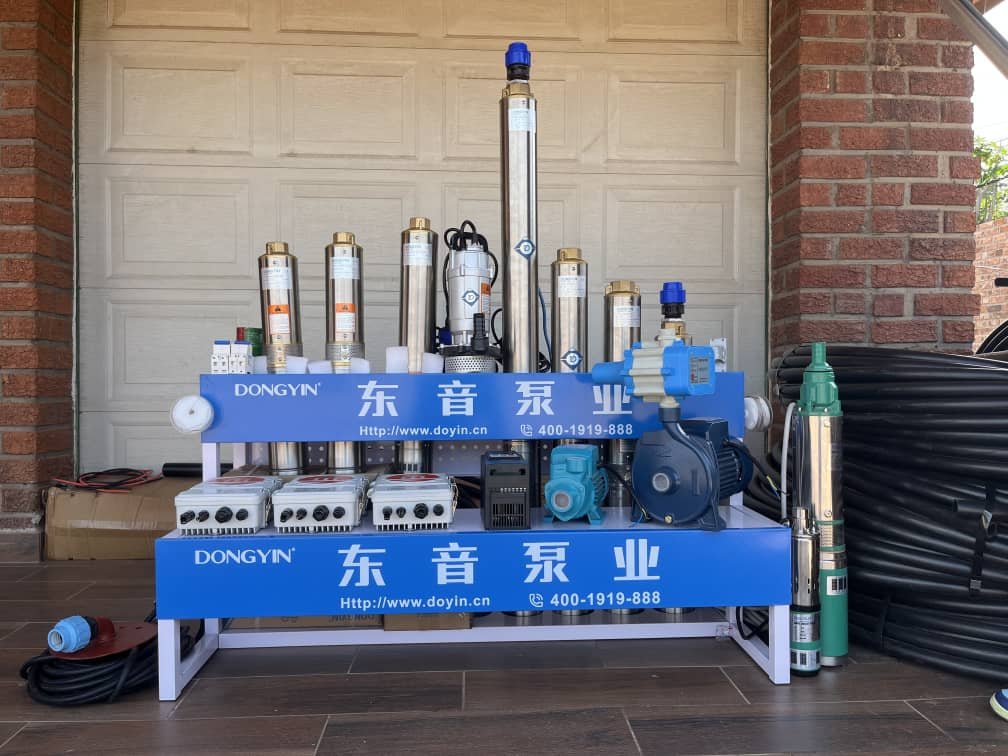
Choosing the Right Solar Water Pump for Your Borehole: AC vs. DC
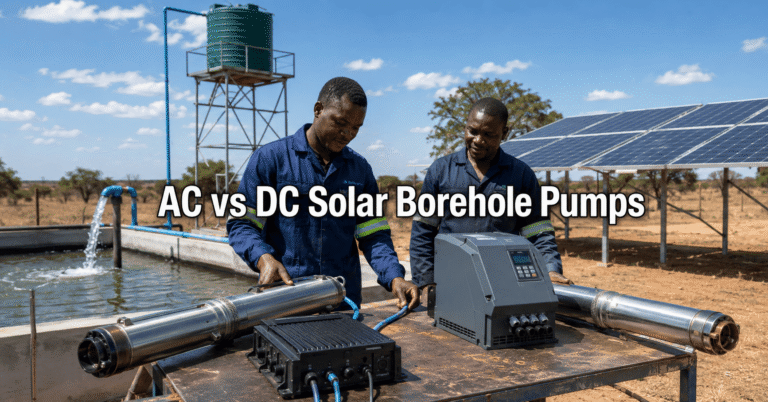
Solar-powered water pumps have become increasingly popular due to their reliability, cost-effectiveness, and sustainability. If you’re planning to install a solar water pump for your borehole, one important decision you’ll face is choosing between an AC or DC pump. Understanding the differences between these two options will ensure you make the best choice for your specific needs.
Table of contents
Understanding Solar Water Pumps
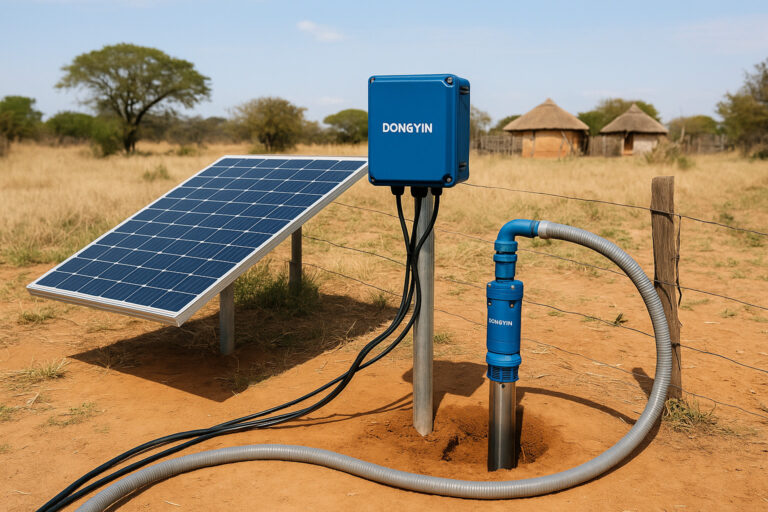
Solar water pumps use solar energy to pump water from boreholes, wells, or other water sources without relying on the conventional power grid. They’re widely used in residential areas, farms, commercial properties, and remote off-grid locations.
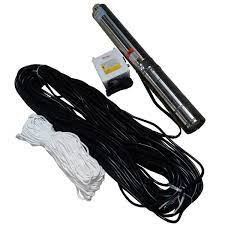
AC Solar Water Pumps
AC (Alternating Current) solar pumps utilize electricity generated by solar panels and converted from DC to AC using an inverter.
Pros:
- Higher pumping capacity suitable for deeper boreholes
- Compatibility with both solar and grid power
- Effective for heavy-duty applications
Cons:
- Higher initial costs due to inverter requirements
- Increased complexity in installation and maintenance
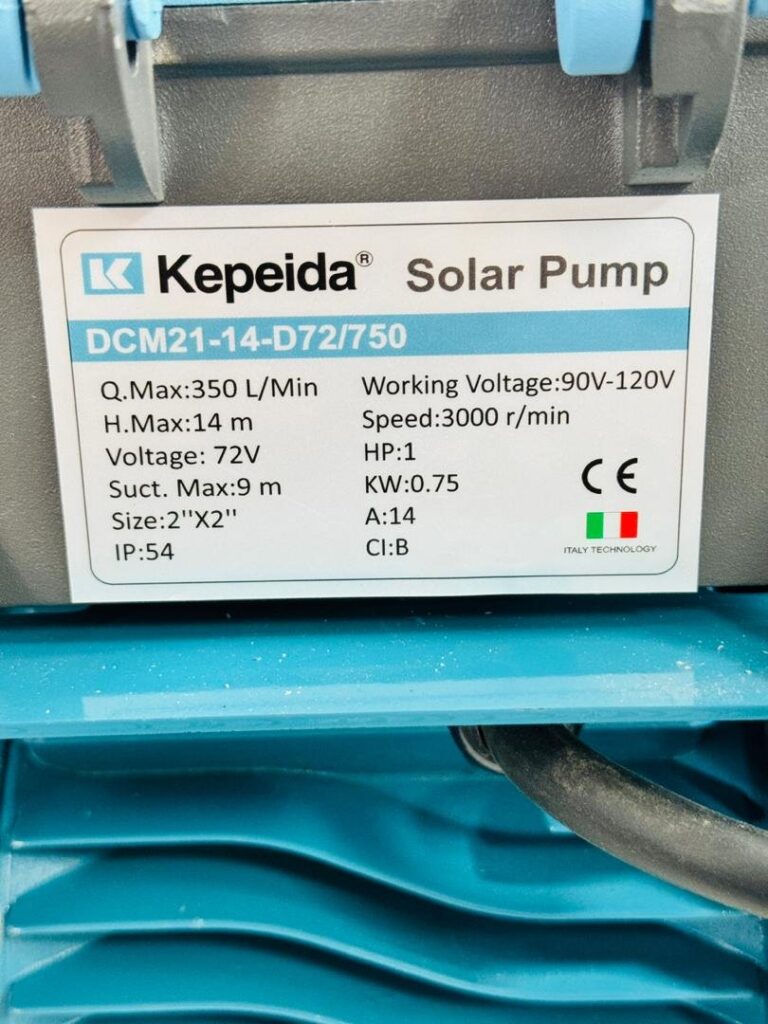
DC Solar Water Pumps
DC (Direct Current) solar pumps directly use the electricity generated by solar panels without conversion.
Pros:
- Greater efficiency for smaller-scale applications
- Simple installation with no inverter needed
- Lower initial investment
Cons:
- Limited pumping power, less suitable for very deep boreholes
- Less effective for high-volume water needs
Key Factors to Consider When Choosing Between AC and DC
When deciding between an AC or DC solar pump, consider these factors:
- Borehole Depth and Yield: Deeper boreholes generally benefit from AC pumps, whereas shallow boreholes work efficiently with DC pumps.
- Energy Efficiency and Complexity: DC pumps are simpler and more energy-efficient for smaller setups.
- Cost Considerations: Evaluate both initial and long-term costs to determine which option fits your budget.
- Maintenance and Parts Availability: AC pumps might require more frequent maintenance, whereas DC pumps typically need less maintenance.
Comparing AC vs. DC Solar Pumps: A Quick Guide
| Feature | AC Solar Pump | DC Solar Pump |
|---|---|---|
| Efficiency | Moderate (due to inverter) | High |
| Initial Cost | Higher | Lower |
| System Complexity | Complex | Simple |
| Pumping Capacity | High (deep wells/high volume) | Moderate (shallow wells) |
| Ideal Usage | Agricultural/industrial use | Residential/small farms |
Expert Recommendations
Industry experts generally recommend AC pumps for deeper, high-capacity boreholes and commercial applications. For residential, small farms, and shallow boreholes, DC pumps provide excellent efficiency and affordability.
Frequently Asked Questions (FAQs)
Q: Are DC pumps suitable for agricultural use?
A: Yes, but typically for smaller-scale agriculture or shallow boreholes.
Q: Can AC pumps work without solar?
A: Yes, AC pumps can easily switch between solar and grid electricity, providing greater flexibility.
Q: Which pump requires less maintenance?
A: DC pumps typically require less maintenance due to simpler components.
Conclusion
Choosing between AC and DC solar water pumps involves carefully assessing your borehole’s depth, water requirements, budget, and long-term maintenance considerations. Consulting with professionals ensures that you make the optimal decision for your specific needs. Reach out to our solar experts today to select the perfect solar water pump for your borehole.