Sizing Your Solar System: A Step-by-Step Guide
Going solar is a fantastic decision for both the environment and your wallet. But before you take the plunge, it’s crucial to determine the right solar system size for your specific needs. An undersized system won’t generate enough power, while an oversized one will be an unnecessary expense.
This guide will walk you through the key factors to consider when sizing your solar system.
Table of contents
Assess Your Energy Consumption
Calculate your average daily electricity usage in kilowatt-hours (kWh). This is a crucial step in determining the correct size of your solar system. But you might ask yourself, “I’m not even an electrician; how am I even going to know how much electricity I use daily?”
Its simpler than you can even imagine, and here are some simple steps you can take to calculate this accurately.
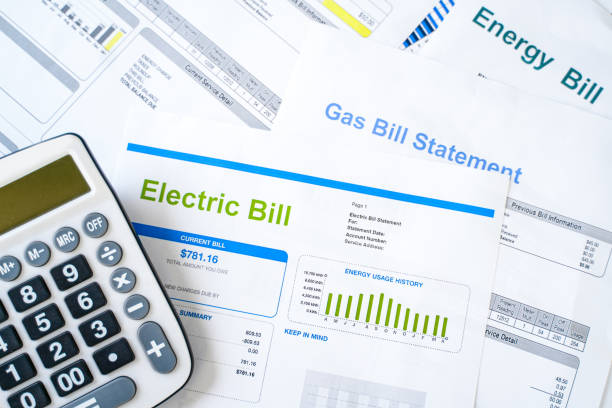
1. Gather your electricity bills
Analyze your past energy consumption patterns and how much energy you buy from the utility (ZESA in the case of Zimbabwe), and let’s assume that you buy at least 300 kWh (300 units). This means that you need 300 kWh every 30 days.
2. Calculate your daily energy usage.
To get your daily energy needs just divide 300kWh by days of the month. Say for a 30 day month if you use 300kWh (300units), that means you need 10kWh [10 units] per day.
The procedure above may save the day for people that already have electricity from the utility and probably want to estimate their daily energy consumption using a utility bill, but what if you don’t have electricity at all but you want to estimate your daily energy needs for an off-grid system?
There is a way to do it which is a bit complex and time consuming, and you might need a good engineer to do it for you, that is why I started off by showing you the simpler way. Now let’s do this for a case where there is no utility bill at all.
3. Sum up the power rating of each and every electrical appliance in your house.
On each electrical gadget there is power rating information that tells you how much power each gadget generally uses. For example, for TV sets and refrigerators, it’s on the back; for laptops, it’s on your power pack that you use to charge the laptop; for cellphones, its on the charging headpin that you plug into your wall socket. You need to add up those values to come up with a total; let’s say you add them and get a value of 3000W.

It simply means if they are going to be working at the same time, you need at least 3000W to be supplied to them to meet their energy demands; but in reality things don’t operate like that.
Not all appliances will be on at the same time. For actual daily energy needs will then need to estimate how many hours each of the appliances would run, say on a day.
If you have somehow failed to do this on your own and you still want to have a thorough and more accurate figure, you might want to consider the following:
4. Hire an electrician to accurately calculate your total home load.
What I have just told you above is for non-electricians, and in as much as it saves the day, an electrician can do a better job by actually calculating the correct load of your house with no mistakes, but if you are on a budget, then what I have told you above will do the trick, or you can hire us to calculate your home load absolutely free of charge!
Steps 1 and 2 above are very critical first steps when designing a solar system that’s meets a particular load energy need. From this you will need to get the right size of solar array; inverter and right-sized battery storage, to meet the energy needs determined in the energy survey.
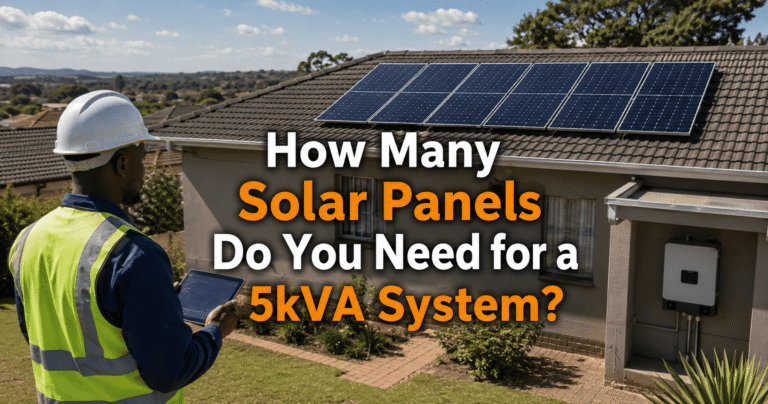
Calculate the number of solar panels needed.
Now that we have seen that you need 10kwh [10units] of energy per day, you now need a solar array big enough to generate or produce these units of energy per day and eventually power your 3000W load. Our solar inverters at Solar Power Shop are hybrid inverters capable of running the load using energy straight from the solar panels and at the same time charging the battery; that is if you have a correctly sized solar array. This is going to be crucial to allow you to only use the sun during the day and the battery only at night. This will also give your battery an even longer life span as it will be used even less and also save you the cost of buying more batteries.
So you will need enough solar panels that will generate 10kwh of energy per day in order to fully run off-grid. Now let me hasten to say 10kwh means 10 000wh. Also take note that for efficient operation its encouraged to always use the same size, brand and type of solar panels. Your electrician may also specify solar panels that may go together provided the specifications align.
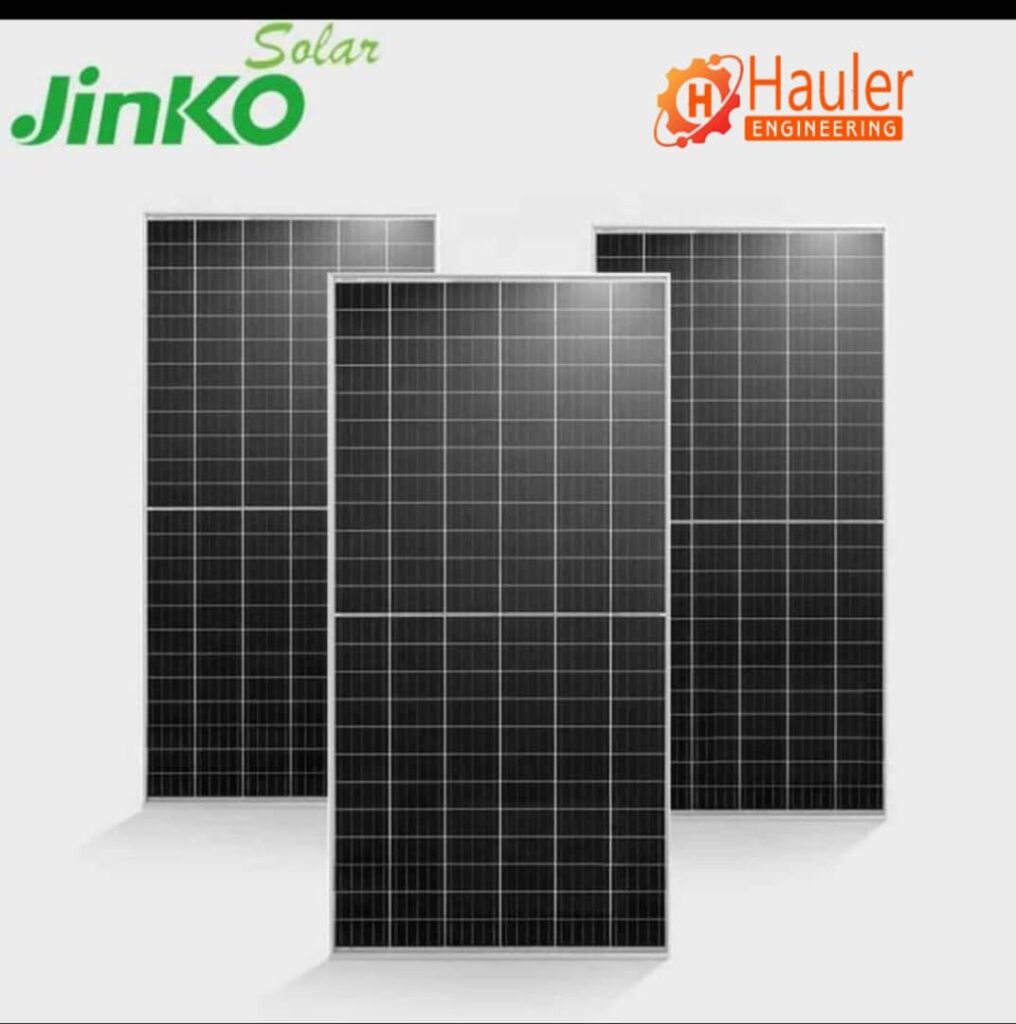
Now going back to our 10 000wh energy needs and assuming that we are going to buy 500 Watts solar modules. As a rule of thump in Zimbabwe a 500w solar module generates about 2500wh (500w x 5hrs) of energy per day, this is because in Zimbabwe we have 5hrs that we expect solar panels to be generating or producing their actaul rated power; we call these peak-sunshine-hours.
So in order to generate 10 000wh in a day we need 4 of these 500W solar modules (10 000wh divided by 2500wh). Also note that we want your system to be flexible enough to cater for future unforseen demands and also to cater for some days when its cloudy, when the solar modules will not be producing energy at their peak performance. An extra 1 or 2 more panels is the safest bet, but if you are on a budget, even 4 panels will be enough, most of the time and you can always add more in the future.
A good assessment of the conditions on the ground is also crucial so that the engineer may put a proper compensation factor as for example, solar panels in Zimbabwe should be installed facing North and at a proper inclination angle.
Getting the right inverter size.

Now that you know the total load you need to power, getting the right-sized inverter is crucial to be able to run that load without any issues. In our case, for purposes of this guide, we are going with an assumed value of 3000 Watts to run an entertainment set, a refrigerator, an electric iron, a laptop, and a microwave. Ideally this is the power that is drawn by your appliances if all of them are running simultaneously; but in reality things don’t work together at the same time, so you need to factor in a de-scaling factor called diversity factor.
So it’s a matter of multiplying the 3000 by say 0.7 or a diversity factor proposed by your engineer after assessment of your appliances.
Your engineer may also determine your peak power demand from the information that you give him on how you would want to use your appliances in terms of times of use for each gadget. That peak power demand will then be used to determine your inverter size.
Now as a good rule of thumb its also good to get to settle on an inverter size that is at least 30% bigger than your calcualted peak demand to actually cater for unforseen future energy demand increases. You never know, as one day you might buy another appliance and you would want it to be run by your solar system also.
Now, factoring in this, getting a 5000W inverter seems a better option to cater for future demands in energy.
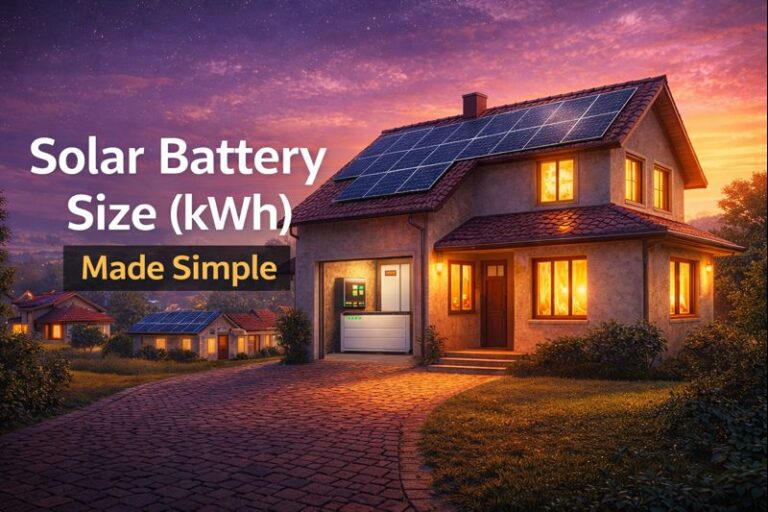
Calculate the size of the battery needed.
Remember, we have enough solar panels to run your appliances during the day; what about at night when we don’t have sunlight? This is where batteries come into play. 3000 watt load is there under the assumption that at some point you are going to turn all appliances on at the same time, but in reality that’s not even true. For example, who is going to watch the TV set at midnight, or who is going to turn the microwave all day 24/7, or who is going to iron clothes 24/7 even at night? If we are to be honest with each other, then we can all agree that only the refrigerator is going to be always running, but even within its mechanism, it doesn’t always run as the compressor turns on and off in turn during its operation. meaning that at night you need even less than half the 3000 watts you might need to run all appliances at once, and the battery is there to cater for you during the night when there is no sunshine.
You see where I’m going with this? But well, let’s assume that you still use the microwave one or 2 times at night and watch the TV until midnight, and the fridge remains running throughout the night. The most you are going to need for the whole night on average is to power a 300-watt load from 5 in the evening to 7 in the morning when we get sunshine again. That’s 14 hours that the battery needs to support an averaged 300-watt load. In other words, you need 14 x 300 = 4200 Wh to spend the whole night uninterrupted.

In other words, you need a battery that can supply 4200 Wh of backup energy for the night. To get the battery size in terms of amp hours from this (Ah), you need to divide the 4200 Wh by the voltage of the battery you intend to use.
Let’s say for example you are going to go for the 48V battery, 4200 divided by 48V is 87.5 ah. So you need an 87.5Ah, 48v battery but remember this is the usable energy from the battery, and generally batteries shouldn’t be drained completely each time as it damages them quickly. Lithium batteries do well as they can be drawn down up to 5% with no damage done to their cells.
But still, you can see that you can’t draw it down to 0%, so in as much as in theory you need an 87.5Ah battery, you are safer with a 48V 100Ah battery instead!
So now you have it—a complete step-by-step guide on how to size your solar system correctly and if you want to know the advantages and disadvantages of connecting batteries in series and in parallel, read our post on this topic!
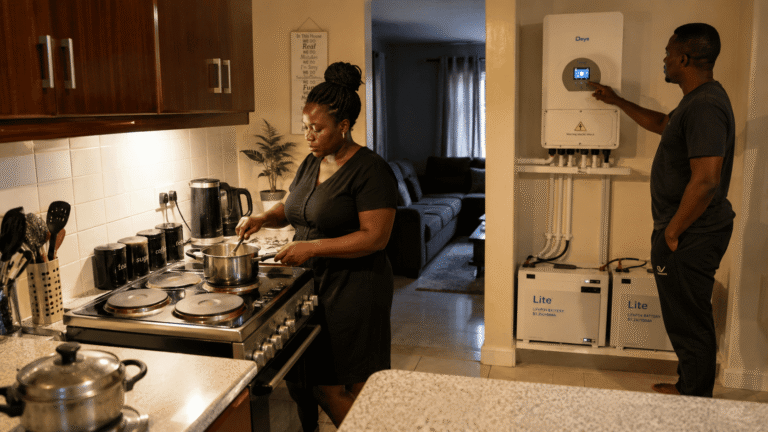
Do you think it’s possible to power an electric stove with solar and go completely off-grid?